

If a lawn mower is running near your child, move them away from it now and put on hearing protection rated to bring the noise below 85 decibels. Gas mowers typically run between 85 and 95 dB(A), and damage can start in as little as 15 minutes at the louder end of that range. This is a fast-moving hazard, not a background nuisance.
Do this immediately:
- Move the child at least several yards away, further if possible
- Fit properly sized earmuffs before the mower restarts
- Pause the equipment if you can do so safely
Quick fact: At 100 dB(A), hearing harm can occur in about 15 minutes. A riding mower or an aging push mower can reach that level.
Key Takeaways
Protecting a child from lawn mower noise requires immediate distance and properly fitted earmuffs, because gas mowers can cause hearing damage in as little as 15 minutes at higher decibel levels.
| Point | Details |
|---|---|
| Act within seconds | Move the child away from the mower and fit earmuffs before restarting equipment. |
| Know the thresholds | Damage can occur in about 15 minutes at 100 dB(A) and 5 hours at 85 dB(A). |
| Use the shout test | If you must raise your voice at arm’s length, the noise is likely too loud for a child. |
| Fit matters more than the NRR number | A gapped or loose earmuff cuts protection no matter what the rating says. |
| Choose earmuffs suited to yard noise | BANZ earmuffs offer NRR 26dB, child sizing, and washable pads for everyday mowing use. |
Table of Contents
- How Loud Are Lawn Mowers, and How Fast Can They Hurt Kids?
- What Should You Do Right Now When a Mower Is Running Nearby?
- How Do You Choose the Right Hearing Protection for a Child?
- How Do You Fit, Clean, and Replace Kids’ Earmuffs Correctly?
- What Else Reduces a Child’s Noise Exposure Besides Earmuffs?
- When Should You See an Audiologist About Your Child’s Hearing?
- Get Your Child Set Up With the Right Earmuffs Today
- Frequently Asked Questions
- Sources
How Loud Are Lawn Mowers, and How Fast Can They Hurt Kids?
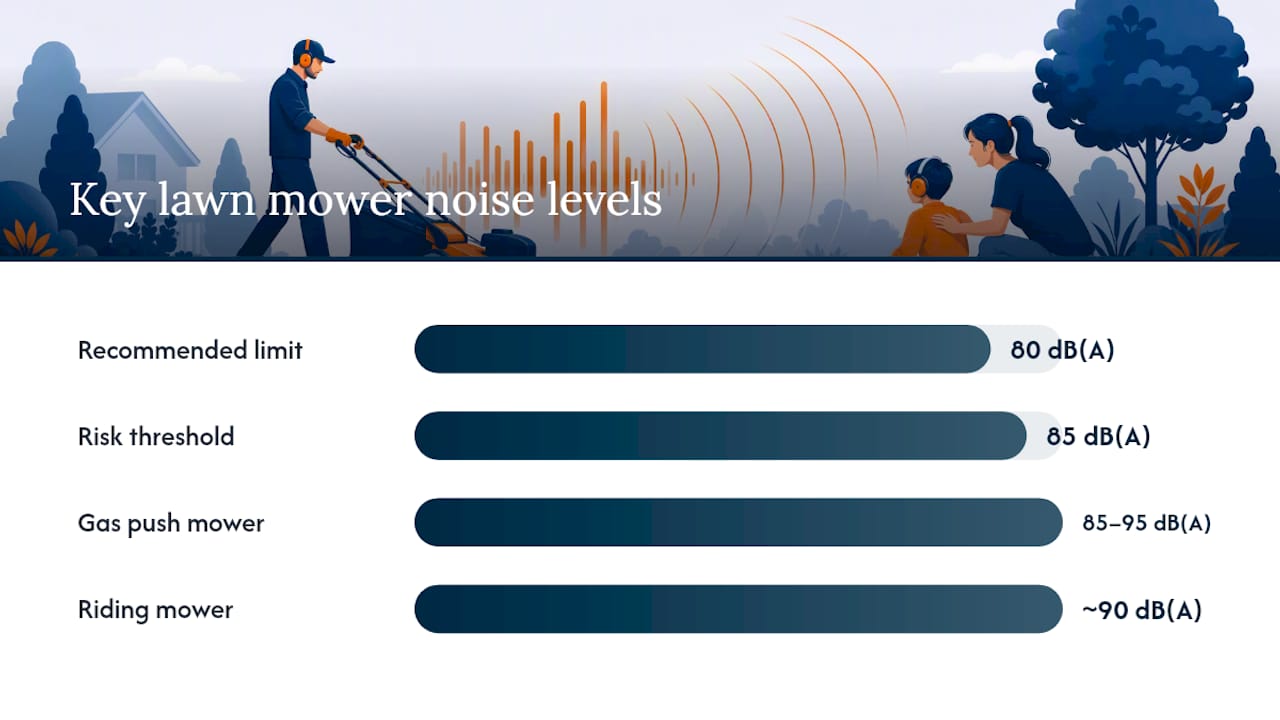
Gas-powered push mowers generally sit between 85 and 95 dB(A). Riding mowers often run around 90 dB, according to noise measurements from UGA Extension. The NIOSH exposure guidelines lay out how fast that translates to risk:
- 85 dB(A): harm possible after about 5 hours
- 90 dB(A): harm possible after about 2 hours
- 100 dB(A): harm possible after about 15 minutes
The number that matters most: 15 minutes. That is how little time it takes at the high end of typical mower noise for damage to begin.
Here’s a test that works without any equipment: if you have to raise your voice to be heard by someone standing an arm’s length away, the environment is likely too loud for a child. Kids’ ears are still developing, which is why many researchers recommend a stricter 80 dBA limit for children rather than the adult 85 dB threshold. Sound exposure also adds up over the course of a day. A toddler can’t remove themselves from a hazardous noise zone, so the responsibility to act sits entirely with the adult nearby.
Pro Tip: Don’t wait for your child to react to the noise before acting. Young kids often don’t cry or cover their ears even when the sound is well past the safe threshold, so treat the decibel level as your cue, not their behavior.
What Should You Do Right Now When a Mower Is Running Nearby?
- Remove the child from the immediate area first. Distance drops noise faster than anything else you can do in the moment.
- Fit earmuffs that actually seal. A loose or crooked earmuff barely helps.
- Pause the mower if it’s safe to do so. Only stop the equipment if you can do it without creating a different hazard.
- Relocate to a quieter zone. A stroller under a tree, a porch, or an indoor spot all work.
If you’re unsure whether a space is hazardous, a mobile noise-meter app can provide an estimate of noise levels. The BANZ Protect app checks real-time noise levels so you can confirm whether you’re above 85 dB before deciding your next move.
Pro Tip: Toddlers pull earmuffs off within minutes if you let them. Keep a spare pair stored somewhere predictable, like a stroller pocket or a bin by the back door, so replacing them takes seconds, not a search.
How Do You Choose the Right Hearing Protection for a Child?
The Noise Reduction Rating, or NRR, printed on the packaging indicates roughly how many decibels a product can reduce under lab conditions. It tells you roughly how many decibels a product cuts under lab conditions. The goal isn’t to grab the highest number available. It’s to bring exposure below 85 dB while your child can still hear you and function normally. Overprotecting a child can backfire: if the earmuffs feel isolating, kids pull them off, and then they have zero protection instead of the right amount, according to guidance from the CDC’s noise-exposure analysis.
When comparing options, look at these factors side by side:
| Comparison Point | What to Look For |
|---|---|
| NRR/SNR equivalence | Choose a rating that reliably drops mower noise below 85 dB |
| Age / head size / fit | Adjustable headbands that grow with the child, not a one-size guess |
| Comfort and wear time | Padded, lightweight designs kids will actually keep on |
| Coverage (earcup seal) | Full ear coverage with no gaps against the head |
| Cleaning and durability | Washable or wipeable cushions that hold up outdoors |
| When to use | Anytime the child is within earshot of a running mower or nearby yard tools |
Earmuffs are generally the better call for young children over earplugs. They eliminate the choking risk that comes with small foam plugs, and they’re far easier to fit correctly, according to the NIDCD. Plugs may be reasonable for older children who can be taught to insert them properly, but for toddlers and preschoolers, earmuffs win on practicality alone.
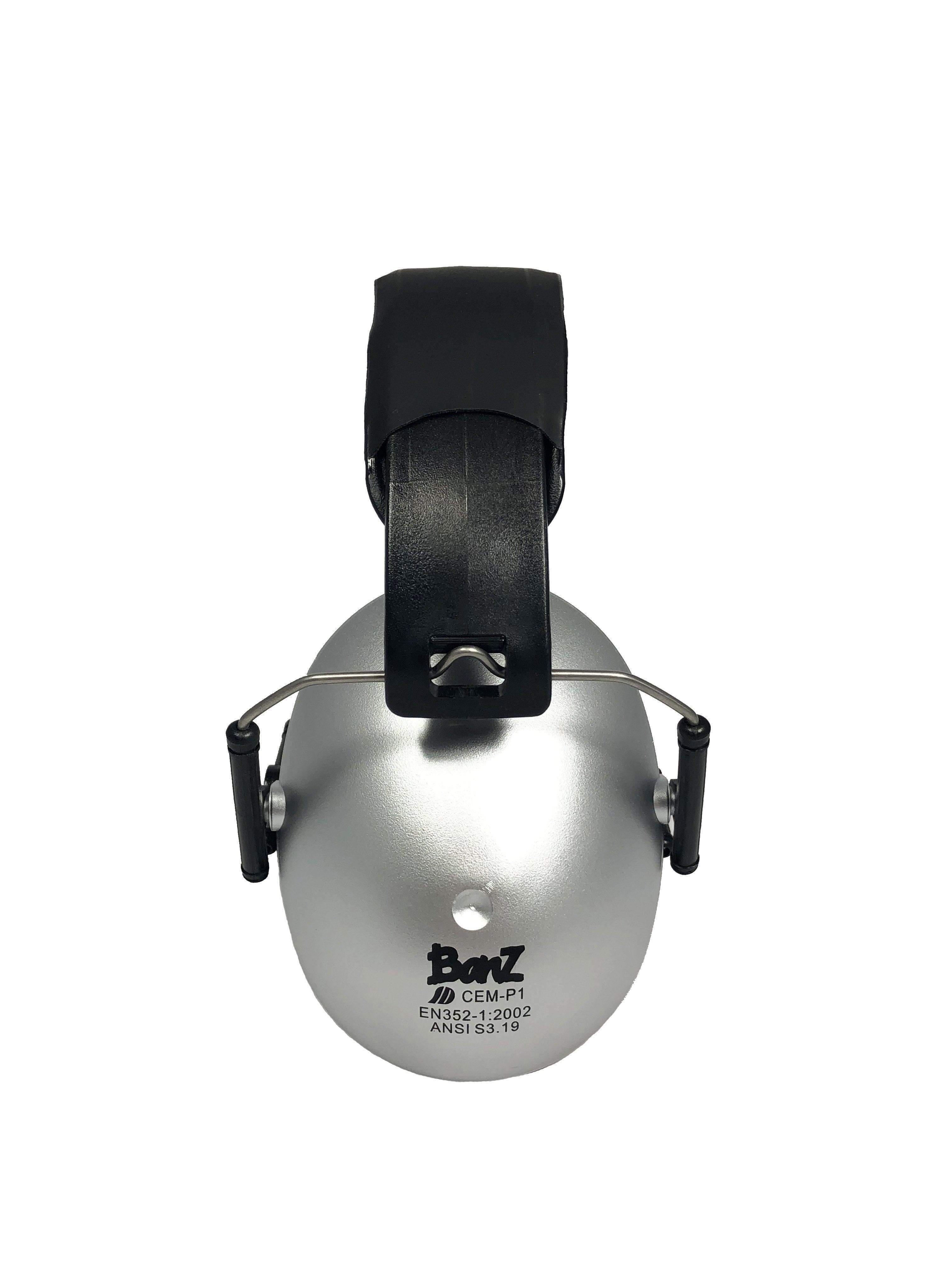
The Kids Hearing Protection Earmuffs from BANZ have a Noise Reduction Rating designed to reduce noise significantly, an adjustable headband for a growing head, and cushions parents can wipe down after a day in the yard.
Pro Tip: Test the fit on your child before you start mowing, not after. A quick check for gaps around the ear while they turn their head saves you from discovering a bad seal mid task.
How Do You Fit, Clean, and Replace Kids’ Earmuffs Correctly?
Correct fit matters as much as the NRR number itself. A pair rated at 26dB that sits crooked on a child’s head might deliver a fraction of that protection.
- Position both cups directly over the ears, not on top of them.
- Adjust the headband until the seal feels snug but doesn’t pinch.
- Check visually for gaps between the cushion and the skin.
- Have the child turn and tilt their head, then recheck the seal.
Wipe the cushions with a mild disinfectant after outdoor use, and inspect the padding for cracking or flattening every few weeks. Replace the earmuffs if the headband has loosened permanently, if gaps keep appearing no matter how you adjust them, or if your child’s head has grown past the product’s sizing range. A compromised seal means a compromised rating, full stop.
The Baby Hearing Protection Earmuffs work well for the youngest kids who need a smaller shell and softer band tension than older toddlers.
Pro Tip: Pair the earmuffs with a simple family rule, like “ears on before the mower starts.” Kids accept routines faster than one-off instructions, and a consistent cue beats negotiating every time.
What Else Reduces a Child’s Noise Exposure Besides Earmuffs?
Earmuffs handle the moment, but a few habits cut total exposure across the whole afternoon:
- Increase distance. Even 20 to 30 extra feet meaningfully drops the decibel level reaching a child.
- Time it right. Mow while the child naps or is indoors when possible.
- Create a quiet zone. A shaded stroller spot or a screened porch works as a buffer.
- Rotate tasks. Intermittent exposure beats one long continuous session.
Battery-powered mowers tend to run quieter than gas models, though they can still exceed safe levels depending on the machine. Older or poorly tuned equipment is often louder than newer models, so don’t assume last year’s protection plan still applies.
Pro Tip: If a landscaper, neighbor, or leaf blower joins the mower at the same time, the combined noise climbs fast, since multiple tools running together raise sound levels well beyond what one machine produces alone. Ask anyone working nearby to pause briefly if your child is in the yard.
When Should You See an Audiologist About Your Child’s Hearing?
Book a hearing evaluation if you notice changes in speech clarity, delayed language milestones, or a child who frequently asks you to repeat yourself. These are the signs worth acting on:
- Not responding to sounds from across a room
- Needing the TV or tablet volume turned up repeatedly
- Complaints of ringing ears or persistent ear pain
- New speech or learning concerns flagged by a teacher or caregiver
Start with a pediatric appointment and ask directly for an audiology referral. Noise-induced hearing loss is typically permanent once it occurs, according to peer-reviewed research on children’s hearing loss, so catching it early matters for how it’s managed going forward. When in doubt, a licensed audiologist can settle the question with an actual test rather than a guess.
Why We Built BANZ Around Earmuffs, Not Assumptions
Protecting children’s hearing shouldn’t depend on parents memorizing decibel charts mid mow. That belief shapes every BANZ earmuff: NRR ratings printed clearly, sizing built for real head shapes at different ages, and cushions designed to hold a seal through a full afternoon outside. The NIDCD’s own guidance on normalizing protection the way families normalize seatbelts and helmets is the same principle behind BANZ’s product design. Families across six continents now rely on that approach for everyday yard work, not just occasional loud events.
Get Your Child Set Up With the Right Earmuffs Today
BANZ makes the decision simple: earmuffs sized specifically for kids and babies, rated at NRR 26dB, built to actually stay sealed during a mowing session instead of sliding off after ten minutes.
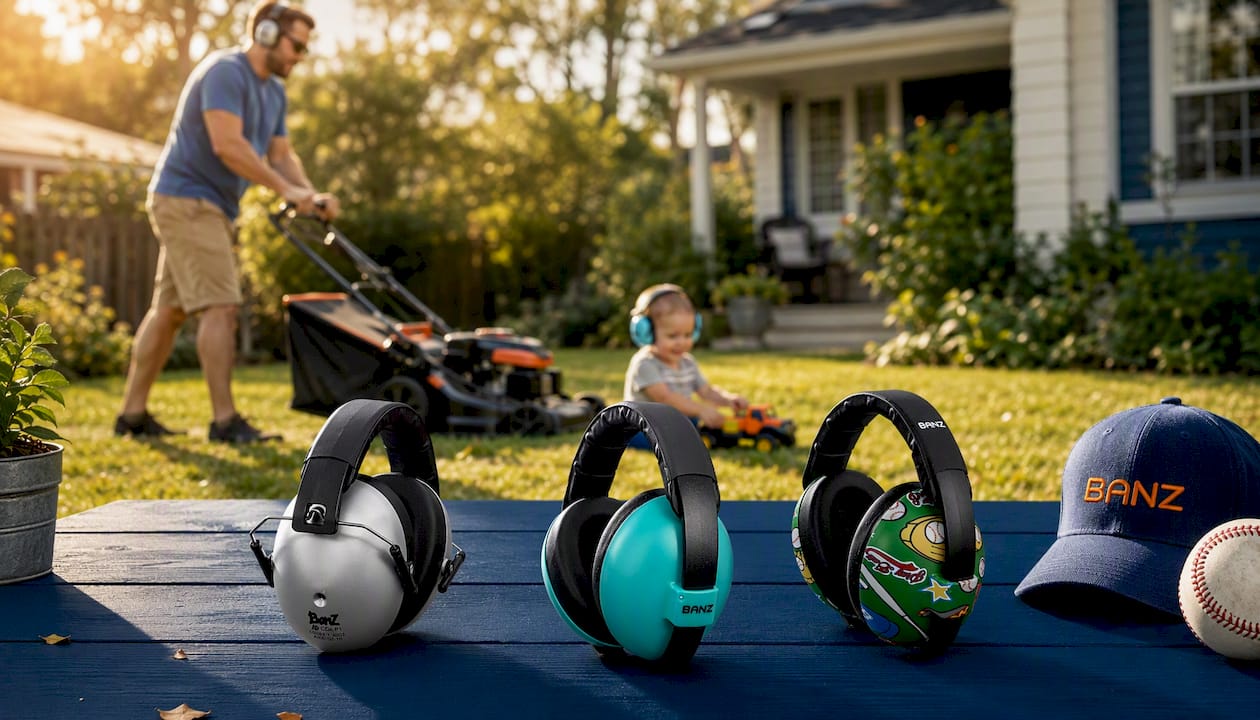
The Baby Hearing Protection Earmuffs combo set bundles hearing protection with wraparound sunglasses, a practical pick if you’re already covering sun safety in the yard. For toddlers and preschoolers, the Kids Hearing Protection Earmuffs come in solid colors with an adjustable band that grows with your child. If your child’s head size falls between two options, size up rather than down. A snug seal only works if there’s enough headband range left to adjust it. Pair either pair with the free BANZ Protect app for a real-time noise reading before you start mowing, so you’re acting on an actual number instead of a guess. Ready to gear up before the next mow? Shop the BANZ earmuffs collection and get the right fit before you cut the grass again.
Frequently Asked Questions
How loud is too loud for a child near a lawn mower? Anything above 85 dB(A) carries risk within hours, and many pediatric sources recommend keeping children’s exposure closer to 80 dBA since their ears are still developing. If you’d have to shout to be heard an arm’s length away, treat it as hazardous.
What decibel level do lawn mowers actually reach? Most gas push mowers run between 85 and 95 dB(A), and riding mowers often sit around 90 dB. Older or poorly maintained equipment can run louder than newer models.
Are earmuffs better than earplugs for toddlers? Yes. Earmuffs remove the choking risk that comes with small plugs and are far easier to fit correctly on a young child, per NIDCD guidance.
How do I know if my child’s earmuffs still work? Check for a snug seal with no visible gaps, a headband that holds its adjustment, and cushions free of cracking. Replace the pair if any of those fail or if your child has outgrown the sizing range.
When should I take my child to see a hearing specialist? See a pediatrician for a referral if your child needs the volume turned up often, struggles with speech milestones, or complains of ringing or ear pain after yard work.
This article is general information, not a substitute for advice from a qualified doctor. Consult a qualified healthcare professional about your own circumstances before acting on anything here.
Sources
- NIOSH: Understanding Noise
- Preventing Excessive Noise Exposure in Infants, Children, and Adolescents (CDC analysis)
- Protect your child’s hearing | NIDCD
- Protect your hearing around common equipment | UGA extension
- Noise — AAP (American Academy of Pediatrics)
Recommended
- Noise Safety for Children: Everyday Sounds Parents Should Watch |BANZ® – BANZ® Carewear USA
- Kids Noise Safety Resource Library | Hearing Protection & Sensory Support | BANZ® – BANZ® Carewear USA
- What Is Sound Pressure Level: A Parent’s Guide – BANZ® Carewear USA
- Noise Sensitivity in Children: Parent Strategies & Hearing Protection | BANZ® – BANZ® Carewear USA
