

Use infant-sized over-ear earmuffs for babies in loud environments, skip earplugs entirely under age 3, and leave the area when you can instead of relying on gear alone. That is the baby ear protection age rule in one sentence, and it holds from the newborn stage through toddlerhood. Authoritative sources back it up directly: the NIDCD recommends earmuffs sized for infants and children because they seal easier than plugs, and the American Academy of Pediatrics tells parents to avoid noisy venues first and reach for earmuffs only when avoidance isn’t possible. Sustained noise above roughly 85 decibels raises risk over time, and short, sharp blasts like fireworks can hit far higher levels in an instant.
Before your next fireworks show, concert, or flight:
- Pack infant-sized over-ear earmuffs, not earplugs, for any child under 3.
- Check the seal against your baby’s head at home before the event, not at the gate.
- If the earmuffs shift, fuss, or won’t seal, leave the noisy area rather than fight the fit.
Key Takeaways
Infant-sized over-ear earmuffs are the preferred choice for hearing protection under age 3, and a verified seal matters more than the number printed on the box.
| Point | Details |
|---|---|
| Earmuffs over earplugs | Use over-ear earmuffs for any child under 3; earplugs carry fit and choking risks at this age. |
| Avoidance comes first | Leave or avoid loud environments above roughly 85 dB sustained noise when you have the option. |
| Fit beats the rating | A gapped seal can erase most of a stated NRR, so practice the fit at home before an event. |
| Watch for distress signs | Red marks, fussiness, or ignoring your voice mean it’s time to remove the earmuffs. |
| BANZ® infant earmuffs | BANZ® builds low-pressure, fontanelle-safe headbands with published NRR specs sized for babies. |
Table of Contents
- What Noise Levels Actually Require Baby Ear Protection?
- Age-By-Age Guidance for Hearing Protection
- How to Choose Earmuffs That Actually Fit
- Keeping Kids Safe While Wearing Ear Protection
- Why BANZ® Backs This Guidance
- What the Research Actually Supports
- Find the Right BANZ® Earmuffs for Your Baby’s Age
- Frequently Asked Questions
- Sources
What Noise Levels Actually Require Baby Ear Protection?
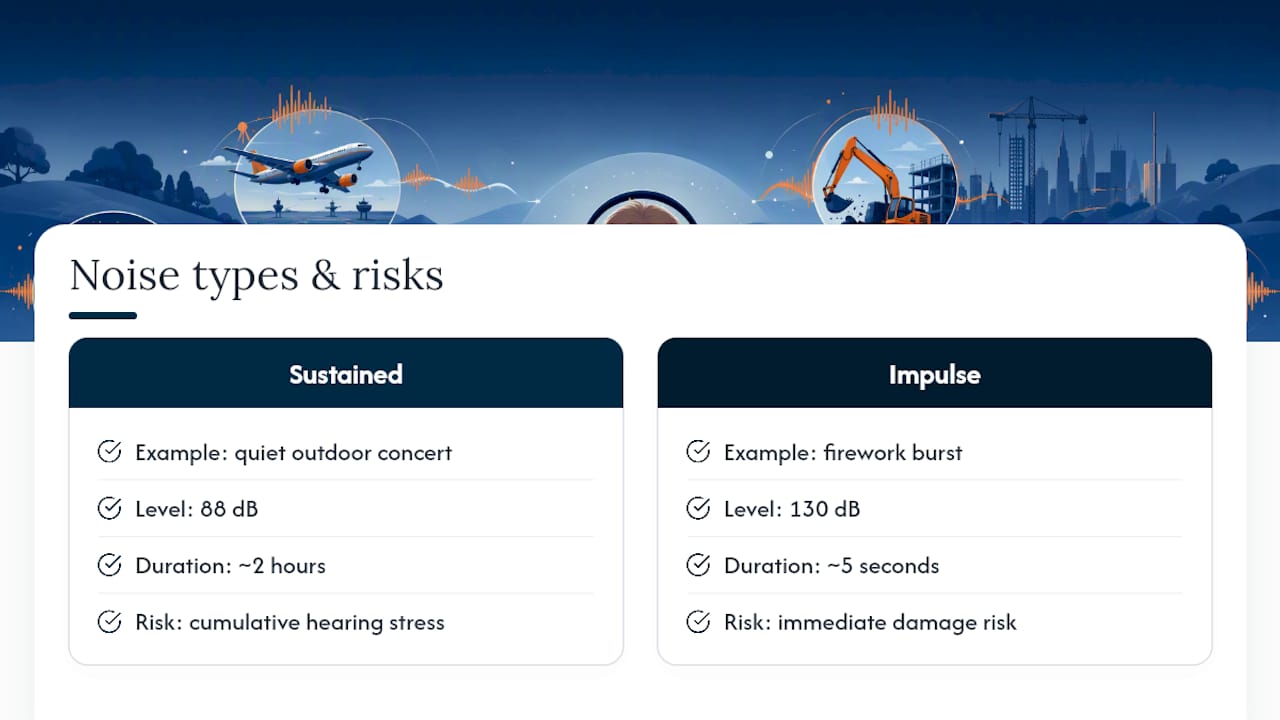
Decibels don’t scale in a straight line. A jump from 85 to 95 dB isn’t a 10% increase in loudness. It’s roughly a tenfold increase in sound energy, which is why the gap between “a little loud” and “genuinely damaging” is smaller than most parents assume. Sustained noise (the kind you’d sit inside for an hour, like a stadium crowd) causes damage differently than impulse noise (the kind that hits in a fraction of a second, like a firework or a starter pistol). The NIOSH sets 85 dB as the threshold where sustained exposure starts raising hearing risk, but a single firework blast can spike well above 120 dB for a fraction of a second, and that kind of impulse spike does damage that has nothing to do with duration.
A handful of situations reliably cross into risky territory for a baby’s ears:
- Fireworks displays — impulse peaks routinely exceed safe limits even from a distance.
- Concerts and festivals — sustained crowd and speaker noise often sits well above 85 dB for hours.
- Air travel — cabin noise during takeoff and cruise commonly runs in the 85 to 105 dB range.
- Motor sports and car races — engine noise near the track can rival a jet engine at close range.
- Sporting events with amplified sound systems — stadium PA systems and crowd roars stack on top of each other.
Statistic to remember: noise above 85 dB is where NIOSH’s exposure guidance kicks in, and impulse sources like fireworks routinely exceed that by a wide margin in a single burst. The rule of thumb: if you have to raise your voice to be heard, it’s loud enough to matter for your baby. Move away first. Reach for earmuffs only when leaving isn’t an option, and for extreme impulse noise, some guidance for older kids and adults recommends doubling up protection (earmuffs over plugs); that combination isn’t appropriate for infants, who should stick to earmuffs alone.
Age-By-Age Guidance for Hearing Protection
The right gear changes as your child grows, mostly because of what their ear canal, skull, and communication skills can handle at each stage.
0 to 12 months. Infant-sized over-ear earmuffs only. A newborn’s fontanelle areas and developing skull shape mean any headband needs to sit low pressure, and there’s no safe way to fit an earplug inside a canal this small without risking it working loose or getting swallowed. This is the age where the NIDCD’s point about earmuffs being easier to use than plugs matters most: a baby can’t tell you a plug feels wrong, and can’t remove it safely either.
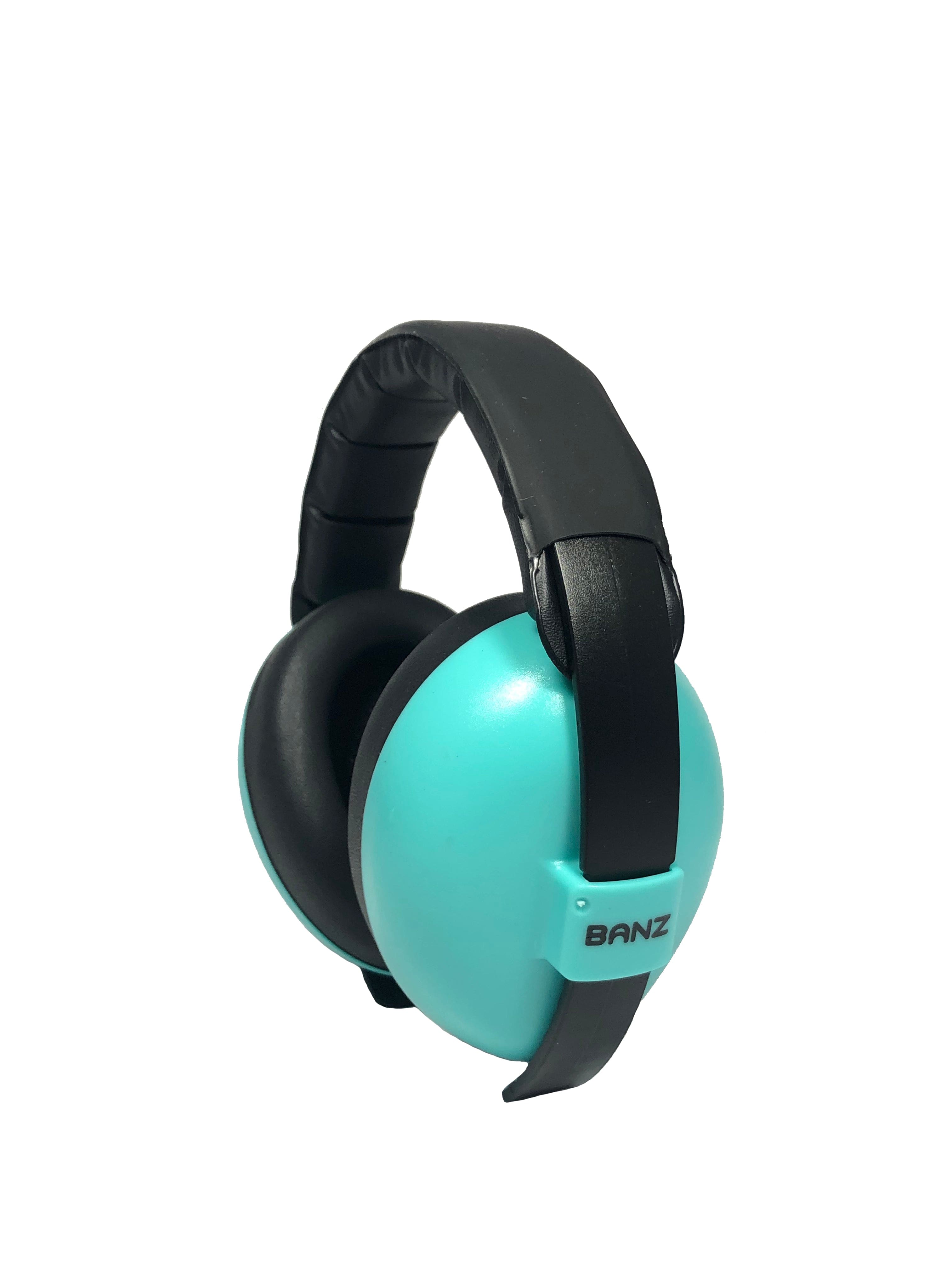
1 to 3 years. Stay with earmuffs, sized up as your toddler grows. This is still too young for earplugs in nearly every case. Toddlers explore with their hands and mouths, and a dislodged earplug is a choking hazard on top of being ineffective protection.
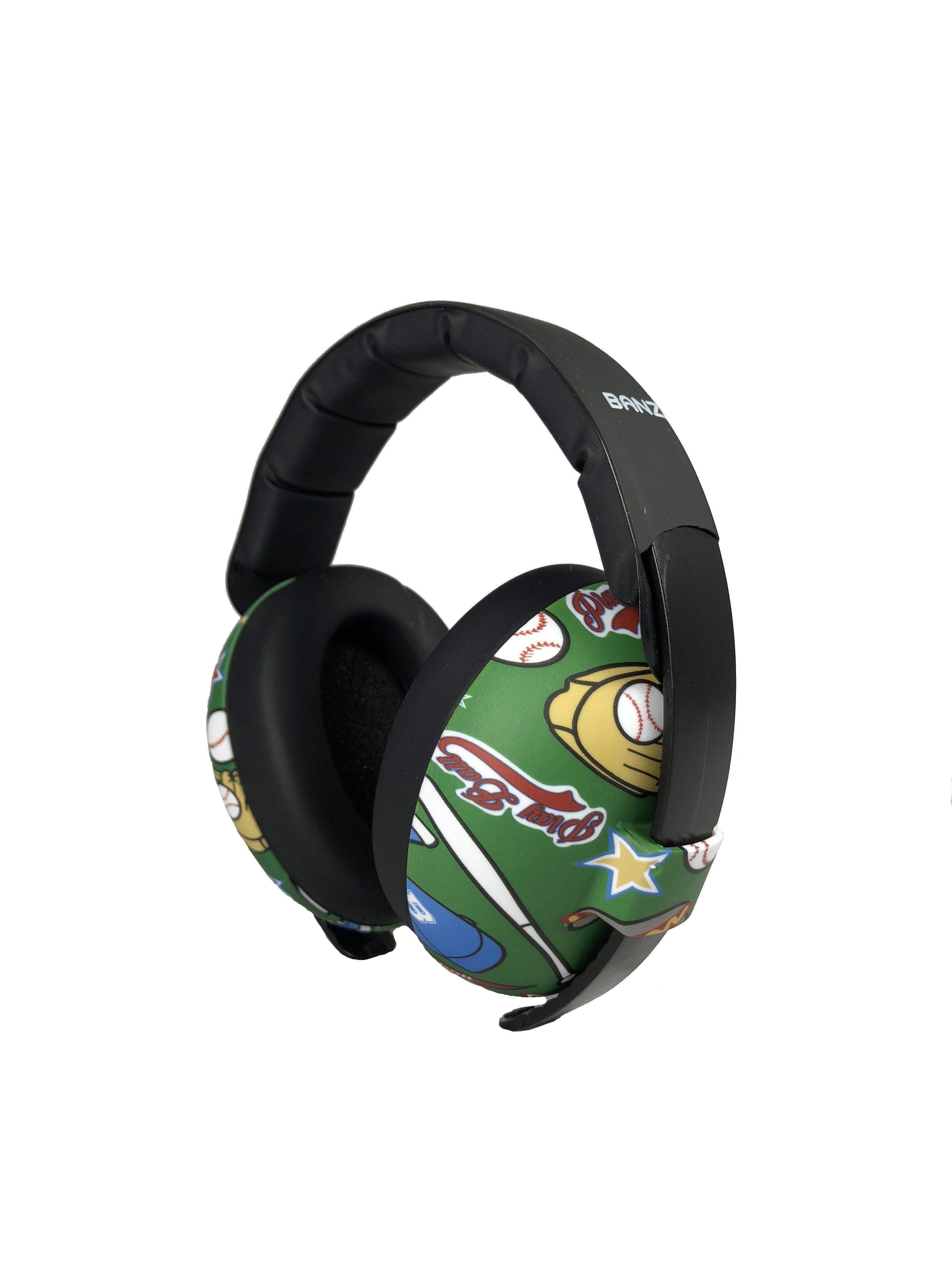
3 to 5 years. Earmuffs remain the simpler default, but supervised earplugs can work if your child cooperates well and the plugs are sized for their age. Watch closely the first few times.
5 and up. Either option can work, depending on fit and the activity. The deciding factor at this age is whether your child can reliably tell you if something hurts or feels loose.
Pro Tip: Match the gear to the event, not just the age. Fireworks and flights call for earmuffs on any child under 3, full stop. A short, unexpected loud burst, like a passing siren, is often better solved by simply stepping away than by fumbling with a headband in the moment.
How to Choose Earmuffs That Actually Fit
Every pair of earmuffs carries a Noise Reduction Rating (NRR) or Single Number Rating (SNR), and that number only means something if the seal is intact. Certified children’s earmuffs typically attenuate somewhere in the high teens to low thirties in decibels, depending on the design and testing standard, but a gap of even a few millimeters between the cup and your baby’s head can cut that rating dramatically. The number on the box describes lab conditions, not a guarantee against a poorly fitted cup.
Run through this before you trust any pair at an event:
- Confirm the cups fully cover the ear, with no part of the ear folded outside the seal.
- Check the headband applies even, low pressure and never rests directly on the fontanelle in infants.
- Do a sound test at home: play music at a moderate volume and see if your baby’s reaction changes noticeably once the earmuffs go on.
- Practice wearing the earmuffs for short stretches before the actual event, since the NIDCD notes that consistent, comfortable wear matters more than the rating on the box.
- Skip earplugs entirely if your child is under 3, and talk to a pediatric audiologist if you suspect a hearing issue or need a custom-fit solution.
Fit statistic worth remembering: certified attenuation for baby earmuffs generally falls somewhere in the high teens to low thirties in decibels, but that number is only real if there’s zero gap in the seal. A loose cup can quietly erase most of that protection without any visible sign something’s wrong.
Keeping Kids Safe While Wearing Ear Protection
Hearing protection isn’t a “set it and forget it” tool, especially for a baby who can’t tell you when something’s wrong.
- Stay within arm’s reach the entire time your baby wears earmuffs, and never let a baby sleep unsupervised in gear that can shift or press against the face.
- Take the earmuffs off during natural breaks in the noise rather than leaving them on for hours straight; short wear sessions are easier to monitor for comfort issues.
- Watch for red marks around the ears, persistent fussiness, or your baby ignoring your voice or touch, and remove the earmuffs right away if any of these show up.
- Clean the cups per the manufacturer’s instructions and store small parts (like sunglasses or clip attachments on combo sets) out of reach when not in use.
Pro Tip: Set a mental timer at loud events. If you haven’t checked your baby’s face and ears in the last 15 to 20 minutes, that’s your cue to look, even if nothing seems wrong.
Why BANZ® Backs This Guidance
BANZ® designs infant earmuffs around the exact concerns pediatric guidance raises: low-pressure headbands that avoid the fontanelle, cups sized for a baby’s smaller head, and a published NRR so you’re not guessing at the level of protection you’re getting. Over 2 million families across six continents have relied on BANZ® gear for sun and noise protection since the brand’s founding in Australia, when one family couldn’t find suitable protection for their own kids and built it themselves.
If you want a second opinion before an event, BANZ®'s Ask an Expert resource connects you with guidance tailored to your child’s age and situation, and it’s worth a look mid-planning rather than the night before. For sizing details and how NRR compares to SNR on product labels, the NRR vs. SNR breakdown walks through what those numbers actually mean for your baby’s ears. Parents ready to browse can check current sizing on the baby earmuffs product page or the printed styles at Baby Hearing Protection Earmuffs - Prints.
What the Research Actually Supports
Most advice on baby ear protection treats every loud environment the same way, telling parents to “just get earmuffs” without distinguishing sustained noise from a single impulse spike. That’s a mistake. A quiet outdoor concert at 88 dB for two hours and a five-second firework burst at 130 dB are different problems, and treating them identically leads parents to either over-rely on gear in situations where leaving would be simpler, or under-react to a genuinely dangerous impulse spike because “we brought the earmuffs.”
The conventional wisdom also underweights fit. Parents fixate on the NRR number on the box and treat it as fixed, when in practice a loose seal can erase most of a rating’s real-world value. If I could get parents to change one habit, it wouldn’t be buying better gear. It would be doing a five-minute fit check and practice session at home before the event, every single time, especially for infants who can’t tell you the seal feels off.
Prioritize avoidance first, a verified fit second, and the rating on the box a distant third.
Find the Right BANZ® Earmuffs for Your Baby’s Age
Getting the right fit matters more than picking between styles, so BANZ® builds infant earmuffs with the low-pressure headband and full ear coverage that pediatric guidance calls for, backed by a published NRR you can check before you buy.
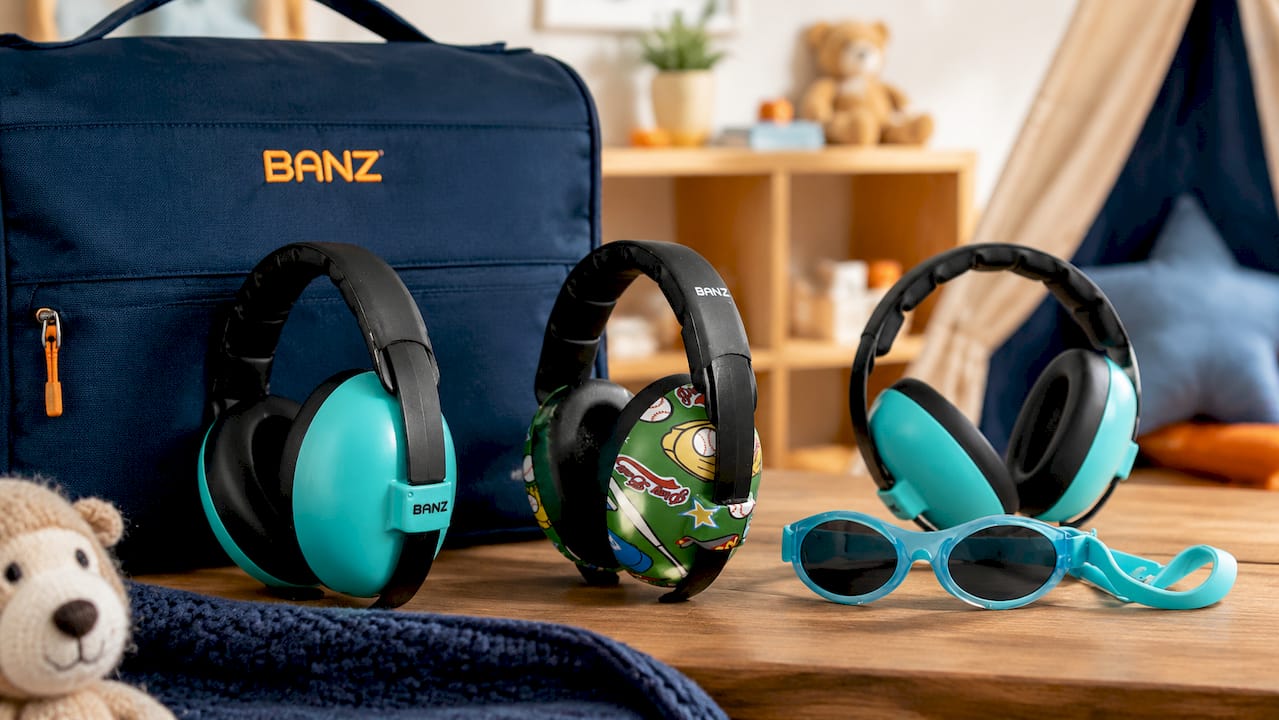
For babies under 12 months, the Baby Hearing Protection Earmuffs are sized specifically for smaller heads and softer skulls, with a headband designed to avoid pressure on the fontanelle. Families who also want sun coverage for the same outings can look at the Baby Hearing Protection Earmuffs & Wrap Around Sunglasses Combo Set, which pairs noise reduction with UPF protection in one purchase. Once your child moves past the toddler stage and into preschool, the Kids Hearing Protection Earmuffs - Solids and Kids Hearing Protection Earmuffs - Prints offer a larger fit while keeping the same over-ear design that’s safer than plugs at this age.
Check sizing against your child’s age and head circumference before your next loud event, and shop the full earmuffs lineup to find the right fit ahead of time rather than the day of.
Frequently Asked Questions
At what age can a baby start wearing hearing protection? Babies can wear infant-sized over-ear earmuffs from birth in loud environments. Earplugs are not recommended until around age 3, and even then only under supervision.
Are earplugs ever safe for infants? No. Earplugs pose fit and choking risks for children under 3, according to guidance from the American Academy of Audiology. Over-ear earmuffs are the appropriate choice for this age group.
What decibel level is safe for a baby’s ears? Sustained noise above roughly 85 dB starts raising hearing risk over time, per NIOSH guidance. Impulse noises like fireworks can spike far higher in an instant and deserve extra caution regardless of duration.
Do baby earmuffs actually block enough noise? Certified children’s earmuffs typically attenuate somewhere in the high teens to low thirties in decibels, but only when the seal is intact. A gap between the cup and the ear reduces that protection significantly, so checking fit matters as much as checking the rating.
Should I bring ear protection on a flight with my baby? Yes. Cabin noise during takeoff and cruise commonly falls in the 85 to 105 dB range, which is why infant earmuffs are a common recommendation for air travel with a baby.
This article is general information, not a substitute for advice from a qualified doctor. Consult a qualified healthcare professional about your own circumstances before acting on anything here.
Sources
- Protect Your Child’s Hearing | NIDCD
- Preventing Excessive Noise Exposure in Infants, Children, and Adolescents (AAP)
- Noise and Hearing Loss Prevention | NIOSH (CDC)
- Children and Hearing Loss | American Academy of Audiology
