

TL;DR:
- Childcare sun protection policies mandate measures at UV Index 3 or higher, regardless of weather conditions.
- Effective policies require multiple layers, including sunscreen, hats, shade, protective clothing, and scheduling adjustments.
A childcare outdoor sun protection policy mandates sun safety measures whenever the UV Index reaches 3 or higher, regardless of temperature or cloud cover. That threshold applies on overcast winter days just as much as on bright summer afternoons. Children’s skin and eyes are far more sensitive to UV radiation than adult skin, making routine protection a non-negotiable part of any outdoor play program. A complete policy combines sunscreen, hats, shade, protective clothing, hydration, and smart scheduling. Parents and caregivers who understand these requirements can evaluate any childcare center’s approach with confidence.
What are the essential elements of a childcare outdoor sun protection policy?
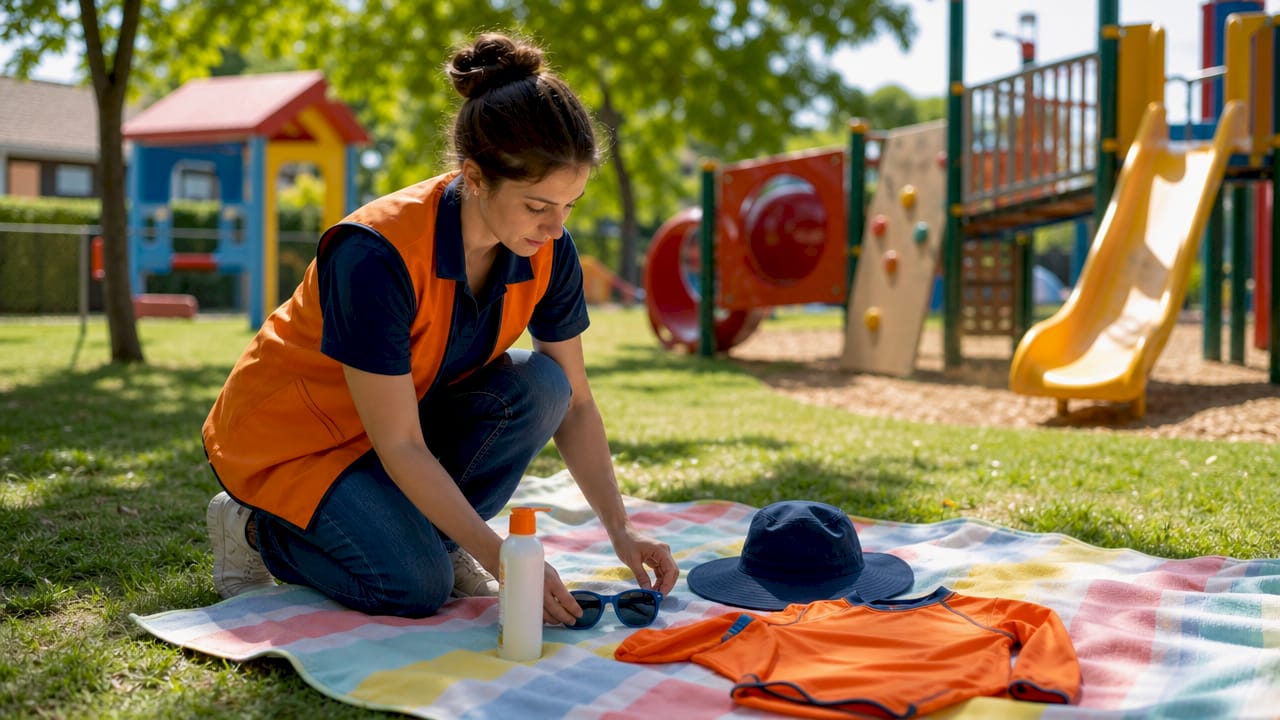
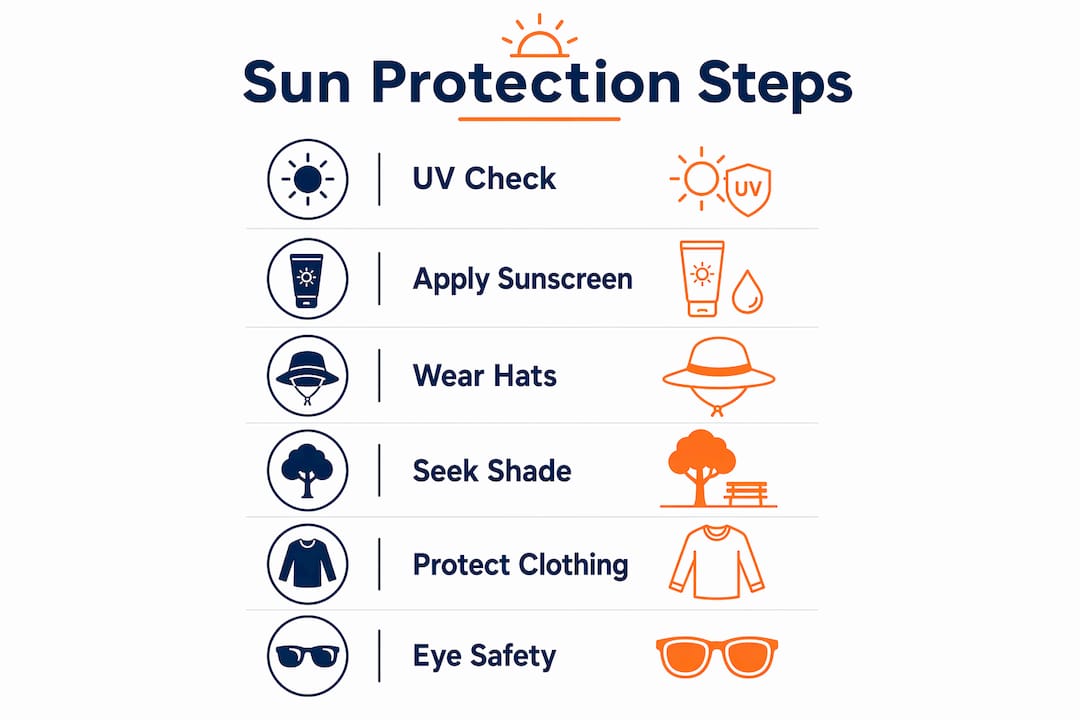
An effective policy covers six distinct layers of protection. No single measure is enough on its own. Multi-layer sun safety is the standard recommended by health authorities worldwide, and each layer addresses a different exposure risk.
Sunscreen
SPF 30+ broad-spectrum sunscreen applied 15–20 minutes before outdoor play is the baseline requirement. Reapplication every two hours, or immediately after water play, maintains effectiveness. Families typically supply labeled, in-date sunscreen for their child, and educators apply it as part of the pre-outdoor routine.
Hats
Wide-brimmed hats covering the face, ears, and neck are mandatory in most formal sun safety guidelines for childcare. Legionnaire-style hats, which include a rear flap, offer similar coverage. A standard baseball cap does not meet this requirement because it leaves the ears and neck exposed.
Shade
Shade provisions must include both natural cover (trees, pergolas) and artificial structures (shade sails, canopies). Shade areas require regular inspection to confirm they remain effective as sun angles shift through the day and seasons.
Clothing and scheduling
Protective clothing covers the shoulders and arms. Outdoor activities shift to early morning or late afternoon to avoid peak UV hours, which typically run from 11:00 AM to 3:00 PM. Hydration is built into the outdoor routine, not treated as optional.
Infants under 6–12 months
Infants under 6 months should avoid direct sun exposure entirely. Sunscreen for this age group is used only with physician advice. Shade and protective clothing carry the full protective load for the youngest children.
Eye protection
UV exposure harms eyes as well as skin. Policies that include UV-safe sunglasses for children provide a layer of protection that hats alone cannot deliver.
Pro Tip: Check that your child’s childcare center lists both natural and artificial shade in its written policy. A policy that relies only on trees gives no guarantee of coverage after pruning or seasonal leaf loss.
How do childcare providers implement and monitor sun protection during outdoor play?
Consistent implementation requires a daily system, not a seasonal reminder. The steps below reflect best practices used by centers with formal UV protection policies for kids.
-
Check the UV Index each morning. Staff use a weather service or a monitoring app to confirm whether the UV Index will reach 3 or higher during planned outdoor time. The free BANZ Protect app provides real-time UV readings, which makes this check fast and reliable for educators.
-
Apply sunscreen before going outside. Educators apply sunscreen to children 15–20 minutes before outdoor time. This step is built into the pre-outdoor routine alongside handwashing and hat checks. Involving children in the process, such as letting them rub in sunscreen on their arms, builds lifelong sun safety habits from an early age.
-
Confirm hats and clothing before exit. No child goes outside without a compliant hat. Centers keep spare hats on hand for days when a child arrives without one. Children without appropriate clothing stay indoors or move to a fully shaded area.
-
Use structured supervision during transitions. The stop-scan-count method during transitions between indoor and outdoor zones closes the gap where UV exposure most often goes unmanaged. Educators stop movement, scan the group, and count children before proceeding.
-
Reapply sunscreen on schedule. A visible timer or a set alarm reminds staff to reapply sunscreen every two hours. After water play or heavy sweating, reapplication happens immediately regardless of the timer.
-
Communicate with families daily. Centers send UV alerts or reminders through their parent communication app when high UV days are forecast. Family communication about sunscreen, hats, and clothing requirements is a documented part of the policy, not an informal request.
-
Document and respond to incidents. Any case of sunburn or prolonged unprotected exposure triggers a written incident report. The report records what happened, what protection was in place, and what changes will prevent recurrence.
Pro Tip: Ask your childcare center how it handles the day a child forgets their hat. The answer tells you whether sun safety is a real policy or a suggestion.
What challenges do childcare centers face in maintaining sun protection policies?
The biggest barrier to consistent outdoor play sun protection is not equipment. It is misconception. UV radiation causes damage on cool and cloudy days just as it does on hot, clear ones. Temperature is not a reliable indicator of UV risk. Centers that tie their sun protection routines to warm weather leave children unprotected on overcast spring and fall days.
- Sunscreen allergies and sensitive skin. Some children react to standard sunscreen formulas. Centers address this by requesting family-approved products and keeping a record of each child’s approved brand. Mineral-based SPF 30+ sunscreens are a common alternative for sensitive skin.
- Unsafe shade setups. Covering a pram with a blanket to block sun is a documented hazard. Covering a pram without ventilation can dangerously increase heat exposure inside. Proper shade structures, not fabric covers, are the correct solution.
- Gaps during transitions. Moving children from indoors to outdoors and back creates brief windows where no one is actively monitoring sun exposure. Structured supervision methods close these gaps.
- Balancing outdoor time with sun safety. Restricting all outdoor play during high UV periods removes the developmental and physical benefits children gain from outdoor activity. Childcare centers can balance outdoor play with sun safety by scheduling activities in shaded areas and adjusting timing rather than canceling outdoor time entirely.
- Educator modeling. Staff who skip hats or sunscreen send a clear behavioral signal to children. Educators modeling sun-safe behavior is one of the most effective tools a center has for normalizing protection habits.
Sun safety in childcare works best as a permanent environmental design, not a seasonal checklist. Shade sails, fixed hat hooks at the door, and a daily UV check built into the morning routine create a system that runs without depending on individual memory or motivation.
What role do parents and caregivers play in supporting sun safety at childcare?
Parents are the first line of supply and the most consistent reinforcement for sun-safe habits. A childcare center’s policy only works when families support it at home and prepare children for it each day.
- Send labeled, in-date sunscreen. Expired sunscreen loses effectiveness. Labels with the child’s name prevent mix-ups and allow staff to confirm the product is family-approved.
- Provide a compliant hat every day. A wide-brimmed or legionnaire hat should be part of the daily bag, not an afterthought. Reviewing a sun safety gear checklist helps parents confirm they have the right items.
- Communicate skin sensitivities and allergies. Any reaction to sunscreen ingredients should be documented with the center before the child’s first day, not reported after a reaction occurs.
- Reinforce sun-safe habits at home. Children who wear hats and apply sunscreen at home treat the same routine at childcare as normal, not as an imposition. Consistency across settings builds the habit faster.
- Check daily UV levels. Parents who monitor the UV Index understand why the center adjusts outdoor schedules on certain days. That understanding reduces friction when outdoor time is shortened or moved.
- Dress children in protective clothing. Lightweight, long-sleeved shirts in UV-protective fabrics reduce the skin area that sunscreen must cover. Layering options for different weather conditions, including guidance on layering children’s clothing for outdoor protection, help parents make practical choices year-round.
Participating in any sun safety education sessions the center offers gives parents direct insight into what children are being taught. That shared language makes conversations about sun protection at home much easier.
Key Takeaways
A childcare outdoor sun protection policy is effective only when it combines mandatory UV thresholds, layered physical protection, daily monitoring, and consistent family support.
| Point | Details |
|---|---|
| UV Index 3 triggers protection | Sun safety measures apply at UV Index 3+, regardless of temperature or cloud cover. |
| Layered protection is required | Sunscreen, hats, shade, clothing, and scheduling together provide comprehensive UV coverage. |
| Infants need special rules | Children under 6 months avoid direct sun; sunscreen requires physician approval for this age group. |
| Educator behavior matters | Staff who model sun-safe habits normalize protection routines for children more effectively than rules alone. |
| Family partnership is non-negotiable | Consistent sunscreen supply, compliant hats, and home reinforcement directly support center-level policy outcomes. |
Why I think most childcare sun policies fail at the same point
By Shari M. Murphy
After years of reviewing childcare practices and talking with parents, the pattern is clear. Centers write detailed sun protection policies and then let implementation drift by mid-autumn. The assumption is that sun risk belongs to summer. It does not. UV radiation at Index 3 arrives in march and stays through october in most of the United States. A policy that only activates in june is protecting children for roughly half the days they actually need it.
The second failure point is adult behavior. Children watch educators constantly. A staff member who steps outside without a hat while reminding children to wear theirs teaches children that the rule is for them, not for adults. That lesson sticks. Centers that require staff to follow the same sun-safe dress code as children see noticeably better compliance from the kids.
The third issue is that parents often treat the policy as the center’s responsibility alone. The most effective setups treat sun safety as a shared system. The center manages the environment and the routine. Parents manage the supply and the home reinforcement. When both sides are consistent, children internalize sun-safe behavior as simply what you do before going outside, not as an external rule imposed on them.
Choosing a childcare center with a written, actively enforced sun protection policy is one of the most concrete health decisions a parent can make. Ask to see the policy in writing. Ask how staff are trained. Ask what happens when a child arrives without a hat. The answers reveal whether sun safety is a real operational priority or a document filed in a drawer.
— Shari M. Murphy
BANZ sun safety gear for childcare outdoor use
BANZ has built its product range around the exact protection gaps that childcare outdoor environments create. UPF 50+ sun hats designed for active children stay on during play, cover the ears and neck, and meet the hat standards required by formal sun safety guidelines for childcare.
The free BANZ Protect app gives educators and parents real-time UV Index readings, so the daily UV check takes seconds rather than requiring a separate weather lookup. For eye protection, BANZ offers UV eye protection designed specifically for children’s developing eyes. Parents can review the full range of outdoor sun safety gear to find hats, sunglasses, and apparel that work alongside any center’s written policy. BANZ products are trusted by over 2 million families across six continents.
FAQ
What UV Index level requires sun protection at childcare?
Sun protection is required when the UV Index reaches 3 or higher. This applies regardless of temperature, season, or cloud cover.
What type of hat meets childcare sun safety requirements?
A wide-brimmed hat covering the face, ears, and neck meets the standard. Legionnaire-style hats with a rear flap are also compliant. Baseball caps do not meet the requirement.
Can infants under 6 months use sunscreen at childcare?
Sunscreen for children under 6 months is used only with physician advice. Shade and protective clothing are the primary protection methods for this age group.
How often should sunscreen be reapplied during outdoor play?
SPF 30+ broad-spectrum sunscreen should be reapplied every two hours, or immediately after water play or heavy sweating, whichever comes first.
What should parents send to childcare to support the sun protection policy?
Parents should send labeled, in-date SPF 30+ sunscreen and a compliant wide-brimmed or legionnaire hat every day. Communicating any sunscreen allergies or skin sensitivities to staff in advance is also part of the parent’s role.
