

A baby’s scalp is one of the most sun-vulnerable areas on the body. The skin there is thin, delicate, and often left unprotected while parents focus on arms, legs, and faces. To protect baby scalp from sun effectively, you need a layered approach: physical barriers first, sunscreen second, and smart timing always. The American Academy of Pediatrics (AAP) and the FDA both set clear, age-specific guidelines that every caregiver should know before the next outdoor outing.
What are the best physical barriers to protect a baby’s scalp from the sun?
Physical barriers are the safest and most reliable method for infant scalp sun safety. They work immediately, require no reapplication, and carry zero risk of skin irritation from chemicals.
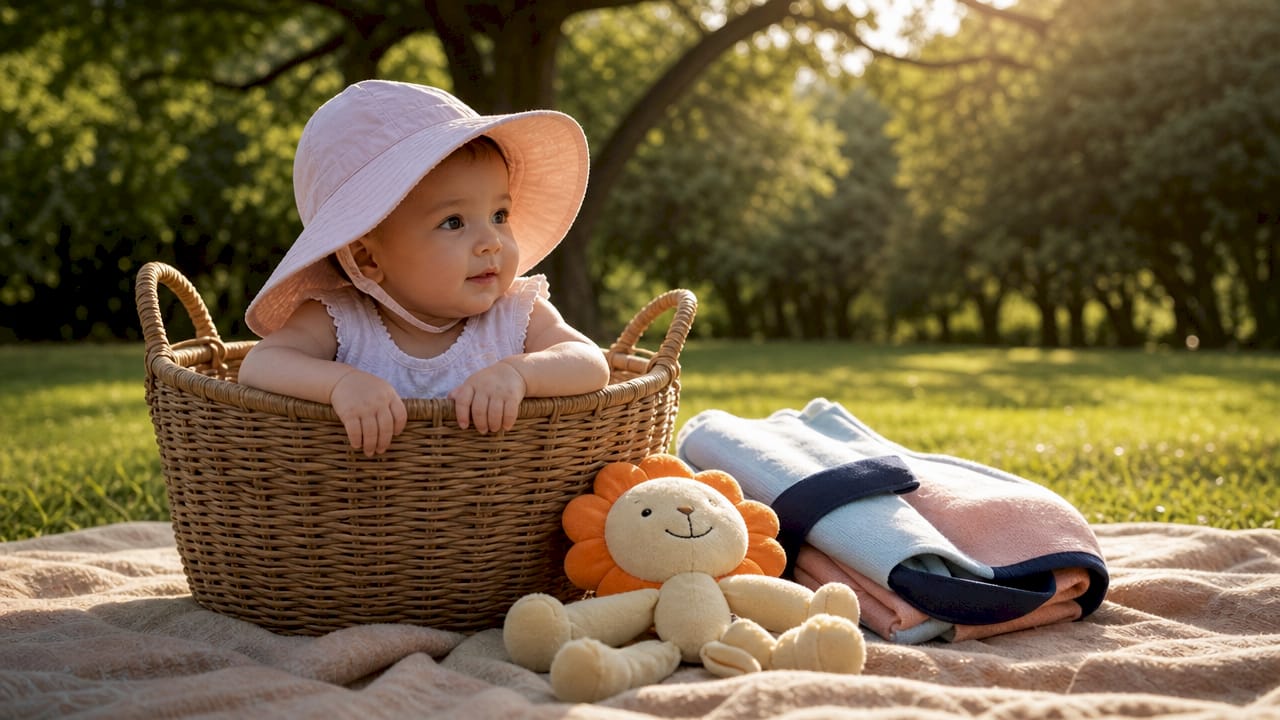
Wide-brimmed hats are the top recommendation from dermatologists. A hat with a minimum 3-inch brim shields the scalp from direct UV rays and does not wear off the way sunscreen does. Dr. Ida Orengo at Baylor College of Medicine specifically advises prioritizing physical coverage to reduce scalp skin cancer risk. For infants, look for hats with a chin strap to keep them in place.
Shade is the second line of defense, but it has real limits. Up to 80–90% of UV rays penetrate cloud cover, and umbrellas reduce UV exposure by only about 50%. Shade from trees, stroller canopies, and beach umbrellas all help, but none of them fully block UV radiation on their own.
Lightweight clothing with a UPF rating adds another layer of protection for the neck and ears around the scalp. UPF 50+ fabric blocks over 98% of UV rays. Pair it with a hat for full coverage.
- Use a hat with a 3-inch or wider brim and a chin strap
- Position your stroller so the canopy faces the sun directly
- Choose UPF 50+ clothing for neck and ear coverage
- Seek shade under trees or solid structures, not just umbrellas
- Avoid leaving babies in parked strollers in direct sun, even briefly
Pro Tip: Avoid dark-colored hats in peak heat. Light-colored, breathable fabrics like cotton or linen keep babies cooler and still provide solid UV protection when UPF-rated.
Watch for signs of overheating: flushed skin, fussiness, and reduced wet diapers. Heat stroke is a serious risk for infants, so shade and airflow matter as much as UV protection.
How and when should sunscreen be used on a baby’s scalp?
Sunscreen rules for babies depend entirely on age. Getting this wrong can cause skin reactions or false confidence in inadequate protection.
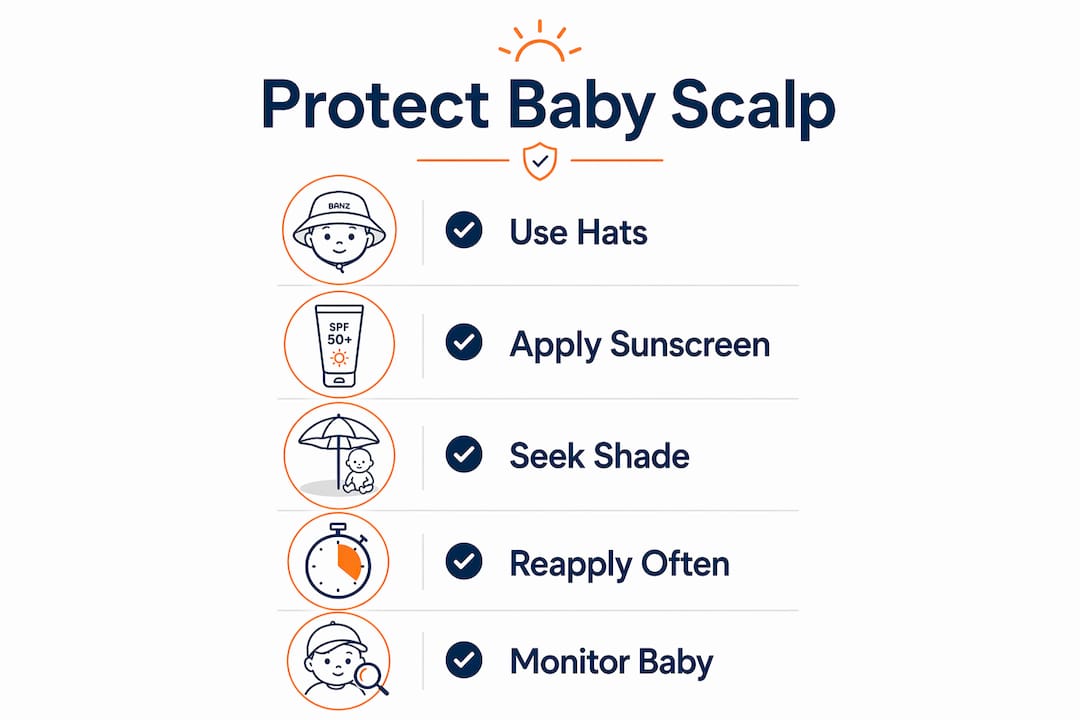
For infants under 6 months: The AAP advises against sunscreen as routine protection. Infant skin absorbs chemicals more readily, raising the risk of rashes and systemic absorption. Physical barriers remain primary for this age group. In rare cases where sun exposure is unavoidable, a pediatrician may approve limited sunscreen on small exposed areas only.
For babies 6 months and older: Mineral sunscreens with zinc oxide or titanium dioxide are the recommended choice. These sit on top of the skin rather than absorbing into it, making them gentler for sensitive infant skin. SPF 30 blocks approximately 97% of UVB rays, and broad-spectrum formulas also cover UVA rays. Always apply 15–30 minutes before going outside.
Here is how to apply sunscreen to a baby’s scalp correctly:
- Part the hair along natural lines to expose the scalp skin directly.
- Apply along the part line and hairline where the scalp is most exposed to direct sun.
- Use a stick formula for precise application without dripping into eyes. Dr. Castilla notes that sticks are cosmetically preferred for scalp areas because they leave minimal greasy residue.
- Reapply every 90–120 minutes and immediately after swimming or heavy sweating.
- Skip broken or irritated skin. Sunscreen on compromised skin increases absorption risk.
- Choose fragrance-free, hypoallergenic formulas to reduce the chance of contact dermatitis.
Pro Tip: Dr. Oyetewa Asempa’s guidance is clear: consistency beats branding. Pick a sunscreen format your baby tolerates and that you will actually use every time. A product applied routinely outperforms a premium one used inconsistently.
Never rely on hair to substitute for sunscreen. Scalp skin gets sun-damaged even through hair, and thin or fine infant hair offers almost no UV barrier at all.
When is sun exposure most risky for babies?
Timing outdoor activities around UV intensity is one of the most effective tools for sunburn prevention in infants. The risk is not uniform throughout the day.
UV radiation peaks between 10 a.m. and 2–4 p.m. depending on your region. UV protection is necessary whenever the local UV index reaches 3 or higher. The UV index is available through weather apps, the EPA’s SunWise program, and the BANZ Protect app, which provides real-time UV monitoring for caregivers.
- Schedule walks and outdoor play before 10 a.m. or after 4 p.m.
- Check the UV index before leaving the house, not just the temperature
- Use stroller canopies and UV-protective sunshades during midday outings
- Keep outdoor sessions short during summer months, especially for newborns
- Offer extra fluids to older infants during and after outdoor time
Signs of sunburn in babies: Redness, warmth, and fussiness appearing 2–6 hours after sun exposure are the earliest signals. Blistering, fever, or extreme irritability require immediate medical attention.
Clouds do not mean safety. Because up to 80–90% of UV rays pass through cloud cover, overcast days still require the same protection as sunny ones. Many parents skip hats on cloudy days, which is one of the most common and preventable mistakes in infant scalp sun safety.
What are the best products and formats to protect baby scalps comfortably?
Choosing the right gear makes consistent protection easier. The best products for UV protection for babies combine effectiveness with practicality.
| Product Type | Best For | Key Advantage | Watch Out For |
|---|---|---|---|
| Wide-brim UPF 50+ hat | All ages, daily use | No reapplication needed | Chin strap fit; overheating in thick fabrics |
| Mineral sunscreen stick | 6+ months, part lines | Precise, low-mess application | May feel waxy on fine hair |
| Mineral sunscreen spray | 6+ months, full scalp | Fast, even coverage | Avoid spraying near face; inhale risk |
| Mineral sunscreen lotion | 6+ months, hairline | Familiar format, widely available | Greasy residue in thick hair |
| Stroller canopy or sunshade | All ages, walks | Hands-free UV block | Only 50% UV reduction; not standalone |
UPF 50+ baby sun hats are the most practical daily choice. They require no reapplication and provide consistent scalp coverage that sunscreen cannot match. A hat with a wide brim and soft, lightweight fabric keeps babies comfortable while blocking UV rays effectively.
For sunscreen formats, sticks and sprays work best on the scalp. Sunscreen applied along the part line and hairline targets the areas most exposed to direct sun. Powders are a good option for oily or dark hair because they reduce greasiness while still providing protection.
- Wash UPF hats after each use to maintain fabric integrity
- Store sunscreen below 77°F to preserve SPF effectiveness
- Replace hats that show fading or stretched elastic, as UV protection degrades
- Avoid sunscreens with oxybenzone or avobenzone for infants; choose zinc oxide or titanium dioxide
Outdoor sun safety gear like UV-rated stroller canopies and umbrella attachments adds meaningful protection during walks and park visits, especially when combined with a hat.
How to care for a baby’s scalp after sun exposure
Even with the best precautions, babies sometimes get too much sun. Knowing what to do afterward reduces damage and prevents complications.
Mild sunburn on a baby’s scalp shows as redness and warmth. Mild burns typically take 3–5 days to heal, and harsh shampoos worsen inflammation during that window. Switch to a gentle, fragrance-free cleanser immediately after any sun overexposure. Avoid heat-based styling tools, and keep the scalp out of direct sun until the skin fully recovers.
- Apply a cool (not cold) damp cloth to the scalp for 10–15 minutes to reduce heat
- Use only fragrance-free, sulfate-free shampoo until redness clears
- Do not apply aloe vera directly to an infant’s scalp without pediatric guidance
- Call your pediatrician if blistering, fever, or extreme fussiness develops
- Check the scalp regularly for changing spots or moles, as scalp skin cancer can occur in sun-exposed areas
The most common parental mistake is inconsistent sunscreen reapplication. Parents apply sunscreen at the start of an outing and assume it lasts all day. SPF protection degrades with sweat, water, and time. Reapplication every 90–120 minutes is not optional.
A second common mistake is assuming hair protects the scalp. Hair does not provide sufficient UV protection. Sun penetrates part lines and thin hair areas regardless of hair density. Hats and sunscreen remain necessary even for babies with a full head of hair.
Key Takeaways
Protecting a baby’s scalp from sun requires physical barriers like UPF 50+ hats, age-appropriate mineral sunscreen, and consistent reapplication every 90–120 minutes.
| Point | Details |
|---|---|
| Hats first, always | A wide-brim UPF 50+ hat is the most reliable scalp protection for infants of any age. |
| No sunscreen under 6 months | Use physical barriers only; consult a pediatrician before applying sunscreen to young infants. |
| Mineral sunscreen for older babies | Choose zinc oxide or titanium dioxide formulas with SPF 30+ for babies 6 months and older. |
| Avoid peak UV hours | Schedule outdoor time before 10 a.m. or after 4 p.m. when the UV index drops below 3. |
| Reapply every 90–120 minutes | Sunscreen degrades with sweat and water; consistent reapplication matters more than the brand. |
What I’ve learned about baby scalp protection that most guides skip
By Shari M. Murphy
Most sun safety advice for babies focuses on arms and faces. The scalp gets a footnote. That gap is where sunburn actually happens, and I’ve seen it repeatedly: a baby comes home from a park outing with a red, tender part line while the rest of the skin looks fine.
The biggest myth I keep encountering is that a full head of hair means the scalp is safe. It is not. UV rays reach scalp skin through part lines and thin patches regardless of how much hair a baby has. A hat is not optional gear. It is the baseline.
What actually works in practice is choosing products parents will use without friction. A stick sunscreen that takes 10 seconds to apply along a part line gets used. A lotion that requires working through thick hair often gets skipped. The best sun hats for babies are the ones that stay on, breathe well, and do not overheat the child. Everything else is secondary.
Start the habit early. Babies who wear hats from the first outdoor outing accept them as normal. Waiting until they are older and then introducing a hat creates resistance that is genuinely hard to overcome.
— Shari M. Murphy
BANZ sun hats and accessories for baby scalp protection
BANZ makes UPF 50+ sun hats designed specifically for infants and young children. The hats feature wide brims, soft lightweight fabrics, and secure chin straps that keep them in place during active outdoor time.
BANZ products are trusted by over 2 million families across six continents. The BANZ baby sun hat range includes reversible UPF 50+ options that pair well with stroller canopies and UV-rated sunshades for full outdoor coverage. The free BANZ Protect app adds real-time UV index monitoring so you always know when protection is needed. For complete outdoor safety, BANZ also offers kids UV swim goggles to protect eyes during water activities.
FAQ
Can I put sunscreen on a newborn’s scalp?
No. The AAP advises against sunscreen for infants under 6 months. Use a wide-brimmed hat and shade as the primary protection instead.
What SPF should I use on my baby’s scalp?
Use a broad-spectrum mineral sunscreen with SPF 30 or higher for babies 6 months and older. SPF 30 blocks approximately 97% of UVB rays.
Does hair protect a baby’s scalp from UV rays?
Hair does not provide sufficient UV protection. Sun penetrates part lines and thin hair areas, so hats and sunscreen remain necessary regardless of hair density.
How often should I reapply sunscreen to my baby’s scalp?
Reapply every 90–120 minutes during outdoor activity, and immediately after swimming or heavy sweating.
What type of sunscreen works best on a baby’s scalp?
Stick sunscreens provide the most precise application along part lines with minimal mess. Choose fragrance-free, hypoallergenic formulas with zinc oxide or titanium dioxide.
