

Shade is a partial UV barrier that reduces but does not eliminate harmful ultraviolet radiation exposure, making it an incomplete protection strategy for children outdoors. The CDC confirms that shade alone does not provide full protection from UV radiation and recommends combining it with sunscreen and protective clothing. Cancer Council SA reinforces this, framing shade as a risk reducer rather than a primary defense. Parents and caregivers who rely only on shade are leaving children exposed to UVA and UVB rays through reflection, scattering, and fabric transmission. Understanding why shade is insufficient for full UV protection is the first step toward building a layered sun safety routine that actually works.
Why shade is insufficient for full UV protection
Ultraviolet radiation divides into two primary types that reach your child’s skin even in shaded environments. UVA rays penetrate deeply into the skin, contributing to long-term damage and premature aging. UVB rays cause sunburn and are the primary driver of skin cancer risk. Both types reach children through more pathways than most parents realize.
Direct UV exposure is only one part of the problem. Three indirect mechanisms deliver significant UV doses under shade:
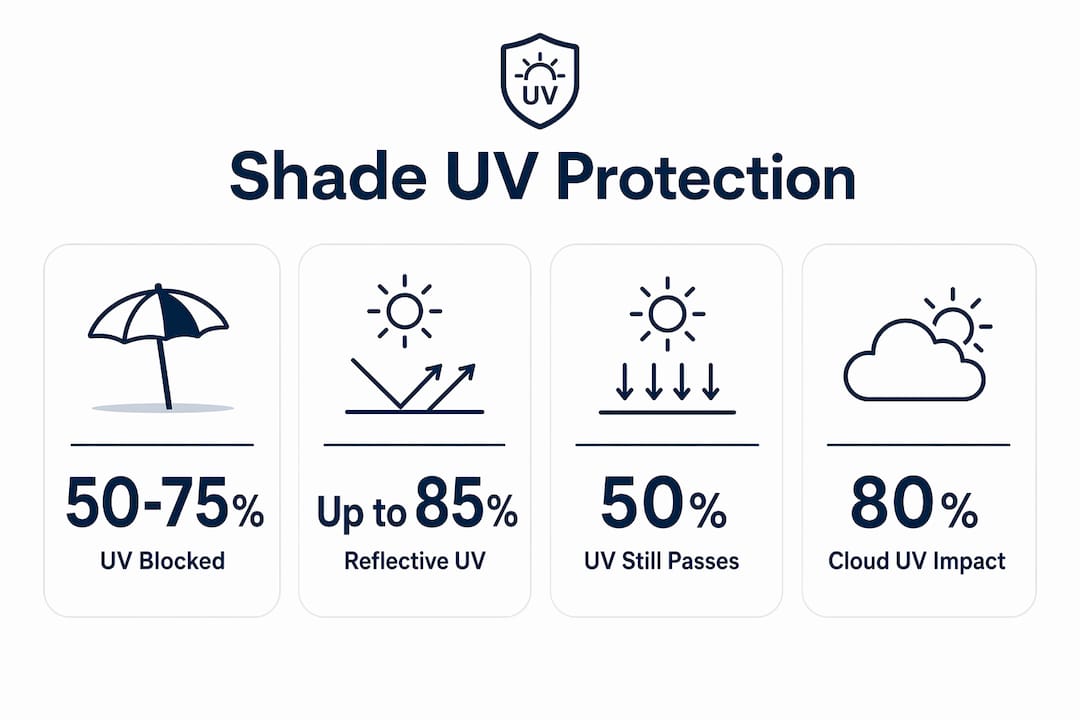
- Reflection: Surfaces like water, sand, and concrete bounce UV rays upward and sideways. Snow reflects up to 85% of UV radiation, while sand reflects 15 to 25% and water reflects 5 to 30%. A child sitting under a beach umbrella still receives substantial UV from the sand beneath them.
- Atmospheric scattering: UV rays scatter as they pass through the atmosphere. Scattering accounts for 10 to 20% of UV exposure even under shade, meaning the sky itself is a UV source.
- Transmission through fabrics: Loosely woven or degraded shade materials allow UV rays to pass directly through. A standard beach umbrella with a light-colored interior can reflect UV upward from the ground while simultaneously transmitting UV downward through the canopy.
The table below shows how different surfaces contribute to indirect UV exposure under shade:
| Surface | UV Reflection Rate | Risk to shaded child |
|---|---|---|
| Snow | Up to 85% | Very high indirect exposure |
| Water | 5–30% | High near pools, lakes, beaches |
| Sand | 15–25% | High at beaches and sandboxes |
| Concrete | 10–15% | Moderate in urban play areas |
| Grass | Less than 5% | Lower but not zero |
This data means a child playing in a shaded sandbox or sitting poolside under an umbrella still accumulates meaningful UV doses. The environment around the shade structure matters as much as the structure itself.
Do common shade structures actually protect kids?
Most parents assume a tree, patio umbrella, or pop-up canopy delivers reliable UV protection. The reality is more complicated. Shade typically blocks only 50 to 75% of harmful UV radiation, and that range depends heavily on shade quality, density, and placement. This means even in good shade, children can receive a quarter to half of the UV dose they would get in direct sunlight.
Tree canopies vary widely. A dense oak provides more UV blocking than a sparse palm, but neither eliminates indirect exposure from reflected and scattered rays. A backyard tree canopy differs notably in UV blocking compared to a dense, anchored umbrella with UV-reflective lining. Standard patio umbrellas with light-colored or aging fabric perform poorly because the fabric transmits UV and the light interior reflects ground-level UV back upward toward the child.
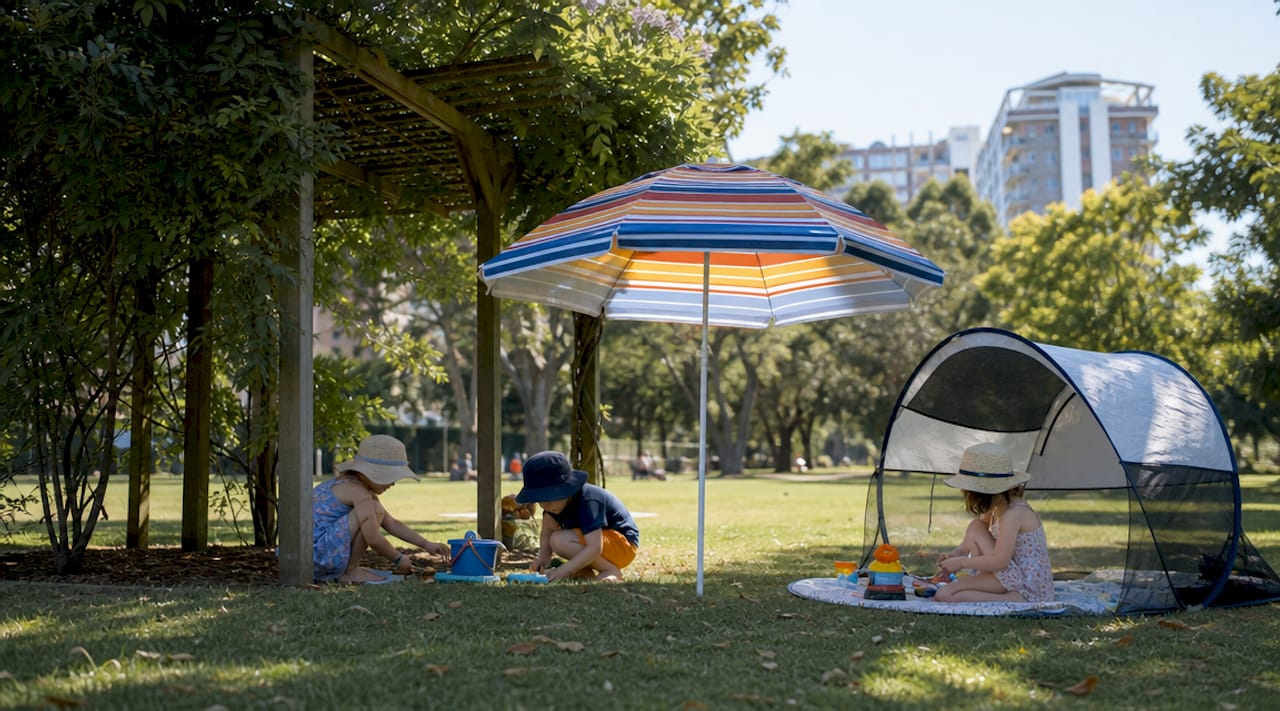
Shade movement from wind creates another overlooked hazard. A flapping or shifting umbrella creates intermittent gaps in coverage, exposing children to direct sunlight without any warning. Children absorbed in play rarely notice when the shade has shifted away from them.
Here is a practical comparison of common shade types and their UV-blocking effectiveness:
| Shade type | Approximate UV blocking | Key limitation |
|---|---|---|
| Dense tree canopy | 50–75% | Scattered rays still penetrate |
| Standard beach umbrella | 30–70% | Fabric quality and wind movement vary |
| UV-rated canopy (UPF 50+) | Up to 98% | Only blocks direct overhead rays |
| Awning or pergola | 40–70% | Reflected UV from ground still reaches child |
| Building shadow | 50–80% | Depends on sun angle and surroundings |
Pro Tip: When choosing a portable shade structure for outdoor use with children, look for products labeled UPF 50+ and choose darker, tightly woven fabrics. Anchor the structure securely so wind cannot shift coverage during play.
For more on practical shade options and their real-world limitations, BANZ has a detailed guide covering what works and what does not for toddlers specifically.
How to combine shade with other protection methods
Shade works best as one layer in a multi-strategy approach. The CDC recommends broad-spectrum sunscreen with SPF 15+ even when children are in shade, because sunscreen filters both UVA and UVB rays that indirect exposure delivers. Apply sunscreen 15 minutes before going outside and reapply every two hours, or immediately after swimming or sweating.
Follow these steps to build a complete sun safety routine for children outdoors:
- Apply broad-spectrum sunscreen. Use SPF 30 or higher on all exposed skin, including ears, the back of the neck, and the tops of feet. These areas are frequently missed and are directly exposed even under shade.
- Add UPF-rated clothing. UPF 50+ garments block up to 98% of UV radiation. Long-sleeve rashguards, swim shirts, and full-coverage swimwear protect skin that sunscreen might miss during active play. Understanding UPF 50 clothing benefits helps you choose the right garments for different activities.
- Use a wide-brim sun hat. A hat with a brim of at least 3 inches covers the face, ears, and neck. The CDC specifically notes that ears and neck remain exposed in shade and require hat or clothing coverage.
- Schedule outdoor time strategically. UV radiation peaks between 10 a.m. and 4 p.m. Moving outdoor play to early morning or late afternoon reduces UV intensity significantly, even before adding other protective measures.
- Use UV monitoring tools. The free BANZ Protect app provides real-time UV index readings so you know exactly when conditions require extra protection. A UV index of 3 or higher calls for full protective measures regardless of cloud cover or shade availability.
Pro Tip: Set a phone reminder every two hours during outdoor activities to reapply sunscreen. Children’s skin accumulates UV damage faster than adults’, and the reminder removes the guesswork from reapplication timing.
For real-world examples of how parents layer these strategies, the BANZ guide on sun protection layering for toddlers walks through specific routines by activity type.
Environmental factors that change UV exposure under shade
The setting where your child plays directly affects how much UV reaches them, even in shade. Ground surfaces like sand reflect 15 to 25% of UV, water reflects 5 to 30%, and concrete reflects 10 to 15%. These numbers mean a child at a beach playground receives more indirect UV than a child playing on a grassy backyard lawn under the same shade structure.
Urban environments present a specific challenge. Concrete and glass surfaces surround children in city parks and playgrounds, creating multiple reflection angles that deliver UV from the sides and below. A child sitting under a tree in a concrete plaza receives more indirect UV than the same child under the same tree in a grass-covered park.
Cloud cover creates a false sense of security that catches many parents off guard. Clouds reduce UV intensity but do not block it. Up to 80% of UV rays pass through light cloud cover, meaning an overcast day at the beach still requires full sun protection. Shade under clouds provides even less protection than shade on a clear day, because the diffuse light from clouds increases atmospheric scattering.
Several specific factors increase UV exposure under shade:
- Altitude: UV intensity increases approximately 10 to 12% for every 1,000 meters of elevation. Mountain playgrounds and ski areas expose children to significantly higher UV even in shade.
- Proximity to water: Pools, lakes, and ocean beaches combine water reflection with sand or concrete reflection, stacking indirect UV sources.
- Time of year: UV index peaks in summer months, but significant UV exposure occurs year-round in southern states and at higher altitudes.
- Ozone levels: Reduced atmospheric ozone increases UV penetration, a factor that varies by location and season.
Children’s skin may appear comfortable and unaffected in shade while still accumulating damaging UV doses through these indirect routes. Visible sunburn is not the only indicator of UV damage. Repeated sub-burn UV exposure contributes to long-term skin damage and increases cancer risk over time.
Key takeaways
Shade reduces UV exposure but cannot replace a full sun protection strategy for children outdoors.
| Point | Details |
|---|---|
| Shade blocks 50 to 75% of UV | Up to half of harmful radiation still reaches children through reflection and scattering. |
| Indirect UV is the hidden risk | Sand, water, and concrete reflect UV upward into shaded areas, bypassing overhead coverage. |
| Fabric quality determines shade effectiveness | Loosely woven or aging shade materials transmit significant UV directly through the canopy. |
| Layering is the only complete strategy | Combining sunscreen, UPF clothing, wide-brim hats, and shade provides the most reliable protection. |
| Environment changes the risk level | Beach and urban settings reflect more UV than grass, requiring extra protective measures in those locations. |
Why parents keep getting this wrong
By Shari M. Murphy
After years of covering children’s health and outdoor safety, the pattern I see most often is not negligence. It is misplaced confidence. Parents position their child under a tree or umbrella and genuinely believe the job is done. The shade looks solid. The child looks comfortable. Nothing feels wrong.
The problem is that UV damage is invisible in the moment. A child can accumulate a meaningful UV dose on a partly cloudy day under a beach umbrella and show no sunburn until hours later. By then, the damage is already done.
What I find works in practice is treating shade as the starting point, not the finish line. You set up the umbrella or find the tree, and then you still apply sunscreen, still put on the hat, still check the UV index. The layered approach feels like more work until it becomes routine. After a few weeks, it takes less than five minutes and becomes as automatic as buckling a car seat.
The other shift that matters is moving away from reactive protection. Most parents apply sunscreen after they notice the sun is strong. The better habit is applying it before leaving the house, every time, regardless of how the sky looks. That single change closes most of the gap between partial and full UV protection.
— Shari M. Murphy
Protect your child beyond the shade
Shade is a starting point. BANZ builds the rest of the protection layer.
The BANZ rashguard and swim diaper set delivers UPF 50+ coverage for babies and toddlers during water play, blocking up to 98% of UV radiation that shade and sunscreen alone cannot cover. For eye protection near water and in bright outdoor settings, the BANZ UV swim goggles add anti-fog UV protection designed for active kids. BANZ products are trusted by over 2 million families across six continents, and the free BANZ Protect app gives you real-time UV index readings so you know exactly when your child needs more coverage. Browse the full outdoor sun safety gear guide to find the right combination for your child’s activities.
FAQ
Does shade provide any UV protection at all?
Yes, shade reduces UV exposure but typically blocks only 50 to 75% of harmful radiation. It is a useful risk reducer but not a complete barrier on its own.
Can children get sunburned while sitting in the shade?
Yes. UV rays reach shaded areas through reflection from sand, water, and concrete, as well as through atmospheric scattering. The CDC confirms that sunscreen is needed even in shade to protect against these indirect exposure routes.
What is the most effective sun protection for kids outdoors?
The most effective approach combines shade, broad-spectrum SPF 30+ sunscreen, UPF 50+ clothing, and a wide-brim hat. No single method provides complete protection. The CDC recommends using all of these measures together for children during outdoor activities.
Does cloud cover make shade safer for children?
No. Up to 80% of UV rays pass through light cloud cover, and clouds increase atmospheric scattering, which raises indirect UV exposure under shade. Full sun protection measures apply on overcast days the same as on sunny ones.
Which shade structures block the most UV?
UPF 50+ rated canopies and tightly woven, dark-colored fabrics block the most UV, up to 98% of direct overhead rays. Standard beach umbrellas with light-colored or aging fabric allow significant UV transmission and provide far less protection than their appearance suggests.