

Rinse your tumbler immediately after every use, then hand-wash it with warm water, mild dish soap, and a soft bottle brush. Once a week, run a deeper clean using baking soda or white vinegar to break up stains and mineral film. Do this consistently and a stainless tumbler will stay odor-free and look new for years.
Three things will shorten its life fast:
- Bleach, which strips the chromium oxide layer that keeps stainless steel from rusting
- Steel wool or abrasive scrubbers, which scratch the interior and create spots where bacteria collect
- Repeated dishwasher cycles, unless the care card explicitly says “dishwasher-safe”
Key Takeaways
Consistent daily rinsing paired with a weekly baking-soda or vinegar deep clean keeps stainless tumblers odor-free and preserves their insulation far longer than sporadic dishwasher cycles ever will.
| Point | Details |
|---|---|
| Rinse immediately | Rinsing right after use prevents most stains and odors before they set in. |
| Deep clean weekly | Use a 2-tablespoon baking-soda soak or a vinegar rinse to clear mineral film and residue. |
| Disassemble the lid | Remove and soak the gasket separately since it traps oils and proteins that cause odor. |
| Avoid bleach and steel wool | Both damage the protective steel finish and raise the risk of rust and pitting. |
| Choose care-friendly drinkware | BANZ’s Picnic Wine Insulated Stainless Tumbler is designed for the same simple hand-wash and pantry-recipe routine covered in this guide. |
Table of Contents
- How Do You Clean Stainless Steel Tumblers Every Day?
- What’s the Best Way to Deep Clean a Stainless Steel Cup?
- How Do You Clean Tumbler Lids and Gaskets?
- How Do You Get the Smell Out of a Water Bottle or Tumbler?
- What Should You Never Do to a Stainless Tumbler?
- Who Wrote This Guide and What Backs the Advice?
- Is the Standard Cleaning Advice for Tumblers Actually Right?
- Keep Family Picnics Cleaner With BANZ Gear Built for Real Use
- Sources
How Do You Clean Stainless Steel Tumblers Every Day?
A tumbler that gets rinsed the moment it’s empty almost never needs a fight later. Coffee, smoothies, and juice start staining and smelling within hours, not days, so the habit that matters most is speed, not intensity.
Here’s the daily routine that works for busy parents managing multiple kids’ cups:
- Rinse with warm (not boiling) water right after use. Boiling water can warp gaskets over time and doesn’t clean any better than warm water plus soap.
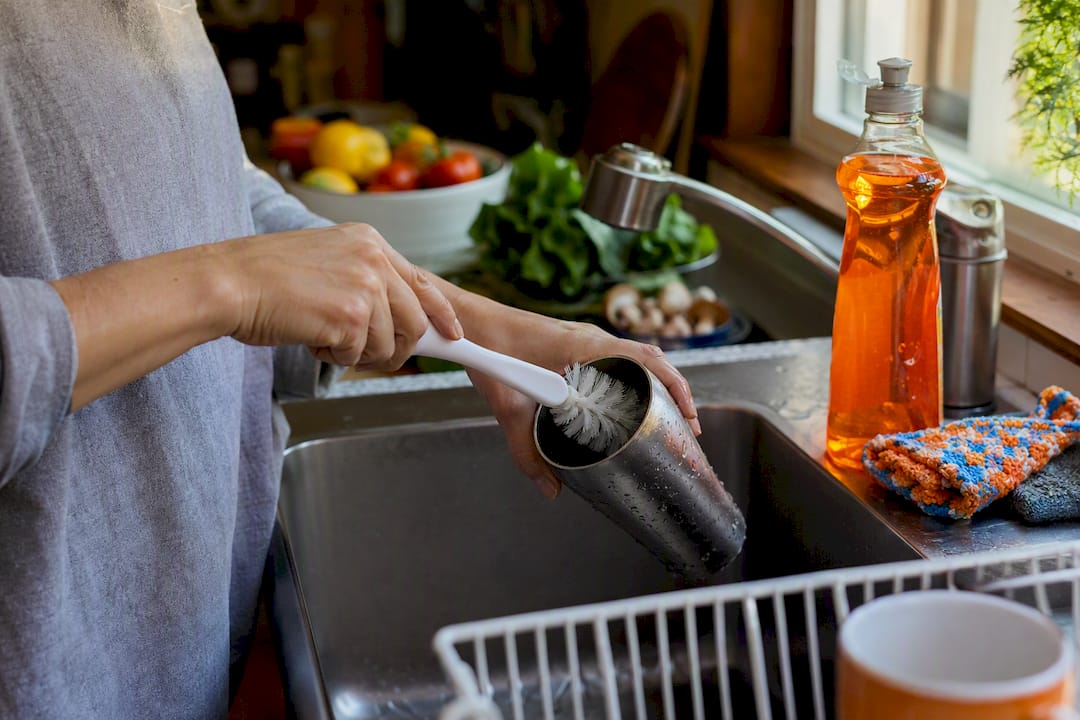
- Wash with a few drops of mild dish soap and a soft, long-handled bottle brush that reaches the bottom of tall tumblers.
- Pull the lid apart and clean the gasket separately. Food and drink residue hides in the seams where the seal meets the lid body.
- Run a straw brush through any straw or spout at least a couple of times a week, since these narrow channels trap milk and juice fastest.
- Air-dry upside down with the lid off. Sealing a damp tumbler traps moisture inside the double wall seam and invites mildew.
A soft bottle brush, a thin straw brush, and a microfiber cloth cost less than $10 combined and cover nearly every cleaning task a family tumbler needs. Skip anything abrasive.
Pro Tip: Keep a dedicated bottle brush by the sink for tumblers only. Using the same brush on greasy pans transfers oil residue that dulls the interior finish and makes odors harder to fully rinse away.
What’s the Best Way to Deep Clean a Stainless Steel Cup?
Weekly deep cleaning handles what daily washing leaves behind: coffee and tea rings, turmeric or berry stains, dried smoothie film, and the chalky mineral deposits that build up from tap water. Pantry staples handle almost all of it.
For general staining, dissolve baking soda in warm water inside the tumbler and let it soak for a suitable period, such as 30 minutes to overnight. Baking soda works as a gentle abrasive and odor absorber, so it lifts residue without scratching the interior. Scrub lightly with your bottle brush and rinse thoroughly.
Set-in stains, like the ring turmeric or beet-based smoothies leave, respond better to a paste. Mix baking soda with a small amount of hydrogen peroxide until it forms a thick paste, apply it directly to the stain, and let it sit for 10 to 15 minutes before scrubbing and rinsing well. Don’t leave peroxide paste on longer than that. It’s an oxidizer, and prolonged contact isn’t necessary for the job it’s doing.
Mineral film from hard water calls for a different fix:
- Fill the tumbler with equal parts white vinegar and warm water
- Let it sit for 10 to 15 minutes
- Rinse two or three times to clear the vinegar smell completely
For fresh berry or turmeric splashes, rub a lemon wedge dipped in salt directly on the stain, then rinse. Repeat once if the color hasn’t lifted. One rule matters more than any recipe: never combine baking soda and vinegar in the same soak. The fizzing reaction cancels out the cleaning power of both.
How Do You Clean Tumbler Lids and Gaskets?
Lids and silicone gaskets cause more lingering odor complaints than the tumbler body itself, because oils and proteins settle into the seams where the gasket meets the lid.
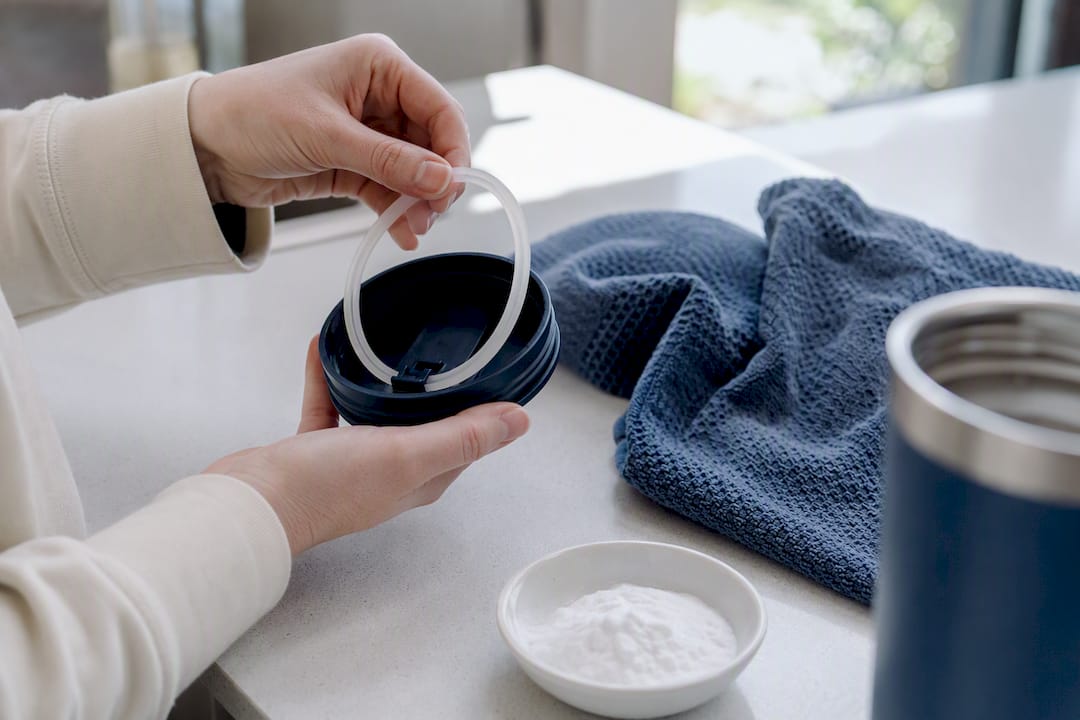
- Pop the gasket out if your lid design allows removal. Most twist-lock and press-fit lids do.
- Soak the gasket for 30 minutes in the same baking-soda solution you use for the tumbler, or in a straight vinegar soak if odor is heavy.
- Scrub the threads, vents, and any small crevices with an old toothbrush. These spots trap far more residue than they look like they could.
- Rinse everything under running water and let each piece dry completely on a towel before reassembling.
Silicone gaskets commonly trap oils and milk proteins that plain rinsing never fully removes. If mold or a musty smell comes back after two thorough cleanings, replace the gasket rather than keep fighting it. Most tumbler brands sell replacement gaskets separately for a few dollars.
Pro Tip: Never reassemble a lid while any piece is still damp. Trapped moisture between the gasket and the lid body is the single biggest cause of the mildew smell parents can’t seem to clean away.
How Do You Get the Smell Out of a Water Bottle or Tumbler?
Lingering odor almost always comes from one of three places: the gasket, the threaded lid channel, or the tumbler interior itself. A quick test tells you which. Sniff the empty tumbler body alone, then sniff the lid and gasket separately. Whichever smells worse is where to focus.
For interior odors, a baking-soda soak left overnight breaks down bacterial buildup better than a quick rinse ever will. For sour or musty smells tied to bacteria or mineral buildup, a straight vinegar soak for 15 to 20 minutes works, followed by two rinses to clear the vinegar scent itself.
Citrus peels offer a gentler, natural option. Drop a few orange or lemon peels into the tumbler, fill with warm water, seal, and let it sit for up to 24 hours. Pull the peels out before that window closes. Left longer, they can start fermenting instead of freshening.
Persistent odor that survives interior cleaning almost always points back to the gasket. Small crevices in threaded lids hold onto fats and proteins that a full-tumbler soak simply can’t reach.
What Should You Never Do to a Stainless Tumbler?
Skip the dishwasher unless the care card specifically says dishwasher-safe. High heat and harsh detergents can degrade the vacuum seal between the double walls over repeated cycles, which is what kills insulation performance long before the steel itself wears out.
Bleach and metal scouring pads are off the list entirely, no exceptions. Bleach strips the protective chromium layer, and steel wool scratches the interior enough to create spots where bacteria and rust can take hold.
Keep care simple:
- Air-dry completely before storing, lid off
- Store in a breathable spot, never sealed while damp
- Daily rinse and wash for everyday use; a full baking-soda or vinegar deep clean once a week
- Heavy daily use (multiple fill-ups, sports, travel) may call for a deep clean every four or five days instead
Who Wrote This Guide and What Backs the Advice?
This guide was written by Shari M. Murphy, drawing on established manufacturer care standards for insulated stainless drinkware.
BANZ built its reputation on protective gear that has to hold up to daily family use, from UPF 50+ sun protection to noise-reduction earmuffs trusted by more than 2 million families across six continents. That same durability mindset applies to the drinkware families pack for picnics and outings.
If you’re outfitting a family outing, the Picnic Wine Insulated Stainless Tumbler is built with the same care-friendly construction covered in this guide, and it pairs naturally with a waterproof foldable picnic blanket for cleanup between snacks and sunscreen. Clean tumblers and a wipeable blanket go hand in hand for keeping picnic setups sanitary.
Is the Standard Cleaning Advice for Tumblers Actually Right?
Most tumbler care advice online treats cleaning as a one-size-fits-all checklist. It isn’t. The families who pack tumblers for kids’ sports practices, beach days, and long car rides face a different problem than someone using one tumbler at a desk: multiple cups, multiple lids, and multiple chances for a gasket to grow mold while nobody notices.
The conventional wisdom undersells gasket maintenance. Most guides mention it once and move on, but in practice, the gasket is where nearly every stubborn odor complaint actually originates. If you only take one habit from this guide, make it this: disassemble the lid weekly, not just when something smells off. By the time you can smell it, bacteria has had days to build up in a spot you can’t fully see.
Parents juggling gear for more than one child should prioritize speed over intensity. The pantry recipes matter, but they’re a backup plan, not a substitute for the habit of rinsing before residue sets.
— Shari M. Murphy
Keep Family Picnics Cleaner With BANZ Gear Built for Real Use
BANZ makes outdoor family gear that’s built to be cleaned, not babied. If you’re already following the routines in this guide, an insulated tumbler that resists staining in the first place saves you a step every week.

The Picnic Wine Insulated Stainless Tumbler, 12oz uses the same smooth, low-porosity stainless finish that responds well to baking-soda and vinegar cleaning, so stains lift instead of setting in. Pair it with the Picnic Gear collection for blankets and coolers that hold up to the same wipe-down, rinse, and air-dry routine your tumblers already follow. For colder drinks on the go, the Picnic Insulated Cooler Bag keeps everything at temperature between stops.
Browse the collection and add a tumbler that’s easy to keep spotless before your next family outing.
Sources
- Chillymoose
- How to Clean a Stainless Steel Tumbler: A Complete Guide for Every Mess
- How To Care For Your Tumbler | Arctic Tumblers
- How to Clean Luxury Stainless Steel Tumblers the Right Way – Potable, Inc.