

Pick a cooler bag for day trips, beach mornings, and picnic outings where you need to grab and go. Pick a hard cooler for multi-day camping, boat trips, or anywhere ice retention matters more than portability. The trade-off is simple: cooler bags win on weight and convenience, hard coolers win on performance. For parents packing snacks and drinks for a few hours outdoors, a soft-sided cooler bag like BANZ’s Picnic Insulated Cooler Bag covers the job without the bulk.
TL;DR:
- Soft coolers offer easier portability and storage, making them ideal for short outings, while hard coolers provide longer ice retention for multi-day trips.
- Ice lasts about 24 to 36 hours in soft coolers and up to several days in premium hard coolers, with insulation quality being the key factor.
- Backpack straps and wheels significantly improve ease of transport for large, heavy coolers, with soft bags often being lighter and more flexible.
- For typical family outings, a 12 to 20-quart soft cooler is sufficient, while larger hard coolers are better suited for extended camping or boat trips.
- Families should consider multiple cooler types based on activity duration and carrying needs, rather than relying solely on ice retention figures.
Table of Contents
- Soft Cooler vs Hard Cooler: What Actually Differs
- How Long Does Ice Actually Last in Each Cooler Type?
- Which Cooler Is Easier to Carry and Store?
- What Size Cooler Do You Actually Need?
- When Do You Actually Need a Hard Cooler?
- How Do You Clean and Store Either Cooler Type?
- Why BANZ Cooler Bags Fit the Family Day-Trip Brief
- Which Advice Actually Holds Up for Families?
- Grab a Cooler Bag Built for Real Family Outings
- Sources
Soft Cooler vs Hard Cooler: What Actually Differs
The core difference comes down to shell material, and everything else follows from that one choice. Hard coolers use rigid, rotomolded plastic walls, often two to three inches thick, with foam insulation sealed inside. Cooler bags use flexible fabric exteriors, usually nylon or polyester, wrapped around a thinner foam or foil-lined liner. That construction gap explains almost every other difference on this list.
- Insulation approach: Hard coolers trap cold air behind thick rigid walls; cooler bags rely on thinner insulation plus a tight-fitting zipper or roll-top closure.
- Closure systems: Hard coolers use latching, gasketed lids that create a near-airtight seal. Cooler bags depend on zippers or Velcro, which let in more warm air over time.
- Impact resistance: A hard cooler can survive being dropped from a truck bed or used as a step stool. A cooler bag cannot take that kind of abuse without damaging the liner.
- Footprint and storage: Hard coolers keep a fixed shape whether full or empty. Cooler bags fold flat, which matters if you’re short on trunk space or closet room.
- Price range: Cooler bags typically run $20 to $80 depending on size and brand. Hard coolers span a much wider range, from $30 for basic foam models to $300 to $500 for premium rotomolded units.
The decision trigger is usually storage versus performance. If you’re working with limited garage or car space, or you only need cold storage for a few hours, the bag wins. If you need ice to last through a weekend without a refill, the hard shell earns its bulk.
How Long Does Ice Actually Last in Each Cooler Type?
Soft coolers typically hold ice for about 24 to 36 hours under normal conditions, according to Tasting Table’s comparison of soft and hard coolers. Premium hard-sided coolers can extend that to 48 hours and sometimes several days, based on field testing from Outside that tracked top rotomolded models under real trip conditions.
By the Numbers: Consumer Reports ran chamber tests at 91 to 118 degrees Fahrenheit with continuous temperature logging over 72 hours, giving a repeatable baseline for comparing ice retention across cooler models rather than relying on manufacturer claims alone.
Wall thickness and lid seal quality drive most of the gap between cooler types, but several controllable factors matter just as much:
- Ice type: Block ice melts slower than cubes because it has less surface area exposed to warm air.
- Pre-chilling: A cooler that starts cold holds ice longer than one pulled straight from a hot garage.
- Air space: Empty space inside the cooler warms up fast and speeds melting, so packing tight helps.
- Number of openings: Every time the lid comes off, cold air escapes and warm air rushes in.
- Placement: Direct sun on a dark lid can add several degrees to interior temperature within an hour.
Coleman’s cooler guidance notes that pairing block ice with a layer of cubes on top, minimizing lid openings, and pre-chilling both the cooler and its contents are the three moves with the biggest real-world impact, regardless of which cooler type you own. That advice matters for food safety, too: perishables need to stay below 40 degrees Fahrenheit to avoid spoilage, so a cooler that’s losing its chill fast is a bigger risk on a hot afternoon than most people realize.
Which Cooler Is Easier to Carry and Store?
How you’ll physically move the cooler should weigh as heavily in your decision as ice performance. A loaded hard cooler can hit 40 or 50 pounds once you add ice and drinks, and most rely on side handles or wheels rather than a shoulder strap. Cooler bags rarely exceed 15 to 20 pounds fully packed, and many come with backpack straps or a single shoulder strap for hands-free carrying.
- Backpack straps: Best for trailheads, beach walks, or any route without a paved path.
- Shoulder strap: Fine for short distances, like parking lot to picnic table.
- Telescoping handles and wheels: Necessary once you’re hauling 30-plus pounds of ice and food over any real distance.
- Fixed side handles: Work for two-person carries but strain a single parent managing kids and gear at the same time.
OutdoorGearLab’s cooler testing points out that for most families, ergonomic details like telescoping handles and backpack straps end up mattering more day-to-day than a cooler’s maximum theoretical ice life. Storage tells a similar story. Cooler bags collapse flat and tuck into a closet shelf or under a car seat. Hard coolers hold their shape year-round, though some rotomolded designs now collapse for storage, splitting the difference for anyone tight on space.
Pro Tip: If you’re a parent juggling kids, snacks, and beach chairs solo, a backpack-style cooler bag frees up both hands — just like the Ultimate Hockey Mom Tote Bag Checklist suggests for hands-free carry and efficient packing at family events. Save the wheeled hard cooler for trips where someone else is helping carry gear.
What Size Cooler Do You Actually Need?
Matching capacity to trip length keeps you from hauling a half-empty cooler or running out of ice room. A few rules of thumb make this easier:
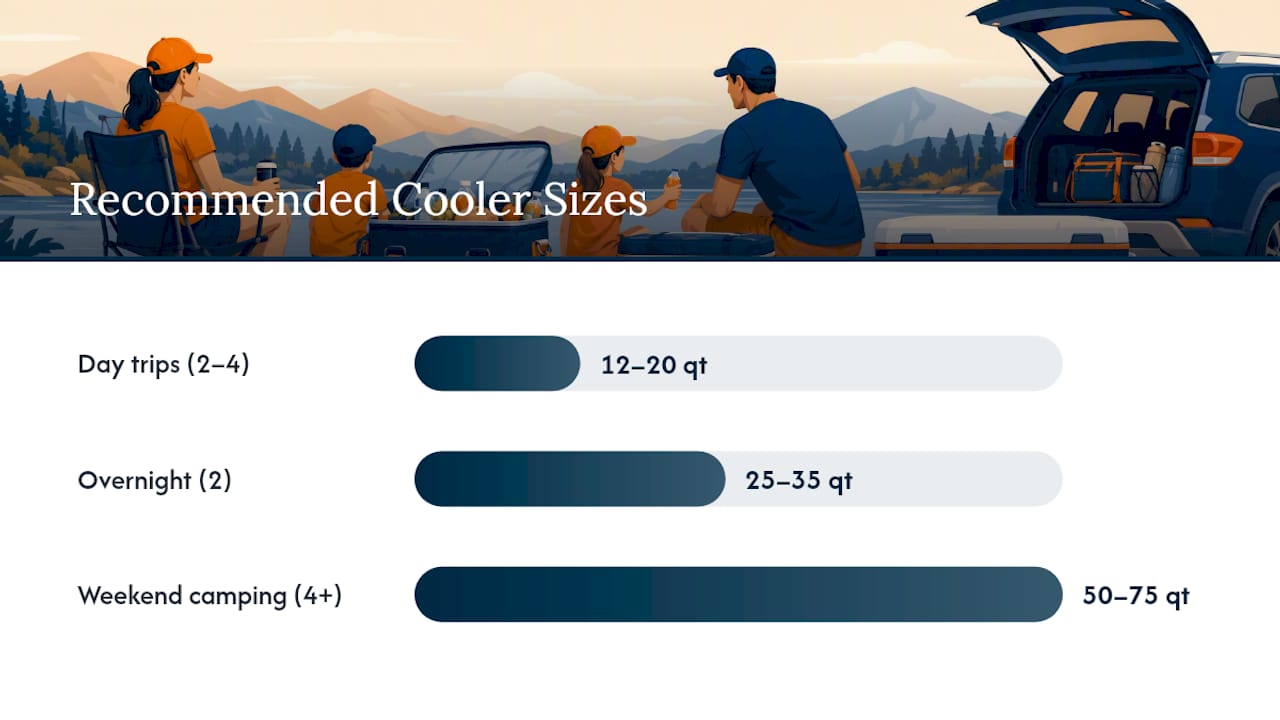
- Day trips (one family, a few hours): A 12 to 20-quart soft cooler bag handles drinks, sandwiches, and fruit for two to four people without excess bulk.
- Overnight trips (two people): A 25 to 35-quart cooler, soft or hard, covers a day’s food plus breakfast the next morning if you pack efficiently.
- Weekend group camping (four-plus people, two to three nights): A 50 to 75-quart hard cooler gives you enough ice volume to actually last through day three.
Dead space is the enemy of ice retention in any size cooler. Use small containers to fill gaps between food items, and compress soft-sided contents like bread or bagged produce so air pockets don’t form around them. Pack in layers: ice on the bottom, dense cold items like meat and dairy in the middle, and quick-grab snacks or drinks near the top where you’ll reach for them most.
A family beach day might look like a cooler bag packed with two ice packs on the bottom, sandwiches wrapped tight in the middle, and juice boxes on top for easy access. A two-person overnight setup could use a mid-size hard cooler with a block of ice on the bottom, breakfast items in sealed containers above it, and drinks tucked along the sides. A weekend camping group usually does best with one large hard cooler dedicated to ice and perishables, plus a separate soft cooler bag for daily snacks that gets refilled from the main unit.
When Do You Actually Need a Hard Cooler?
Certain situations make a hard cooler the only practical choice, no matter how much you value portability. Camp seating is one of them. A rotomolded cooler with a flat, reinforced lid doubles as a stool or a food-prep surface, something Carryology’s cooler roundup points to as a real reason campers pay extra for rugged models.
- Bear country camping: National parks in bear habitat often require Interagency Grizzly Bear Committee (IGBC) certified containers, a standard that soft coolers generally cannot meet.
- Boat trips: Marine environments call for secure tie-down points and corrosion-resistant hardware, both standard on hard coolers but rare on fabric bags.
- Extended off-grid trips: Multi-day backcountry stays without a store nearby put a premium on structural durability and sustained ice retention.
- Middle-ground needs: Collapsible hard coolers or reinforced heavy-duty soft coolers can bridge the gap for people who want some rigidity without full bulk.
If your trips involve any of these scenarios regularly, the extra weight and cost of a hard cooler pays for itself over years of use.
How Do You Clean and Store Either Cooler Type?
Cleaning routines differ slightly between the two, but both take less than 10 minutes.
- Soft cooler bags: Wipe the liner with mild soap and warm water, rinse, and hang to air-dry completely before folding.
- Hard coolers: Scrub the interior with soap and water, paying attention to corners and drain plugs, then rinse and let dry with the lid propped open.
- Odor control: A dry baking soda soak overnight or a few hours in direct sunlight neutralizes most lingering smells in either type.
- Storage: Fold soft coolers flat for closet or shelf storage; store hard coolers with the lid cracked open to prevent trapped moisture and mildew.
- Gasket care: Wipe rubber seals on hard coolers periodically and check for cracking, since a failing gasket is usually what kills ice retention on an otherwise solid cooler.
Skipping the drying step is the most common mistake with both types, and it’s the fastest way to end up with a musty cooler by the next trip.
Why BANZ Cooler Bags Fit the Family Day-Trip Brief
BANZ built its reputation on protecting kids outdoors, starting with UPF 50+ sun gear and NRR 26dB hearing protection earmuffs, and that same family-first thinking carries into its outdoor accessories lineup. The brand’s free BANZ Protect app already helps caregivers track real-time UV and noise exposure, so a cooler bag built for the same day-trip routines fits naturally alongside that mission.
- The brand serves families with gear designed around real outdoor use, not just aesthetics.
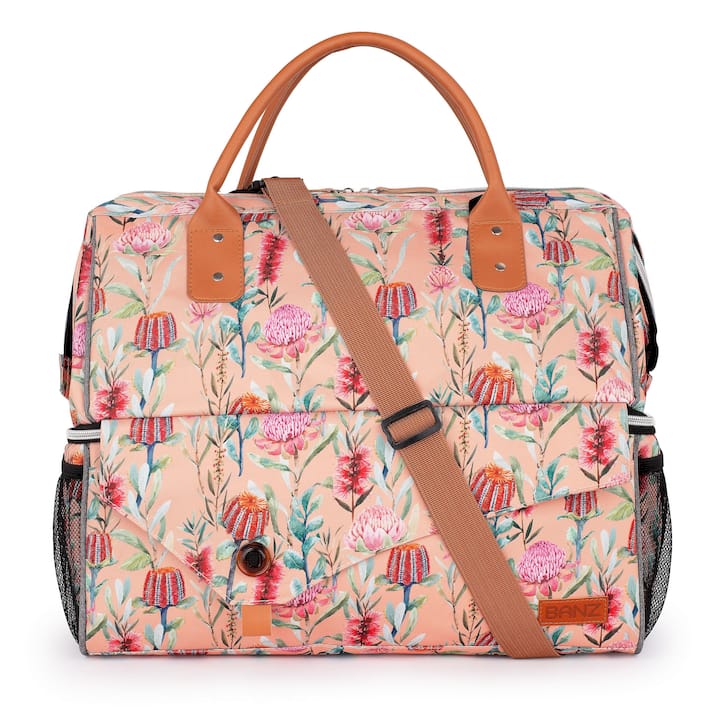
- The Picnic Insulated Cooler Bag targets picnics, beach mornings, and park outings where portability and quick packing matter more than multi-day ice life.
- The Lunch Insulated Cooler Bag suits shorter outings, like a toddler’s snack bag or a compact grab-and-go option for errands and short drives.
- Both are sized for the kind of packing a caregiver actually does: juice boxes, snacks, and a few cold packs rather than a weekend’s worth of meat and ice.
For guidance on what else belongs in your bag alongside the cooler, BANZ’s guide to packing a diaper bag with sun essentials covers the rest of the outing checklist.
Which Advice Actually Holds Up for Families?
Most cooler guides treat ice retention as the only number that matters, and that’s where they get it wrong for families. A cooler that holds ice for five days is worthless if a parent can’t carry it one-handed while also managing a toddler and a beach umbrella. The research backs this up: ergonomic details like backpack straps and telescoping handles routinely outrank maximum ice life in how people actually rate their cooler experience.
The bigger mistake I see in buying advice is treating this as a single purchase decision instead of a two-cooler household reality. Most families don’t need to choose once. They need a lightweight bag for the 90% of outings that last a few hours, and they might eventually add a hard cooler for the rare multi-day trip. Buying the wrong one first, usually an oversized hard cooler for what turns out to be a lifetime of park visits and beach mornings, is the actual expensive mistake.
If you’re a parent weighing this decision, start with how you actually spend your weekends, not with the biggest ice-retention number you can find. For nearly every family day trip, portability wins.
— Shari M. Murphy
Grab a Cooler Bag Built for Real Family Outings
BANZ makes the day-trip choice easy, not complicated. The Picnic Insulated Cooler Bag handles beach mornings, park picnics, and backyard gatherings without the weight of a hard-shell cooler. The Lunch Insulated Cooler Bag is the compact pick for toddler snacks, short errands, or anyone who wants a grab-and-go option that doesn’t take up trunk space.
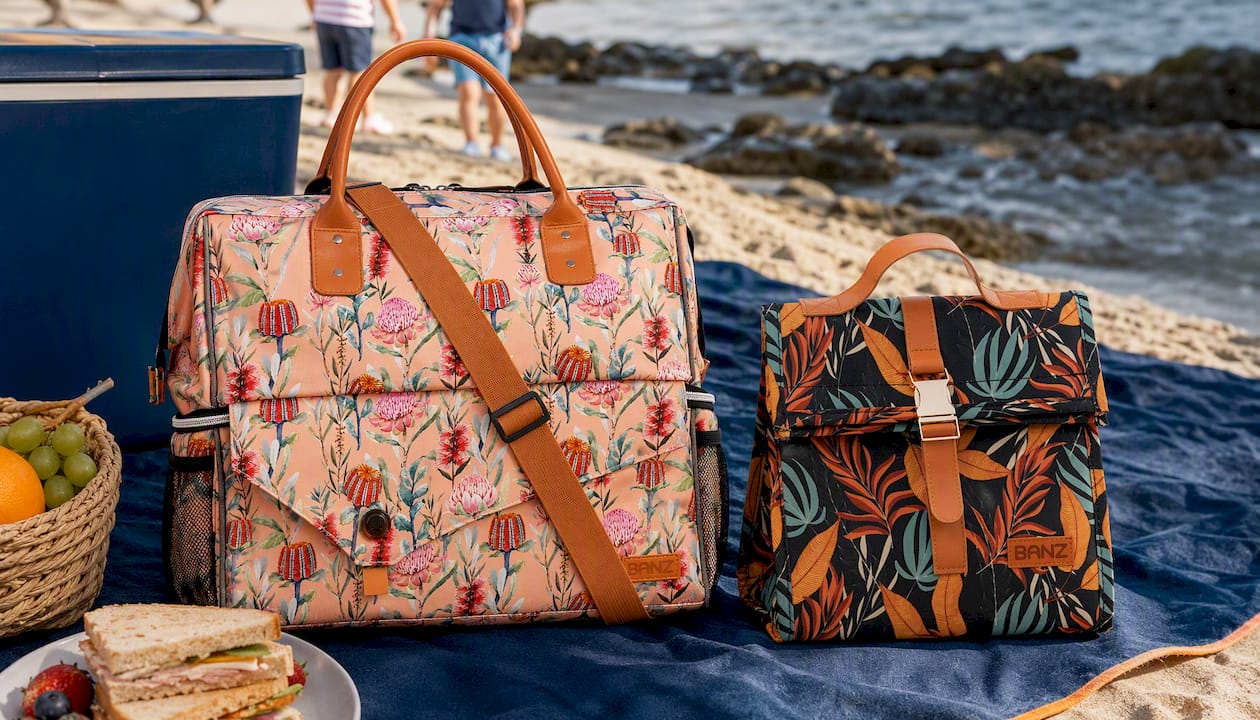
Both bags pair naturally with BANZ’s sun and hearing protection gear, since a caregiver already thinking about UPF-rated hats and NRR-rated earmuffs for outdoor trips will want the rest of the packing list handled just as carefully. Check out the current selection and shop the Picnic Insulated Cooler Bag now to see which size fits your next outing.
Sources
- The best coolers — Outside
- The best coolers — Consumer Reports
- Are soft-sided coolers as good as hard coolers? — Tasting Table
- Soft vs Hard Coolers: What’s the Difference? — Coleman