

Protecting toddler ears from summer sun and loud noise is a two-part job that most parents only solve halfway. Toddlers’ ears are exposed to UV radiation every time they step outside, and noise above 85 dB can cause permanent hearing damage at events like fireworks shows and outdoor concerts. The good news: a layered approach using UPF-rated hats, mineral sunscreen, and properly fitted earmuffs covers both risks at once. This guide gives you the exact methods, product features, and daily habits to keep your toddler’s ears safe all summer long.
How to protect toddler ears from summer sun exposure
Sun protection for toddler ears starts with physical barriers, not sunscreen. Dermatologists rank shade and clothing as the primary daily defense, with sunscreen as a secondary layer for skin that clothing cannot cover. Ears fall into that second category, which is why most parents underprotect them.
Choosing the right hat
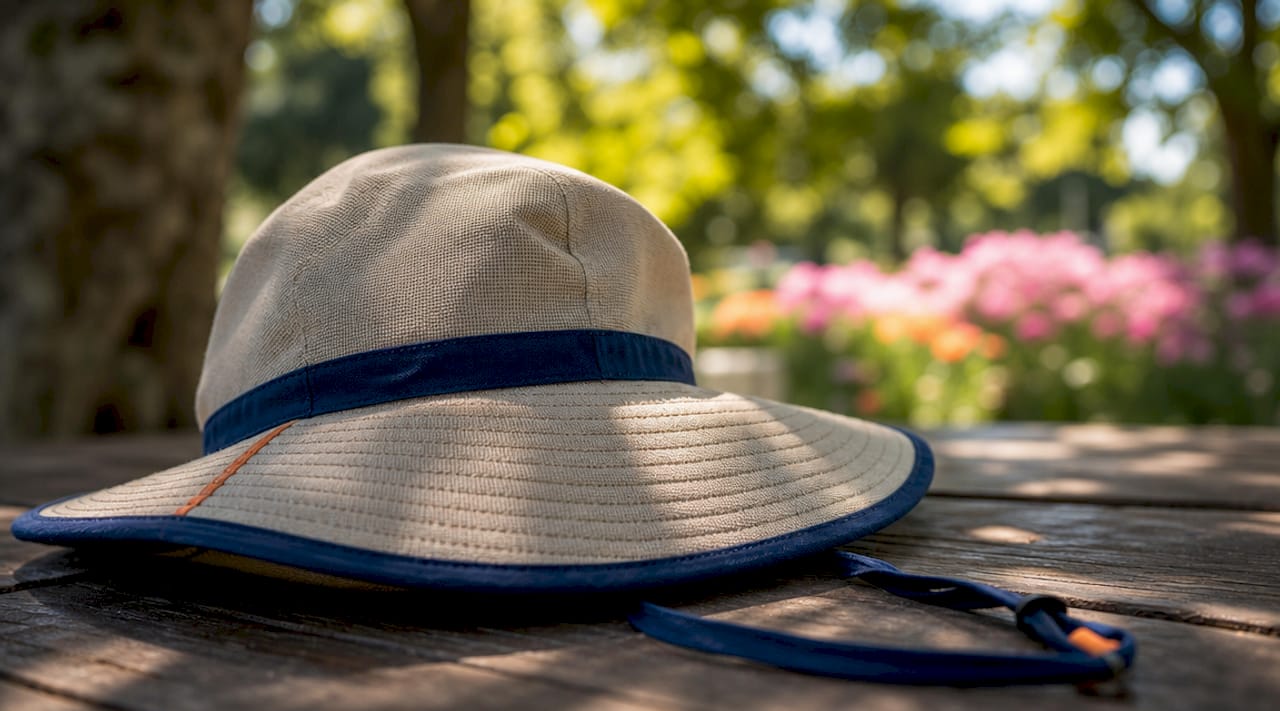
A hat is the single most effective tool for shielding toddler ears from UV rays. Wide-brimmed hats with at least a 4-inch brim and a chin strap are the standard recommendation for toddlers. The chin strap matters because toddlers pull hats off constantly. Without it, the hat is off within minutes and the ears are exposed. Look for hats rated UPF 30 or higher for reliable UV shielding. Bucket-style hats with full-circle brims cover the ears from multiple angles and are harder for toddlers to remove than baseball caps.
Applying sunscreen to toddler ears
Parents frequently miss the ears when applying sunscreen. The outer ear, the rim, and the area just behind the ear are all high-exposure zones that rarely get covered. Stick-format mineral sunscreens allow precise, mess-free application on these small surfaces without getting product in the eyes. Zinc oxide and titanium dioxide formulas sit on top of the skin rather than absorbing into it, making them the safer choice for toddlers.
Apply sunscreen to the ears before going outside, not after. Use approximately 1/4 teaspoon for the face and neck area, and reapply every two hours or immediately after water exposure. That reapplication window is shorter than most parents expect, especially on a hot day when kids are sweating.
Key steps for ear-specific sunscreen application:
- Use a stick sunscreen to target the outer ear rim, the back of the ear, and the earlobe
- Apply before dressing your toddler to avoid missing spots
- Reapply every two hours and after any water play
- Pair sunscreen with a wide-brimmed hat for full coverage
Pro Tip: Keep a mineral sunscreen stick in your bag specifically for ear touch-ups. It takes five seconds and covers the spots a hat brim can miss.
UPF clothing as a backup layer
UPF-rated clothing adds another layer of protection when hats shift or come off. Rash guards and UV-protective bodysuits with UPF 30+ ratings block a significant portion of UV rays through the fabric itself. Tightly woven fabrics in darker colors offer the best protection. For toddlers near water, a rash guard that covers the neck reduces the UV load on the entire head and ear area.
What are the best earmuffs for toddler noise protection?
Toddler hearing protection in summer centers on one product: properly fitted earmuffs. Earmuffs with a noise reduction rating of 22 to 26 dB are sufficient for outdoor environments like festivals, fireworks, and sports events. That range reduces harmful volumes while still allowing your toddler to hear voices and ambient sounds. Total sound blocking is not the goal and is not necessary for outdoor use.
What to look for in toddler earmuffs
Fit determines whether earmuffs actually work. Pre-positioned ear cups on stable, non-slip headbands deliver consistent noise dampening because the cups stay over the ears even when a toddler moves around. Adjustable headbands matter because toddler head sizes vary significantly between ages one and three. Soft cushioning on the ear cups prevents the pressure discomfort that causes toddlers to pull earmuffs off.
Features to prioritize when selecting toddler earmuffs:
- Adjustable headband that fits heads from infant to toddler size
- Soft foam or gel cushioning on ear cups
- Stable, non-slip band that stays in place during movement
- NRR (Noise Reduction Rating) of 22 to 26 dB
- Lightweight construction under 200 grams to reduce neck strain
BANZ produces hearing protection earmuffs designed specifically for babies and toddlers, with adjustable headbands, cushioned ear cups, and NRR ratings suited to outdoor events. They are used by families across six continents and are built to stay on active toddlers.
When to use earmuffs
The obvious situations are fireworks, concerts, and air shows. But summer creates noise exposure in less obvious settings too. Lawn mowers, power tools, crowded pool areas, and outdoor sporting events all regularly exceed 85 dB. A good rule: if you feel the need to raise your voice to be heard, the environment is loud enough to warrant ear protection for your toddler.
Pro Tip: Pack earmuffs in your diaper bag as standard gear from Memorial Day through Labor Day. You will use them more often than you expect, and having them on hand removes the decision entirely.
Supplementary tips for toddler ear health in summer
Sun and noise are the two biggest summer threats to toddler ears, but water and hygiene add a third layer of risk. Here is a practical sequence for maintaining ear health across the full summer season:
- Dry ears after every water exposure. Moisture retained in the ear canal creates the conditions for otitis externa, commonly called swimmer’s ear. Gently dry toddler ears after swimming or bathing by tilting the head to each side and using a soft towel on the outer ear only.
- Skip the cotton swabs. Cotton buds push wax deeper into the ear canal and can scratch the delicate skin inside. The outer ear is the only part that needs cleaning, and a damp cloth handles that job safely.
- Watch for signs of ear discomfort. Tugging at the ear, unusual fussiness after loud events, or any discharge from the ear canal are signals to contact a pediatrician. Early attention prevents minor issues from becoming infections.
- Schedule outdoor time around peak UV hours. UV radiation peaks between 10 a.m. and 4 p.m. Outdoor play before 10 a.m. or after 4 p.m. reduces total UV exposure to ears and skin without limiting activity.
- Build in quiet, shaded breaks. Plan 20 to 30 minute breaks in shaded areas during long outdoor days. This reduces cumulative noise and UV exposure and gives toddlers a chance to rest.
How to build a daily toddler ear protection routine
A protection routine works when it becomes automatic for both you and your toddler. The goal is a layered system where each element backs up the others, so a hat that slips off does not leave the ears completely unprotected.
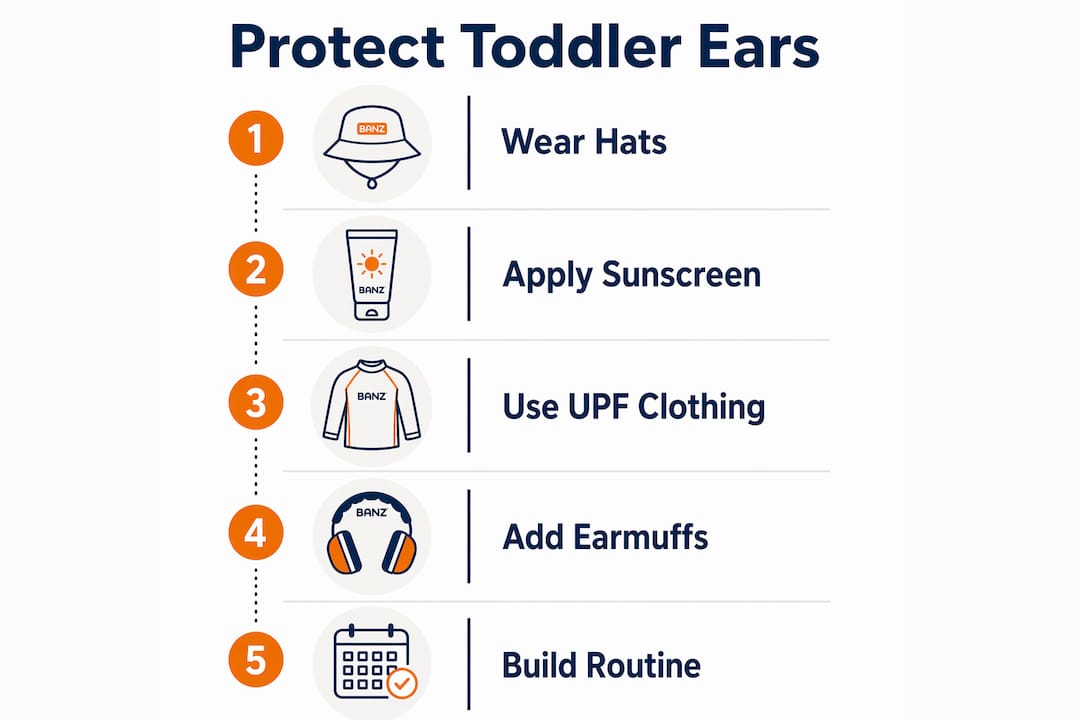
The layered approach looks like this:
- Hat first. Put the wide-brimmed hat on before leaving the house. Make it part of the “shoes and hat” departure ritual so toddlers expect it.
- Sunscreen second. Apply mineral sunscreen to the ears, face, and neck before going outside. Use the stick format for ears specifically.
- Earmuffs for loud environments. Keep earmuffs in the bag and put them on before the noise starts, not after. Toddlers accept them more readily when they go on before the sound hits.
- Shade as a reset. Use shade structures and canopies as a mid-activity break point, not just a last resort.
- Clothing as a backup layer. UPF-rated clothing covers the neck and reduces the total UV load on the head and ear area.
Toddler compliance is the real challenge. Distraction works better than explanation at this age. Put the hat on while your toddler is focused on something else. Let them pick between two hat options so they feel in control. Model the behavior yourself. Toddlers who see parents wearing hats and sunscreen are more likely to accept the same routine without resistance.
Sun protection habits formed early reduce lifetime risk of skin cancer and premature aging. Starting these routines in the toddler years builds the behavioral foundation that carries through childhood and beyond.
Key takeaways
Protecting toddler ears in summer requires a layered system of UPF-rated hats, mineral sunscreen applied to the ears, properly fitted earmuffs, and consistent ear hygiene after water exposure.
| Point | Details |
|---|---|
| Hat selection | Use wide-brimmed hats with a 4-inch brim and chin strap rated UPF 30 or higher. |
| Sunscreen on ears | Apply stick-format mineral sunscreen to the outer ear, rim, and behind the ear every two hours. |
| Earmuff fit and rating | Choose earmuffs with an NRR of 22 to 26 dB and a stable, adjustable headband for consistent coverage. |
| Post-water ear care | Dry ears gently after swimming to prevent swimmer’s ear; avoid cotton swabs inside the canal. |
| Routine compliance | Layer hat, sunscreen, and earmuffs in a fixed pre-departure sequence to build toddler acceptance. |
What I’ve learned after years of watching parents get this wrong
By Shari M. Murphy
Most parents I talk to treat toddler ear protection as a single-issue problem. They buy a hat or they buy earmuffs, and they consider the job done. The reality is that ears face two completely separate threats in summer, UV radiation and noise, and neither one waits for the other to be handled first.
The detail that surprises parents most is how often ears get skipped during sunscreen application. The outer ear is one of the most UV-exposed surfaces on the body, and it almost never gets covered. Stick sunscreens changed my recommendation here entirely. They make precise ear application fast enough that parents actually do it, rather than intending to and forgetting.
On the noise side, I see parents wait until a loud event starts before reaching for earmuffs. By then, the toddler is already overwhelmed and resistant. The habit that actually works is treating earmuffs like shoes: they go on before you leave, not after you arrive. That shift alone dramatically improves compliance.
The long-term case for starting these habits early is strong. Early sun protection habits reduce lifetime skin cancer risk, and hearing damage from repeated loud noise exposure in childhood is cumulative and irreversible. Neither outcome is dramatic enough to feel urgent in the moment, which is exactly why the routine approach matters more than the reactive one.
Start simple. Hat, sunscreen stick, earmuffs in the bag. Build from there.
— Shari M. Murphy
Gear up for summer with BANZ
BANZ builds sun and hearing protection gear specifically for babies and toddlers, tested across real outdoor conditions. Their toddler earmuffs feature adjustable headbands, cushioned ear cups, and NRR ratings suited for festivals, fireworks, and everyday noisy environments. For parents who want both UV and noise protection covered in one place, BANZ also offers UPF 50+ sun hats and the free BANZ Protect app for real-time UV and noise monitoring.

Browse the full ear protection collection to find the right fit for your toddler’s age and head size. Stock up before the summer season peaks so you are ready for every outdoor event on the calendar.
FAQ
What is the best sun protection for toddler ears?
Wide-brimmed hats with a UPF 30+ rating and a chin strap provide the most reliable UV protection for toddler ears. Apply stick-format mineral sunscreen to the outer ear and behind the ear as a secondary layer, reapplying every two hours.
What NRR should toddler earmuffs have?
Earmuffs rated 22 to 26 dB NRR are appropriate for toddlers at outdoor events. This range reduces harmful noise while still allowing your child to hear voices and surrounding sounds.
At what noise level do toddler ears need protection?
Noise above 85 dB can damage toddler hearing. Fireworks, concerts, lawn mowers, and crowded pool areas regularly exceed this threshold, making earmuffs necessary in those settings.
How do I prevent swimmer’s ear in toddlers?
Dry toddler ears gently after every water exposure by tilting the head to each side and using a soft towel on the outer ear. Avoid inserting cotton swabs or any object into the ear canal.
How do I get my toddler to keep earmuffs on?
Put earmuffs on before the noise starts, not after. Toddlers accept them more readily when they become part of the pre-departure routine rather than a reaction to an already overwhelming environment. Letting toddlers choose between two styles also increases compliance.
Recommended
- Sun Protection Layers for Toddlers: Real Examples – BANZ® Carewear USA
- How UV Exposure Affects Toddler Eyes: A Parent’s Guide – BANZ® Carewear USA
- Why Summer Programs Require Sun Protection for Kids – BANZ® Carewear USA
- Toddler Reversible Sun Hats with UPF 50+ Protection (Retiring) – BANZ® Carewear USA
