

An NRR of 26 means a hearing protector’s theoretical maximum noise reduction under controlled ANSI S3.19 laboratory testing, but real-world protection is much lower. After applying the OSHA and NIOSH recommended derating formula for field use, typical effective protection for most wearers, including kids, is notably less. Some kids’ earmuffs are built around this exact rating because it represents a solid, honest middle ground for everyday noise, not a marketing exaggeration.
TL;DR:
- After derating, NRR 26 provides about 9.5 dB of real-world noise reduction, suitable for moderate noise environments like yard work or sporting events.
- Proper fit and seal are critical, as even a high-rated device can underperform if worn poorly or if ear shape affects the seal.
- For loud events exceeding 85 dBA, consider higher-rated protection or dual protection like foam plugs paired with earmuffs.
- Kids’ earmuffs designed around NRR 26 often feature adjustable headbands for a reliable seal as children grow.
- Always check fit with quick tests and fit the device before the event, rather than relying solely on the label rating.
Table of Contents
- What Does NRR 26 Actually Mean on a Product Label?
- How Do You Convert NRR 26 Into Real-World Protection?
- Why Does Fit Matter More Than the Rating Number?
- When Is NRR 26 Enough, and When Should You Upgrade?
- How Does BANZ Apply NRR 26 to Kids’ Earmuffs?
- What Actually Matters When You’re Choosing Hearing Protection for a Child
- Shop BANZ Kids Hearing Protection Earmuffs
- Sources
- FAQ
What Does NRR 26 Actually Mean on a Product Label?
The Environmental Protection Agency requires every hearing protector sold in the United States to carry a single number: the Noise Reduction Rating. That number comes from lab testing under ANSI S3.19, a decades-old standard that measures how much sound a device blocks across several octave bands, then compresses those results into one figure.
An NRR of 26 dB is that compressed result. It tells you the device blocked 26 dB of noise when tested on adult subjects, under ideal conditions, with a research-grade fit. It does not tell you what your child will experience at a fireworks show wearing the earmuffs slightly askew.
Hearing-protection manufacturers themselves acknowledge the single number oversimplifies a frequency-dependent result. That is why the EPA also requires a secondary label that breaks down attenuation by frequency band.
When you’re comparing products, look for:
- The primary NRR number on the front of the package
- A secondary attenuation chart, usually on the back or inside the packaging
- The specific test standard cited (ANSI S3.19 is the one you want to see)
- Manufacturer fit instructions, especially for smaller heads
Some products list NRR 26 clearly on their kids’ earmuff packaging for exactly this reason: parents deserve a number they can actually use.
How Do You Convert NRR 26 Into Real-World Protection?
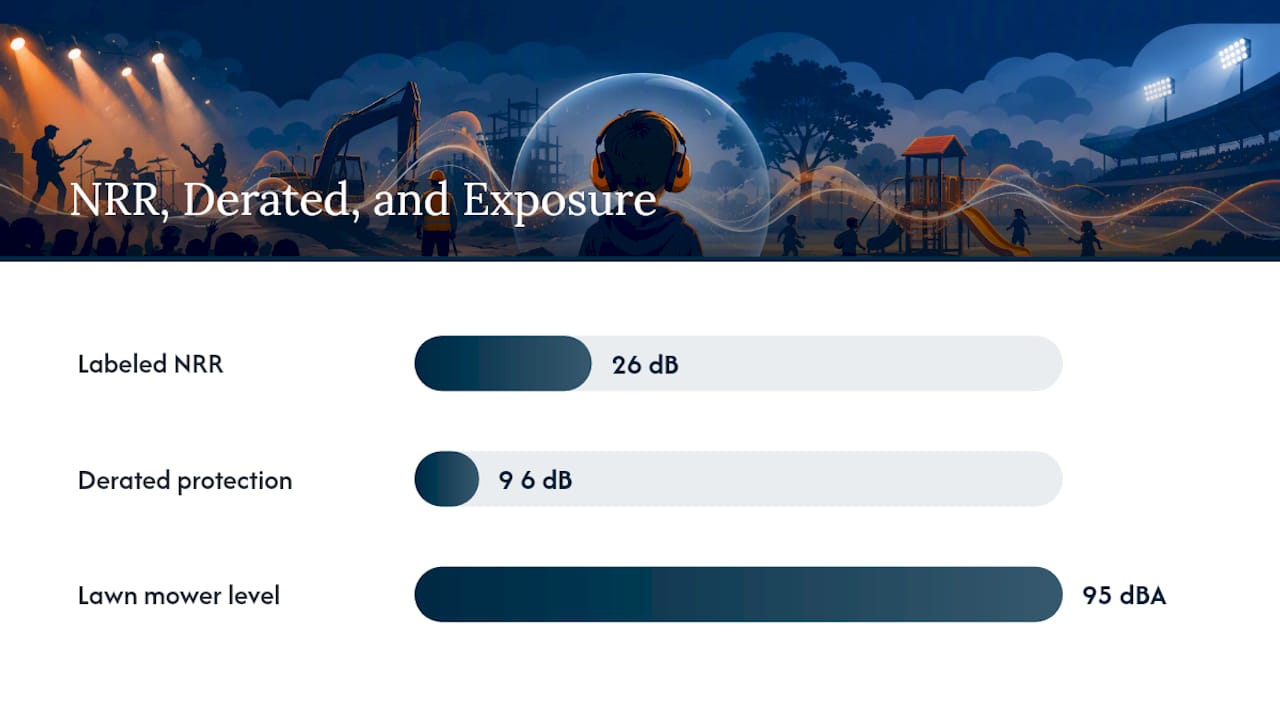
You don’t get to keep all 26 dB. OSHA’s derating guidance recommends subtracting 7 dB before halving the result, a formula designed to account for the gap between lab conditions and how people actually wear hearing protection.
Here’s the math, step by step:
- Start with the labeled NRR: 26 dB
- Subtract 7 dB to correct for test-to-field discrepancies
- Divide by 2 to build in a safety margin
This calculation yields an estimated dependable protection in the lower single-digit decibel range. It feels like a steep discount, and it is. The reason is straightforward: lab testers wear the devices with careful, trained insertion, while real users, especially kids, shift, fidget, and rarely achieve a research-grade seal.
NRR 26, derated, provides a moderate level of noise protection appropriate for typical daily use.
Here’s why estimated real-world protection matters. If your child stands next to a lawn mower running at a high noise level around 95 dBA, the noise reaching the ear after protection could be close to the threshold where hearing damage risk increases with prolonged exposure, which is why fit and exposure duration matter as much as the rating on the box.
Why Does Fit Matter More Than the Rating Number?
Fit is the single biggest variable separating the 26 dB lab number from what your child actually experiences. A peer-reviewed review of hearing protection attenuation found that protection is only as good as the seal, and that a well-fitted lower-rated device commonly outperforms a poorly fitted higher-rated one.
Earplugs and earmuffs work differently, and that difference matters more for children than adults. Earplugs depend on a precise insertion into a canal that’s still developing in size and shape through early childhood, which makes a reliable seal genuinely difficult to achieve. Earmuffs work by clamping a cushioned seal around the entire outer ear, a mechanism that’s far more forgiving of small movements and imperfect placement.
NIOSH and the CDC note that head size and ear canal differences make earmuffs with adjustable headbands generally more reliable for kids than one-size protection built for adults.
Quick fit checks worth doing every time:
- Press the earmuffs gently and confirm no light or sound leaks around the edge
- Check that the headband sits centered, not tipped forward or back
- Ask your child if they can still hear your normal speaking voice clearly through the seal
- Watch for red marks or gaps after 10 minutes of wear, both signs of poor sizing
Pro Tip: Have your child wear the earmuffs at home during a vacuum cleaner run before their first loud event. A quick trial run reveals sizing issues without the pressure of a real crowd or deadline.
When Is NRR 26 Enough, and When Should You Upgrade?
Most family situations fall well within what a derated 9 to 10 dB can handle safely. The math changes fast once ambient noise climbs past the mid 90s, so knowing where your event lands matters before you walk out the door.
- Lawn equipment and power tools (80 to 95 dBA): NRR 26 typically brings exposure to a safe range for supervised, limited time near the activity.
- Family fireworks displays (90 to 100+ dBA at close range): protected exposure can land close to or above 85 dBA, so keeping distance from launch points still matters.
- Sporting events and school assemblies (85 to 100 dBA): NRR 26 generally holds up well for these shorter, moderate-volume settings.
- Live concerts or airport terminals near jet engines (100 to 130 dBA): protected exposure can remain well above safe thresholds, and higher-rated or dual protection deserves consideration.
The simple decision rule: if your math puts protected exposure above 85 dBA, look at a higher-rated device or pair earmuffs with foam plugs for very loud, prolonged events. For everything else on that list, NRR 26 is a genuinely solid baseline. If you want a deeper comparison of how NRR stacks up against SNR ratings used outside the US, BANZ breaks that down here.
How Does BANZ Apply NRR 26 to Kids’ Earmuffs?
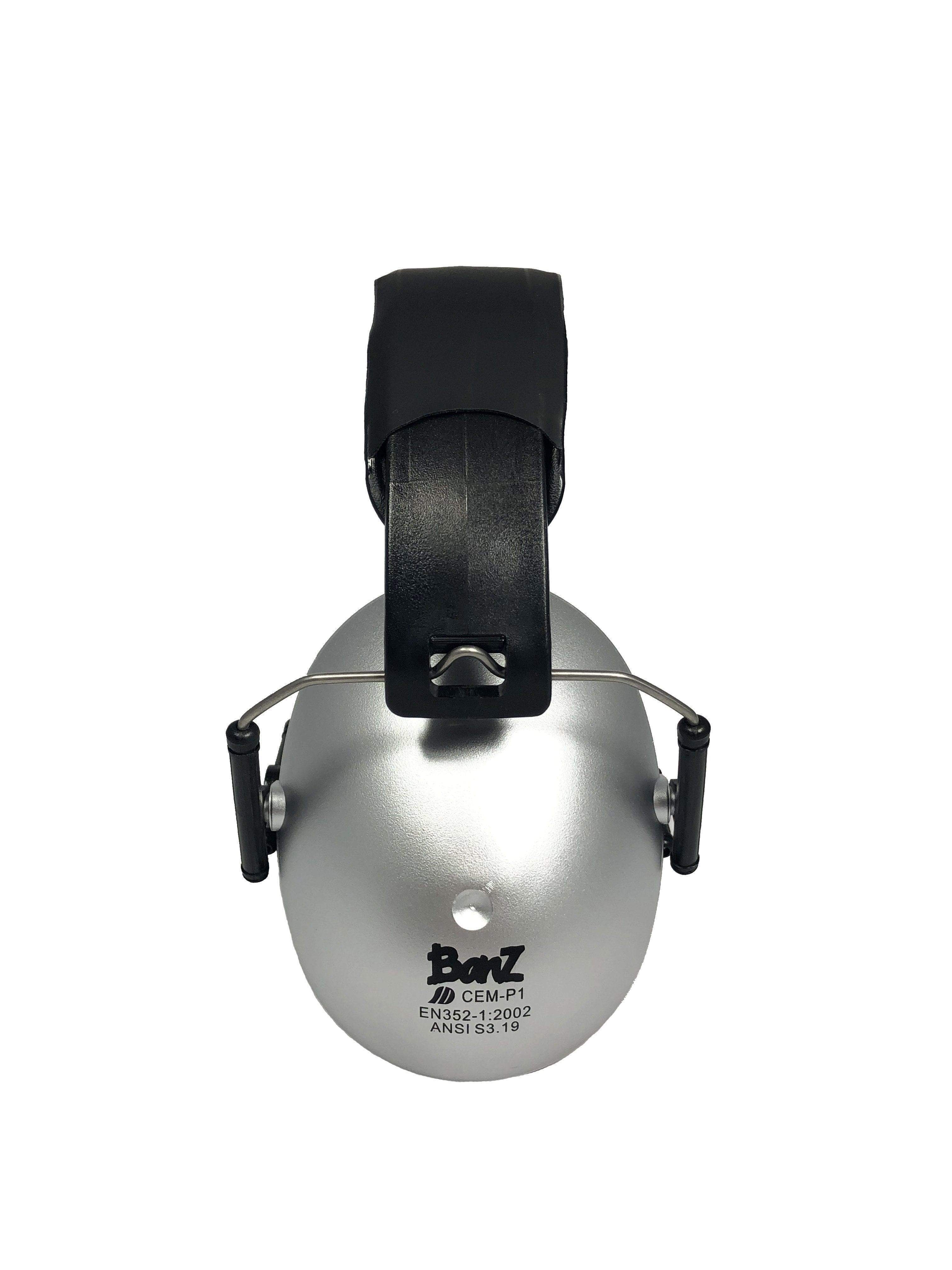
BANZ builds its Kids Hearing Protection Earmuffs, available in solid colors and printed designs, around this same NRR 26 rating, paired with an adjustable headband designed to accommodate growing head sizes rather than a single fixed fit.
Getting a reliable seal on a child comes down to a few consistent habits:
- Adjust the headband so the cushions sit flush against the head with even pressure on both sides
- Recheck fit every few months, since head growth changes seal quality faster than parents expect
- Watch for your child pulling at the muffs, often a sign of an uneven or pinching fit rather than dislike of the sound reduction itself
- Let your child practice wearing them at home before a loud event so the sensation feels familiar, not startling
Some hearing protection lines emphasize consistent, comfortable wear because a rated device only works when it actually stays on a child’s head. For more detail on the mechanics behind that seal, see how earmuffs reduce sound.
What Actually Matters When You’re Choosing Hearing Protection for a Child
The rating on the box is a starting point, not a guarantee, and treating it as one is where most parents go wrong. I’d rather see a family choose a comfortable NRR 26 earmuff their child will actually keep on for three hours at a stadium than a higher-rated device that gets yanked off after ten minutes because it pinches. Consistent, imperfect protection beats perfect protection nobody wears. Check the seal before you leave the house, watch your child’s behavior during the event, and treat the derated 9 to 10 dB estimate as your honest planning number, not the one on the package.
— Shari M. Murphy
Shop BANZ Kids Hearing Protection Earmuffs
There are hearing protection earmuffs built specifically for families who need certified NRR 26 dB protection without guessing whether a device will actually stay put on a moving, fidgeting child. Unlike adult protection resized down, these earmuffs are designed from the headband up for smaller heads and growing kids, with adjustable fit that holds a seal through a full afternoon at the ballgame.
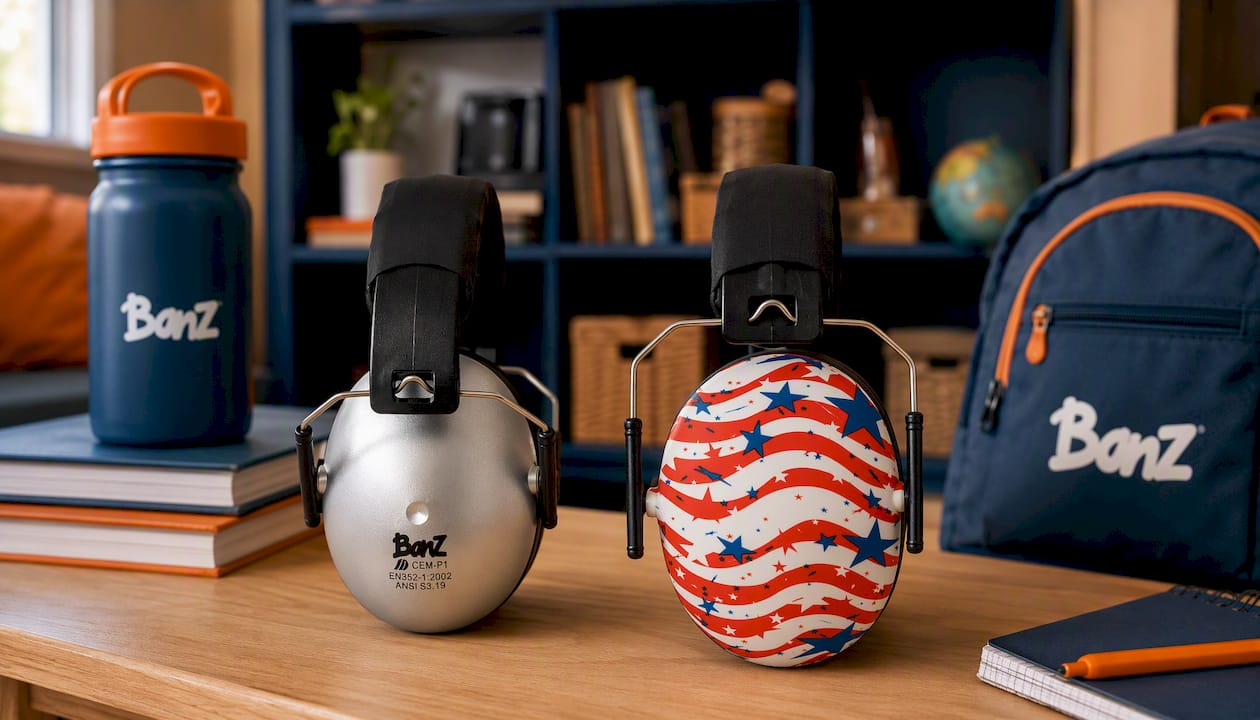
Before you buy, confirm three things: your child’s head size against the sizing guide, the NRR 26 rating printed on the packaging, and a quick fit test the moment the box arrives, not the morning of the event. Browse Kids Hearing Protection Earmuffs in solid colors or printed designs, or explore the full BANZ lineup of sun and hearing protection gear for your next family outing.
Sources
- Appendix B to 1910.95 — Audiometric testing and hearing protection devices
- Peer-reviewed article on hearing protection fit and attenuation (PMC)
FAQ
What Is a Good NRR for Earplugs or Earmuffs?
Most consumer hearing protection covers a practical range, with 26 dB landing in a middle range suitable for everyday noise like yard tools, sporting events, and family gatherings. Higher NRR values matter more for sustained, very loud environments like concerts or industrial settings.
How Many Decibels of Noise Cancellation Is Considered Good?
For hearing protection specifically, a derated reduction of 9 to 15 dB is considered solidly effective for typical daily noise exposure. NRR 26, once derated using the OSHA formula, lands around 9.5 dB, which fits comfortably in that useful range.
What Is Considered a Good NRR Score Overall?
A good NRR score depends on your use case, but typical family and recreational needs balance comfort and effective attenuation around ratings like 26 dB. NRR 26 specifically balances comfort and effective attenuation for kids, which is why BANZ builds its earmuff line around that rating.
At What Decibel Level Do You Need Hearing Protection?
Sustained exposure above 85 dBA is the widely cited threshold where hearing damage risk increases, according to NIOSH guidance. Anything from lawn equipment to fireworks displays can reach or exceed that level, which is exactly where properly fitted protection earns its place.