

Protect children whenever the daily UV Index reaches 3 or higher. That means combining shade, UPF clothing, a wide-brim hat, sunglasses, and broad-spectrum sunscreen before your kids head outside. For babies under 6 months, skip sunscreen where you can and rely on shade and coverage first. This one rule drives almost every sun-safety decision you’ll make this summer.
TL;DR:
- Children should wear protective clothing and accessories when the UV Index reaches 3 or higher, especially since reflections from water, sand, and clouds can increase UV exposure.
- UPF 50+ rated outfits and wide-brim hats are most effective, as standard clothing can lose protection when wet, and regular cotton T-shirts often have low UPF ratings.
- For kids under 6 months, keep them fully shaded and apply mineral sunscreen only on unavoidable exposed patches, avoiding direct sun exposure altogether.
- Regular reapplication of broad-spectrum SPF 30+ sunscreen and packing extra gear are essential for maintaining protection during outdoor activities.
- Using the right gear designed for children, like size-appropriate hats and sunglasses, encourages consistent use and enhances sun safety compliance.
Table of Contents
- Why UV Index 3 Is the Line for Kids’ Sun Protection
- Quick Protection Checklist for UV Index 3 or Higher
- Buying and Applying Sunscreen the Right Way
- What UPF Actually Means for Kids’ Clothing
- Sun Rules for Babies Under 6 Months
- Sunglasses and Eye Protection for Kids
- Treating a Sunburn and Knowing When to Call the Doctor
- Tools and Gear That Make the Checklist Easy
- What Actually Gets Kids to Wear Their Sun Gear
- Shop BANZ® Gear Built for UV 3+ Days
- Where This Guidance Comes From
- Sources
- FAQ
Why UV Index 3 Is the Line for Kids’ Sun Protection
The UV Index measures how strong the sun’s ultraviolet radiation is on a given day, on a scale that typically runs from 0 to 11+. A reading of 3 counts as moderate, and it’s the point where the CDC recommends actively protecting your skin rather than just noticing the sun is out.
Kids aren’t small adults when it comes to UV exposure. Their skin is thinner, they spend more cumulative hours outdoors than most adults, and a large share of a person’s lifetime sun exposure happens before age 18. That early exposure is directly tied to skin cancer risk decades later, which is why pediatric guidance treats UV 3 as an action threshold rather than a suggestion.
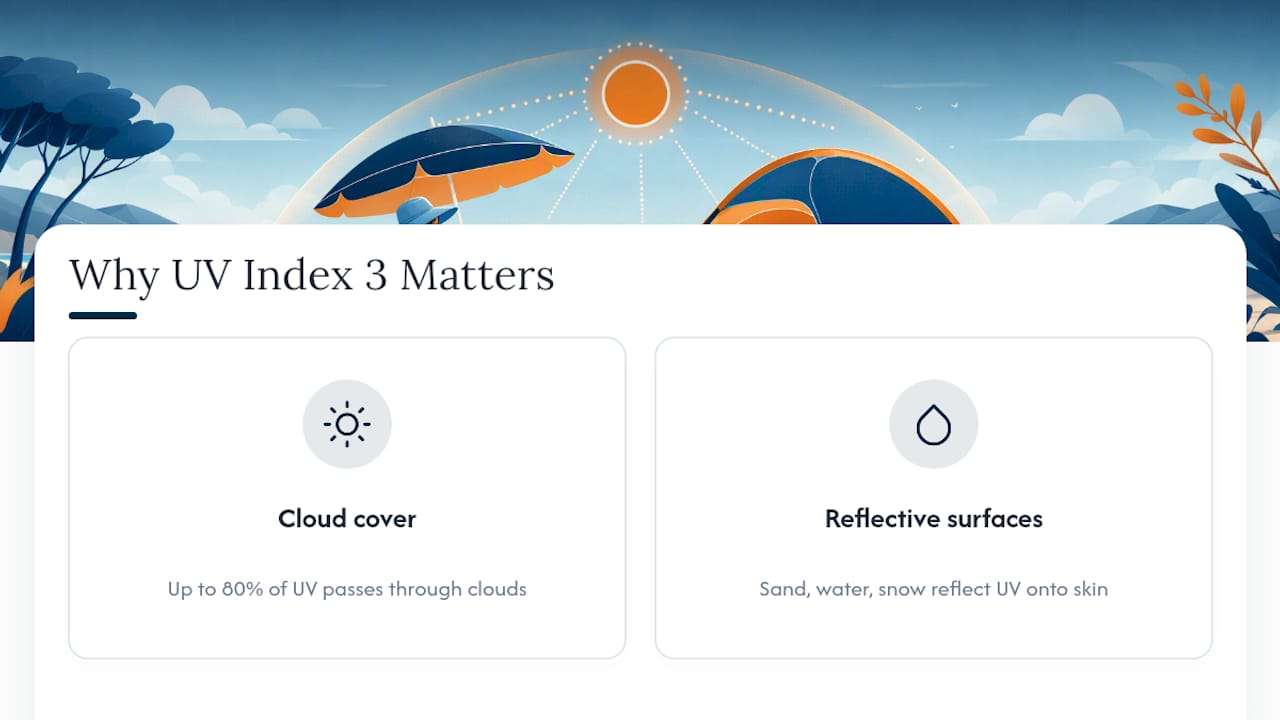
Weather can fool you here. Up to 80% of UV radiation passes through cloud cover, and sand, water, and snow all reflect UV back onto skin that’s already getting hit from above. A gray, overcast afternoon at the pool can carry more effective UV exposure than it looks like.
Quick Protection Checklist for UV Index 3 or Higher
Before anyone walks out the door, check your local UV Index through a weather app, the BANZ Protect app, or your phone’s built-in weather widget. If it reads 3 or above, run through this sequence:
- Time it. Plan outdoor play before 10 a.m. or after 4 p.m. when the sun angle is lower, if the schedule allows it.
- Find shade first. A tree, umbrella, or pop-up canopy cuts exposure before any product does.
- Dress in UPF clothing. Long sleeves and UPF-rated fabric cover more skin than sunscreen alone can reach evenly.
- Add a wide-brim hat. It shields the face, ears, and neck, areas people routinely miss with sunscreen.
- Put on sunglasses with full UV protection.
- Apply sunscreen to any skin still exposed, 15 to 30 minutes before you leave.
- Reapply every two hours, or immediately after swimming or heavy sweating.
- Pack extras. A spare hat, a travel-size sunscreen, and a backup pair of sunglasses save the outing when gear gets lost or wet.
For pool days or beach trips, combine UPF swimwear with sunscreen on the smaller remaining exposed areas. Layering clothing and sunscreen offers strong, reliable protection.
Pro Tip: Keep a small “sun kit” in the car, hat, sunglasses, mineral sunscreen, so you’re never caught outside on a UV 3+ day without gear.
Buying and Applying Sunscreen the Right Way
Look for broad-spectrum sunscreen with SPF 30 or higher. For a child’s face, ears, and other sensitive areas, mineral formulas built on zinc oxide or titanium dioxide tend to be gentler and less likely to sting eyes than chemical filters.
According to the Children’s Hospital of Philadelphia, sunscreen should go on 15 to 30 minutes before your child heads outside and be reapplied every two hours, or right after swimming or heavy sweating. Most parents underapply. A general rule pediatricians use is about a shot glass amount for a child’s whole body, more than most people expect.
There’s ongoing debate among researchers about how much sunscreen ingredients absorb into the skin, which is one more reason clothing shouldn’t be an afterthought. A hat and a rash guard protect the same skin all day without a two-hour clock running.
- SPF 30+ broad-spectrum, reapplied every two hours
- Mineral formulas for face and sensitive skin
- Apply generously, most kids get too little, not too much
- Reapply immediately after water play or sweating
What UPF Actually Means for Kids’ Clothing
UPF stands for Ultraviolet Protection Factor, and it works differently from SPF. UPF 50+ blocks more than 98% of UV radiation, making it the top practical rating for kids’ clothes, hats, and swimwear.
Not all fabric protects equally. A tight weave and blended fibers raise UPF, while a standard cotton T-shirt can drop to a UPF as low as 3 once it’s wet, barely better than bare skin. That’s the gap that catches parents off guard at the pool.
- Choose garments labeled UPF 50+ whenever you can
- Tightly woven or blended fabrics beat loose cotton knits
- Wet fabric loses protection, pack a dry backup shirt
- A brim of at least 3 inches shields the face, ears, and neck
- UPF swimwear cuts down how often you need to reapply sunscreen during long water sessions
Sun Rules for Babies Under 6 Months
Infants under 6 months old need a different playbook. The American Academy of Pediatrics advises keeping babies out of direct sunlight entirely, using shade and clothing as the first line of defense rather than sunscreen.
- Use a stroller canopy, umbrella, or shaded seating whenever you’re outside
- Dress babies in lightweight, breathable long sleeves that still cover skin
- Apply a small amount of mineral sunscreen only to unavoidable exposed patches, like the back of the hands
- Watch for overheating under extra layers; offer regular feedings to keep infants hydrated in warm weather
Sunglasses and Eye Protection for Kids
Sun damage to the eyes builds up over a lifetime, and starting protection early lowers the risk of problems like cataracts later on, according to KidsHealth.
- Look for lenses labeled 99 to 100% UVA/UVB protection or “100% UV”
- Wraparound or close-fitting styles keep light from sneaking in around the edges
- Flexible, impact-resistant frames hold up to active kids and accidental drops
- Pair sunglasses with a wide-brim hat for the fullest coverage
Treating a Sunburn and Knowing When to Call the Doctor
If sunburn happens anyway, act fast and keep it simple.
- Move indoors or into shade immediately and cool the skin with a damp compress.
- Offer extra water to prevent dehydration.
- Dress your child in loose, soft clothing that won’t rub the burn.
- Ask your pediatrician about appropriate over-the-counter pain relief and dosing before giving anything.
- Call a doctor for high fever, blistering over a large area, signs of dehydration, or any sunburn in an infant.
Use the burn as a signal to tighten your routine next time, more shade, an earlier start time, or a stricter reapplication schedule.
Tools and Gear That Make the Checklist Easy
Knowing the rules is one thing. Actually following them on a hot, chaotic Saturday is another, and that’s where the right gear closes the gap. The free BANZ Protect app gives real-time UV and noise readings, so you can check whether today crosses the UV 3 threshold before you even load the car.
- UPF 50+ sun hats that hold up to daily wear and washing
- UV rash guards and board short sets for pool and beach days
- Wraparound sunglasses built for kids who move fast and drop things
- Reversible and adjustable hat styles that fit growing heads for more than one season
What Actually Gets Kids to Wear Their Sun Gear
Compliance beats perfection. A UPF 50+ hat left in the diaper bag protects nobody, so the real work is making protective gear something your child chooses instead of tolerates.
Let kids pick their own hat or sunglasses color. Ownership over the choice cuts a surprising amount of resistance at the door. Pack a spare of anything that tends to slip, sunglasses especially, since a lost pair mid-outing often means no eye protection for the rest of the day. Praise compliance out loud (“Nice job keeping your hat on!”) more than you nag about it; kids respond to that faster than reminders. If a hat brim feels stiff or scratchy, a soft, adjustable style solves the problem faster than a lecture ever will. Try teaching sun safety as a game this week, first one to grab their hat before leaving the house gets to pick the park.
— Shari M. Murphy
Shop BANZ® Gear Built for UV 3+ Days
Some brands have spent decades building sun and hearing protection for kids because generic adult gear rarely fits a child’s head, ears, or activity level the way it needs to. That’s the practical edge over improvising with whatever hat or sunglasses happen to be in the closet: every BANZ piece is sized and rated specifically for kids, so the checklist above is easier to actually follow.
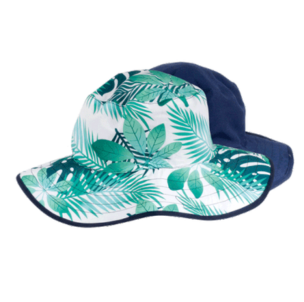
Cover the hat step with the reversible UPF 50+ sun hat or the toddler-sized reversible sun hat, from $19. Handle eye protection with the wraparound square sunglasses, from $17, built with flexible frames for kids who don’t sit still. For pool days, the rash guard and board short set cuts down how often you reach for the sunscreen bottle. If loud environments are also part of your outings, pair sun gear with the Hear No Blare™ earmuffs at $34.99. Browse the full BANZ collection and pick the pieces that match your family’s next outdoor day.
Where This Guidance Comes From
- CDC: UV Index thresholds and sun safety basics
- American Academy of Pediatrics: infant sun exposure guidance
- Children’s Hospital of Philadelphia: sunscreen application rules
- BANZ sun safety resource library: CDC, EPA, and WHO guides in one place
This article is general information, not a substitute for advice from a qualified doctor. Consult a qualified healthcare professional about your own circumstances before acting on anything here.
Sources
- Pediatrics article / AAP guidance (PMC7001416)
- CDC: Sun safety and UV Index guidance
- Children’s Hospital of Philadelphia: How to protect kids from the sun
- PMC article on UPF and textile testing (2023)
FAQ
Is UV 3 Safe Without Sunscreen?
Not reliably. At UV 3, the CDC advises active protection, and while shade and UPF clothing can cover most exposed skin, any uncovered areas still benefit from sunscreen, especially for kids outside longer than 30 minutes.
Is UV Level 3 Safe for Kids to Play Outside?
UV 3 is considered moderate risk, not zero risk. Kids can play outside, but combining shade, a hat, sunglasses, and sunscreen keeps exposure at a safe level rather than skipping protection altogether.
Will UV 3 Give My Child a Sunburn?
It can, especially with long, unprotected exposure or reflective surfaces like water and sand nearby. Kids’ thinner skin burns faster than adult skin does, which is part of why the UV 3 threshold exists in the first place.
Is UV 3 Strong Enough to Tan?
Yes, UV 3 carries enough ultraviolet radiation to gradually darken skin over repeated exposure. For kids, that visible tanning reflects UV damage building up, not a healthy result worth aiming for.
What UPF Rating Should I Look for in Kids’ Sun Hats?
Choose UPF 50+ whenever possible, since it blocks more than 98% of UV radiation. Some sun hats, including the pocket-style sun hat, are rated UPF 50+; current prices can be found on the manufacturer’s website.