

Sunscreen is unsafe for babies under six months because their skin absorbs chemicals far more readily than adult skin, raising the risk of irritation, allergic reactions, and potential systemic exposure. The American Academy of Pediatrics and the FDA both advise against applying sunscreen to infants in this age group. Instead, pediatricians recommend shade, UPF-rated clothing, and wide-brimmed hats as the primary defense. Understanding why sunscreen unsafe babies under six months is such a critical concern helps you make confident, safe choices every time you step outside with your newborn.
Why is sunscreen unsafe for babies under six months?
The core reason is skin biology. Infant skin under six months is immature and thinner than older children’s skin, which means topically applied chemicals absorb more readily and reach the bloodstream faster. Babies also lack fully developed metabolic systems to process those chemicals once absorbed. That combination creates a real risk, even from products considered safe for adults.
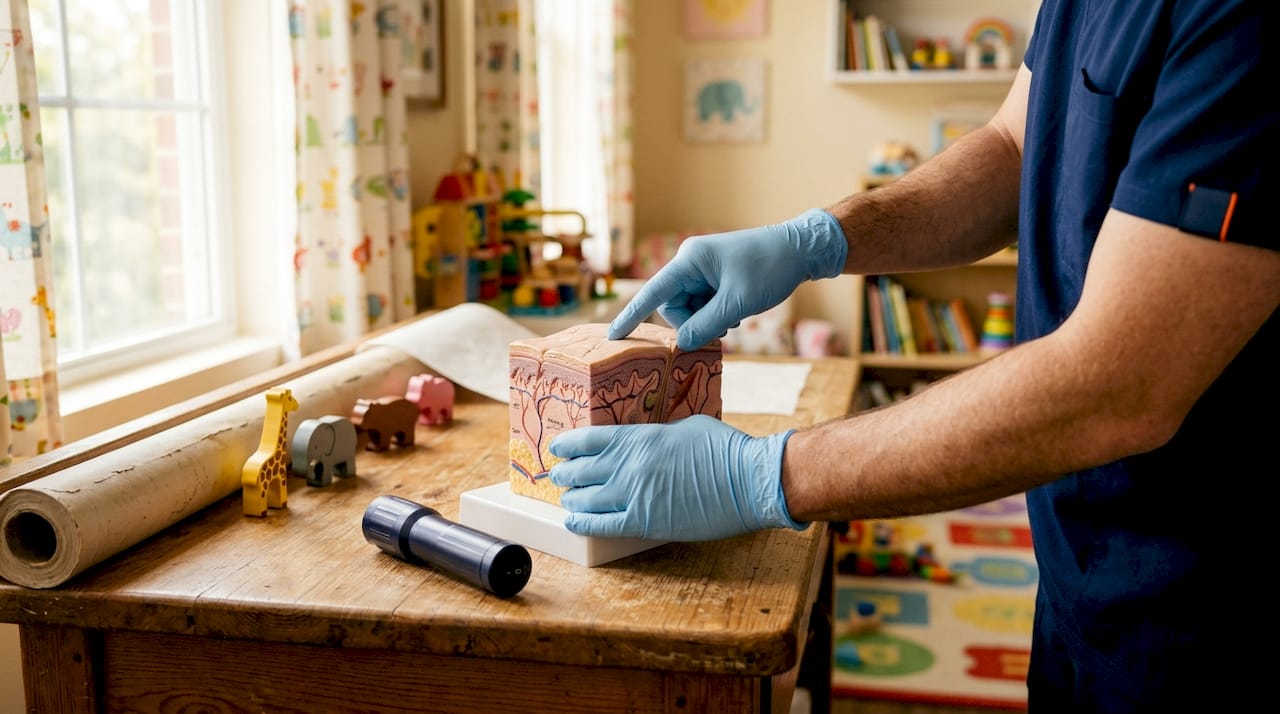
The FDA reinforces this concern from a regulatory angle. No active sunscreen ingredients have proven safety data for infants under six months, which is why current FDA regulations permit sunscreen labels only for children six months and older. That is not a technicality. It reflects a genuine evidence gap that parents should take seriously.
The risk is not just irritation. Chemical sunscreen ingredients like oxybenzone have been detected in infants’ blood, urine, and breast milk, raising concerns about endocrine disruption. Conclusive evidence on long-term harm is still emerging, but clinicians consistently recommend caution given what is already known.
What makes infant skin more vulnerable to sunscreen chemicals?
Baby skin is structurally different from toddler or adult skin in ways that matter for sun protection decisions.
- Thinner skin barrier. The outermost layer of a newborn’s skin is significantly thinner, offering less resistance to chemical penetration.
- Higher surface-area-to-body-weight ratio. A baby absorbs a proportionally larger dose of any topical product relative to body size compared to an adult applying the same amount.
- Immature metabolic processing. Even if a chemical is absorbed in small quantities, a newborn’s liver and kidneys are not yet equipped to clear it efficiently.
- Increased sensitivity. Fragile skin reacts more easily to preservatives, fragrances, and UV filters, making rashes and contact dermatitis more likely.
- Underdeveloped immune response. Allergic reactions can escalate quickly in infants because their immune systems are still calibrating.
Pro Tip: If you are unsure whether a product is safe for your baby, check the label first. If it does not say “safe for children six months and older,” skip it entirely.
Clinicians note that immature metabolic systems mean even small chemical exposures through sunscreen could have unknown impacts. That is why mineral-based options are preferred when any sunscreen use is considered, and why avoidance remains the top recommendation for this age group.
What sun protection methods are safest for babies under six months?
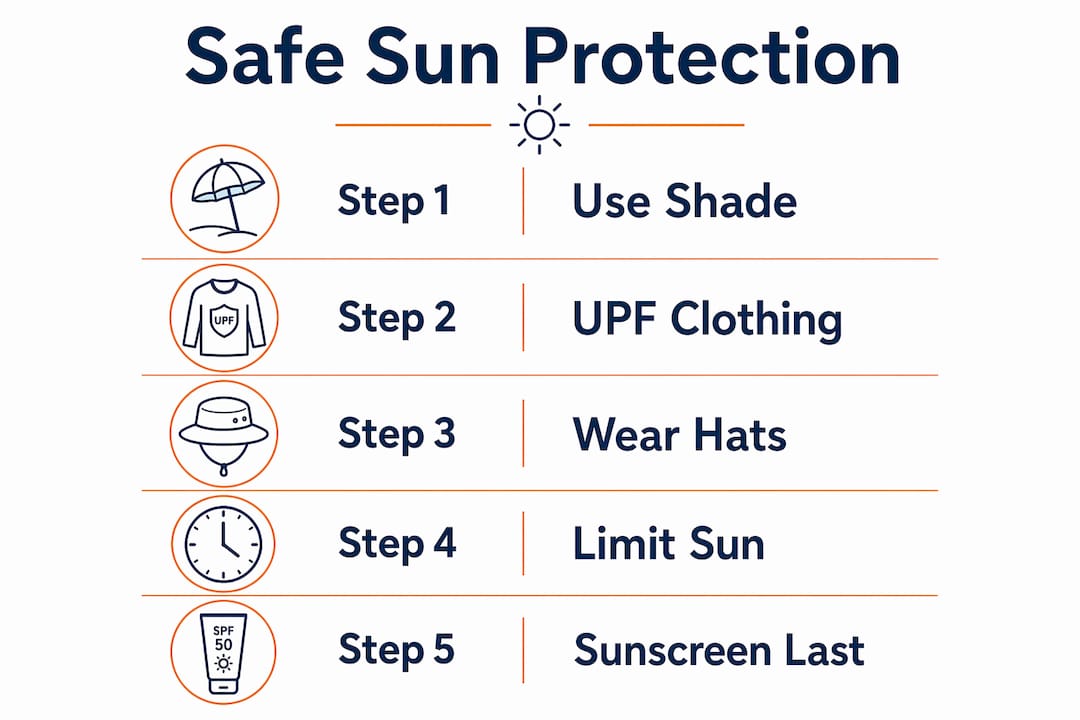
Physical barriers are the gold standard for UV protection for infants in this age group. Shade, clothing, and hats do not carry any absorption risk and, when used correctly, provide reliable protection.
- Seek shade during peak UV hours. The FDA and AAP both advise avoiding direct and indirect sunlight between 10:00 AM and 2:00 PM, when UV radiation is strongest.
- Use UPF 50+ clothing. Clothing with a tight weave, darker or bright colors, and a UPF 50+ rating blocks over 98% of UV rays. That makes it one of the most effective tools available for infant sun protection.
- Choose wide-brimmed hats. A hat with a full brim protects the face, ears, and neck, which are among the most sun-exposed areas on a baby carried or strolled outdoors.
- Limit total sun exposure time. Even on overcast days, UV rays penetrate clouds. Keep outdoor sessions short, especially between late morning and early afternoon.
- Do not rely solely on stroller canopies. Reflective surfaces like sand and water can increase UV exposure by bouncing rays back, reducing the protection from umbrellas or stroller canopies to roughly 50%. Physical clothing and shade structures provide more consistent coverage.
Pediatricians recommend treating sun protection as a layered approach, combining time of day, shade, clothing, and hats. No single method covers every angle. Stacking them does.
When can you use sunscreen on an infant under six months?
Sunscreen is a last resort, not a first line of defense. If you cannot avoid sun exposure and physical barriers are not enough to cover all exposed skin, a mineral-based sunscreen applied sparingly to small areas is the safer choice.
- Choose mineral over chemical. Zinc oxide and titanium dioxide sit on top of the skin and physically reflect UV rays rather than absorbing into it. That reduces systemic exposure risk significantly compared to chemical filters.
- Avoid oxybenzone and chemical UV filters. These ingredients absorb into the skin and have been detected in infant blood and breast milk. Skip any product that lists them.
- Apply only to small exposed areas. The face and the back of the hands are the most practical targets. Do not apply sunscreen to large surface areas on an infant under six months.
- Use sparingly. A thin layer is sufficient. More product does not mean more protection. It means more chemical exposure.
- Reapply every 1.5 to 2 hours. Sunscreen is not waterproof and loses effectiveness with time, sweating, or contact with fabric. Follow label instructions carefully.
Pro Tip: Mineral sunscreens often leave a white cast on skin. That is the zinc oxide or titanium dioxide working as a physical barrier. It is a sign the product is doing its job.
Pediatricians consistently frame sunscreen as a last resort secondary to physical barriers for babies under six months. Use it only when shade and clothing genuinely cannot do the job.
Why do childhood sunburns matter so much for long-term health?
The stakes for getting sun protection right in infancy are high. Just one blistering sunburn during childhood more than doubles a person’s risk of developing melanoma later in life. That statistic reframes every outdoor outing with your newborn as a long-term health decision, not just a comfort issue.
“Childhood accounts for roughly 25% of a person’s total lifetime sun exposure. Habits formed in infancy and early childhood set the pattern for how children relate to sun safety for the rest of their lives. Starting protection early is not overcautious. It is medically sound.”
Even brief, unprotected exposure to direct sunlight can cause UV damage to infant skin. Damage accumulates over time, and the skin does not forget early injuries. Building shade-first habits now means your child carries those instincts into toddlerhood and beyond.
| Age group | Recommended primary protection | Sunscreen appropriate? |
|---|---|---|
| Under 6 months | Shade, UPF clothing, wide-brimmed hats | No, except as last resort on small areas |
| 6–12 months | Shade, UPF clothing, mineral sunscreen | Yes, mineral SPF 30+ on exposed skin |
| 12 months and older | Layered approach including sunscreen | Yes, broad-spectrum SPF 30+ or higher |
Once your baby passes the six-month mark, integrating a broad-spectrum mineral sunscreen into your routine becomes both safe and recommended. The transition is gradual and should align with your pediatrician’s guidance.
Common myths about sunscreen and infant sun safety
Several widespread beliefs about sunscreen safety for infants lead parents to make less-informed choices.
- Myth: A little sunscreen is always better than none. For babies under six months, applying chemical sunscreen to large skin areas can expose them to more risk than brief, shaded outdoor time. Physical barriers are safer.
- Myth: Sunscreen is the most important sun protection tool. Experts treat sunscreen as just one component of a complete sun safety routine, not the centerpiece. Shade and clothing come first.
- Myth: Mineral sunscreens are the same as chemical ones. They are not. Mineral sunscreens work by physically blocking and reflecting UV rays, sitting on top of the skin. Chemical filters absorb into the skin to neutralize UV energy. That distinction matters for infants.
- Myth: Cloudy days mean no UV risk. UV rays penetrate cloud cover. Sun protection applies on overcast days, especially for infants with sensitive skin.
- Myth: Stroller canopies provide full protection. Awareness about the limitations of physical barriers like stroller canopies helps parents layer protection more effectively. Reflected UV from pavement, sand, and water reaches skin even under a canopy.
The clearest expert consensus is this: for babies under six months, physical protection always leads. Sunscreen fills gaps, not the other way around.
Key Takeaways
Sunscreen is unsafe for babies under six months because their immature skin absorbs chemicals more readily, and no sunscreen ingredients have proven safety data for this age group.
| Point | Details |
|---|---|
| Sunscreen is not approved for under 6 months | The FDA permits sunscreen labels only for children six months and older due to an evidence gap. |
| Infant skin absorbs chemicals faster | Thinner skin and a higher surface-area-to-body-weight ratio increase chemical exposure risk significantly. |
| Physical barriers come first | Shade, UPF 50+ clothing, and wide-brimmed hats are the safest and most reliable protection methods. |
| Mineral sunscreen is the safer exception | If sunscreen is unavoidable, zinc oxide or titanium dioxide applied sparingly to small areas is the recommended choice. |
| Early sun habits reduce long-term cancer risk | One blistering childhood sunburn more than doubles melanoma risk, making early protection habits medically important. |
What I’ve learned about infant sun safety after years of watching parents get this wrong
Parents often arrive at the sunscreen question from a place of good intentions. They want to protect their baby, and sunscreen feels like the obvious tool because it works for adults. The problem is that infant skin is not a smaller version of adult skin. It behaves differently, absorbs differently, and reacts differently.
What I have seen consistently is that parents who understand the “why” behind the no-sunscreen recommendation actually follow through more reliably. When you know that your baby’s skin absorbs chemicals at a higher rate relative to body size, and that no regulator has cleared any sunscreen ingredient for this age group, the choice to reach for a UPF hat instead of a bottle feels less like a sacrifice and less like a workaround. It feels like the right call.
The parents who struggle most are the ones who treat shade and clothing as inconvenient substitutes rather than the actual first-line tools. A well-fitted UPF 50+ sun hat and a shaded stroller cover more skin more safely than any sunscreen applied to a six-week-old. That is not a compromise. That is the recommendation.
My honest advice: consult your pediatrician before any extended outdoor time with a newborn, build your routine around shade and clothing first, and treat mineral sunscreen as a backup for genuinely unavoidable exposure. Sun safety for infants is not complicated. It just requires putting the right tools in the right order.
— Shari M. Murphy
BANZ sun protection gear built for babies from day one
Physical sun protection is the pediatric standard for babies under six months, and BANZ builds products specifically for that standard. BANZ UPF 50+ baby sun hats and protective accessories are designed to cover the face, neck, and ears without relying on chemical sunscreen.
BANZ has protected over 2 million families across six continents with gear built around real outdoor conditions, not ideal ones. The free BANZ Protect app adds real-time UV monitoring so you always know when conditions call for extra cover. For parents who want UV eye protection and full-body coverage from the start, BANZ offers a complete physical protection range suited to infants from their earliest weeks. Browse the full collection at usa.banzworld.com.
FAQ
Why can’t you put sunscreen on a baby under 6 months?
The FDA has not approved any sunscreen ingredients for babies under six months, and their thinner, more absorbent skin increases the risk of chemical exposure and irritation. Physical protection methods like shade and UPF clothing are the recommended alternative.
What sun protection is safe for newborns?
Shade, UPF 50+ rated clothing, and wide-brimmed hats are the safest options for newborns. Avoid direct sunlight between 10:00 AM and 2:00 PM when UV intensity peaks.
Can I use mineral sunscreen on my baby under 6 months?
Mineral sunscreen containing zinc oxide or titanium dioxide can be applied sparingly to small exposed areas like the face and hands if sun exposure is unavoidable. It should be a last resort, not a routine product for this age group.
How do childhood sunburns affect long-term health?
One blistering sunburn during childhood more than doubles the lifetime risk of melanoma. Childhood accounts for roughly 25% of total lifetime sun exposure, making early protection habits medically significant.
When can babies start wearing sunscreen regularly?
Babies six months and older can safely use broad-spectrum mineral sunscreen with SPF 30 or higher on exposed skin. Always follow your pediatrician’s guidance on product selection and application frequency.
