

The best beach sun protection for toddlers layers five things together: shade, UPF 50+ clothing and a wide-brim hat, broad-spectrum SPF 30+ sunscreen, reapplied every two hours, UV-blocking sunglasses, and regular water breaks. BANZ’s Toddler Reversible Sun Hats with UPF 50+ Protection and Beachcomber wrap-around sunglasses fit directly into that stack. Avoid peak sun from 10 a.m. to 4 p.m. when you can, since that’s when exposure does the most damage.
TL;DR:
- Reapply sunscreen every two hours and immediately after swimming or sweating, even on overcast days, to maintain effective UV protection for toddlers.
- UPF 50+ clothing and wide-brim hats with chin straps provide reliable, long-lasting sun shielding, especially when combined with shade and water breaks.
- Shade structures like tents or umbrellas must be properly anchored and used alongside sunscreen and protective clothing to effectively reduce UV exposure.
- Toddler sunglasses rated for 99 to 100% UVA/UVB protection with adjustable straps prevent glare and stay in place during active beach play.
- Consistent routines, including packing the same items and following a set application order, help ensure toddlers stay protected despite their unpredictable behavior.
Table of Contents
- Your Beach Sun Protection Checklist for Toddlers
- How Do You Apply Sunscreen to a Toddler at the Beach?
- What Clothing and Hats Actually Block UV Rays?
- Do Beach Tents and Umbrellas Actually Protect Toddlers From the Sun?
- What Should You Look for in Toddler Sunglasses?
- What to Pack for a Beach Day With a Toddler
- Where BANZ Fits Into Your Toddler’s Beach Kit
- When Does Sun Exposure Turn Into a Safety Risk?
- Why Realistic Beach Habits Beat a Perfect Routine
- Gear Up for Your Next Beach Day the Easy Way
- Sources
Your Beach Sun Protection Checklist for Toddlers
No single product protects a toddler at the beach. Sand throws UV rays back up at your child’s face and legs even when they’re sitting in shade, so every layer below earns its place rather than duplicating the one before it.
Follow this order before you even leave the driveway:
- Apply sunscreen 15 to 30 minutes before leaving home. Broad-spectrum, water-resistant SPF 30+ needs time to bind to skin, and doing it in a calm bathroom beats fighting a squirming toddler on hot sand.
- Dress your child in UPF 50+ clothing before the hat and sunglasses go on. Clothing covers the most surface area for the least effort.
- Set up shade first, before unpacking anything else. A body that’s already overheated is harder to cool down than one that never overheats.
- Reapply sunscreen every two hours, or immediately after any swim. Water and toweling off strip sunscreen fast, and CHOP notes that sand reflects UV rays back onto skin even under an umbrella.
- Offer water every 20 to 30 minutes, whether your toddler asks for it or not.
Skipping the order doesn’t ruin the day, but doing shade last after 20 minutes of unprotected play defeats the purpose of having it.
How Do You Apply Sunscreen to a Toddler at the Beach?
Choose a broad-spectrum, water-resistant sunscreen rated SPF 30 or higher, and lean mineral (zinc oxide or titanium dioxide) if your toddler has sensitive or eczema-prone skin. Mineral formulas sit on top of skin instead of absorbing into it, which usually means less stinging around the eyes.
For infants younger than 6 months, the FDA advises caution with sunscreen and recommends prioritizing shade and clothing instead. If shade genuinely isn’t available, a PMC review on pediatric sun protection supports applying a minimal amount of broad-spectrum sunscreen only to small exposed patches, like the backs of hands or feet.
Pro Tip: Apply the first coat of sunscreen 15 to 30 minutes before you leave the house, not once you’re standing on the sand. It gives the formula time to bind to skin before sweat, sand, or a splash test it.
For toddlers old enough for full-body sunscreen, here’s what actually gets it done without a meltdown:
- Use a stick formula on the face, ears, and around the eyes. Less mess, less stinging, less wrestling.
- Apply lotion to arms, legs, and torso during a snack break, when your toddler is already sitting still.
- Turn application into a quick counting or naming game (“nose, chin, cheek, cheek”) to keep hands from swatting yours away.
- Let your toddler apply sunscreen to your arm first. Toddlers copy what they see.
Reapply sunscreen at least every two hours, and immediately after swimming, sweating heavily, or toweling off, according to guidance from Healthychildren. A large portion of UV rays can pass through cloud cover, so an overcast beach day is not a free pass to skip reapplication.
If you notice pink or tender skin despite your efforts, move your toddler into full shade immediately, offer extra fluids, and apply a cool, damp cloth. Contact a pediatrician if you see blistering, fever, or a sunburn covering a large portion of the body.
What Clothing and Hats Actually Block UV Rays?
UPF (Ultraviolet Protection Factor) measures how much UV radiation a fabric blocks, and it’s a different measurement than SPF, which rates sunscreen. UPF 50+ blocks roughly 98% of UV rays and doesn’t wash off, rub off, or need reapplying every two hours, which makes it one of the more reliable layers in the entire plan.
No UPF tag on hand? Use the light test: hold the fabric up to a bright window or the sun. If you can see light shining through easily, UV rays are getting through too. A tight weave that blocks most light offers meaningfully better protection than a loose, breezy fabric, even if both feel similar to the touch.
When shopping for rash guards or long-sleeve swim shirts, look for:
- A snug but stretchy fit that doesn’t ride up when your toddler reaches overhead or crawls.
- UPF 50+ labeling specifically, since lower-rated fabrics still let significant UV through.
- A wide-brim hat with a 3-inch brim and a chin strap, since toddlers pull off anything without a strap within minutes.
- Breathable, quick-dry fabric over thick cotton, which traps heat and stays wet longer.
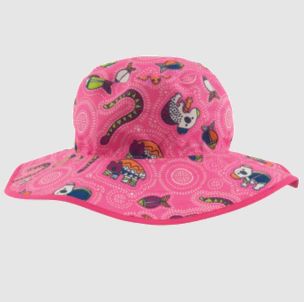
BANZ’s reversible sun hats are built with UPF 50+ fabric and a chin strap specifically because hats without one end up buried in the sand within the first ten minutes.
Pro Tip: Pack one spare UPF shirt per hour of beach time. Wet fabric loses some of its protective weave tightness, and a dry backup means you’re not stretching a soaked shirt back over sandy skin.
Rinse UPF clothing in cool water after the beach and skip the dryer’s high heat when possible. Overheating the fabric’s coating shortens its protective lifespan faster than normal wear does.
Do Beach Tents and Umbrellas Actually Protect Toddlers From the Sun?
Shade is necessary but never sufficient on its own, mainly because sand reflects UV rays up into a shaded space from every angle. A toddler sitting under an umbrella is still catching bounced UV from the sand around them.
Each shade option solves a different problem:
- Pop-up toddler tents offer low, contained shade and double as a nap or play boundary, which matters for a toddler who wanders.
- Family canopies cover more ground for the whole group but need real anchoring in wind.
- Beach umbrellas are the most portable option and easiest to reposition as the sun moves, but they tip in strong gusts if not sunk deep enough.
Enclosed pop-up tents trap heat fast in direct sun, so keep at least one side open for airflow and check on your toddler every few minutes rather than assuming shade alone means “safe and cool.” For BANZ’s own breakdown of tent versus canopy tradeoffs, our guide to shade solutions for toddlers outdoors covers setup specifics in more depth.
To keep shade from becoming today’s biggest headache:
- Dig anchor points at least 12 inches deep for umbrellas and tent stakes.
- Weigh down loose corners with sand-filled bags or a full cooler.
- Have a backup plan (a large towel draped over a wagon works) if wind flattens your setup.
Shade functions as a cool-down zone as much as a UV barrier, so even a perfectly anchored tent only does half the job without sunscreen and clothing layered underneath it.
What Should You Look for in Toddler Sunglasses?
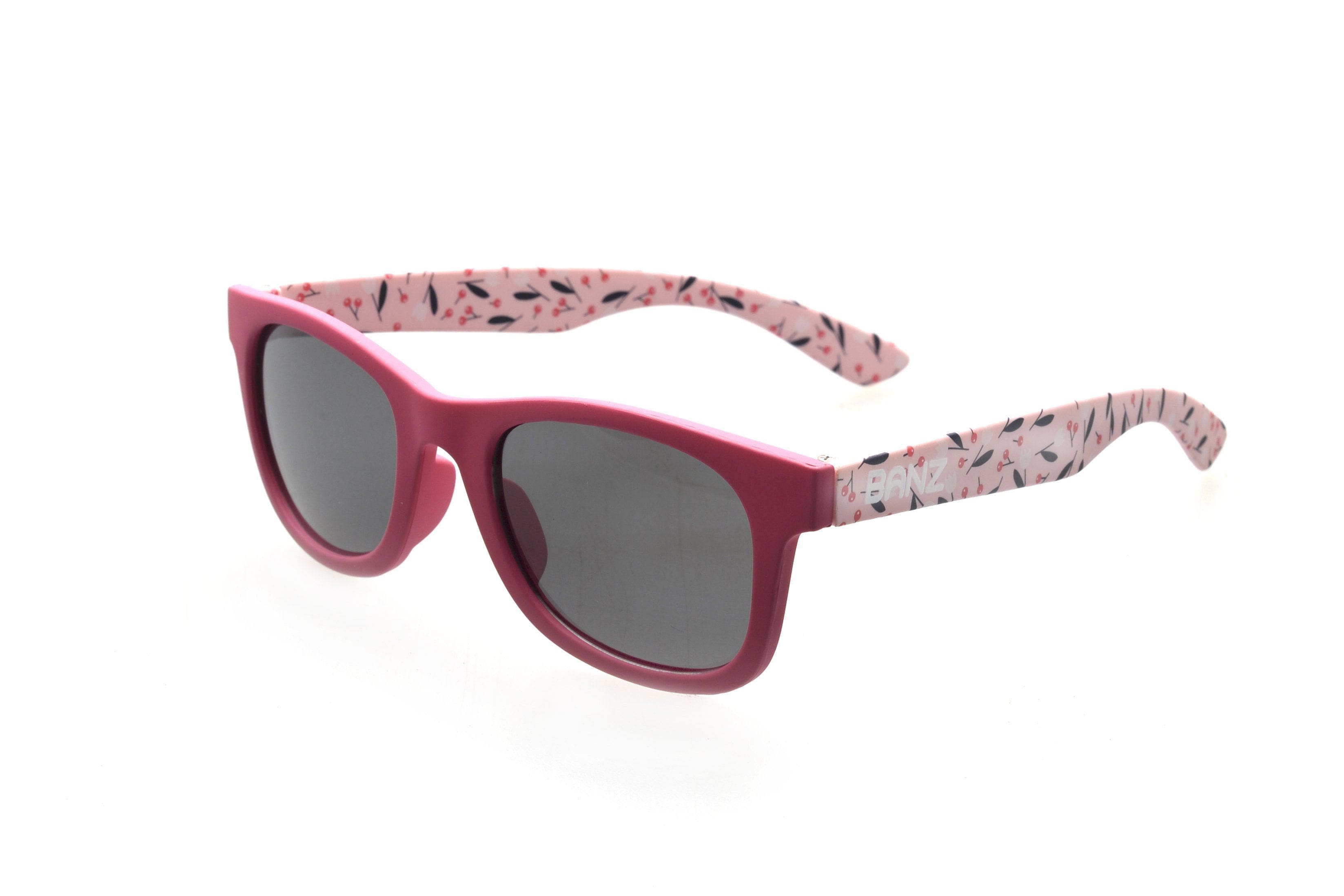
Look for sunglasses rated for 99 to 100% UVA/UVB protection, since sand and water bounce glare directly into a toddler’s eyes at angles a hat brim can’t block. A wrap-style frame limits that side glare far better than a flat, glasses-style lens.
Beyond the UV rating, prioritize:
- Soft, adjustable nose pads for a face that’s still growing and changing shape.
- An attached strap so the sunglasses stay on during a wave, a sprint, or a nap.
- Shatter-resistant, flexible lenses that can survive being sat on, which they will be.
- A floating strap option for pool or shallow-water play.
BANZ’s Baby Beachcomber Wrap Around Sunglasses fit infants and younger toddlers who need a snugger frame, while the Kids Beachcomber Wrap Around Sunglasses suit older, more active toddlers who need a slightly larger fit. For a deeper fit walkthrough, see our guide to choosing toddler sunglasses.
Pro Tip: Let your toddler pick the color or pattern themselves. A toddler who chose their own sunglasses tends to fight you less about wearing them.
What to Pack for a Beach Day With a Toddler
A simple, repeatable list beats reinventing your bag every trip. Pack these before you check the weather:
- UPF 50+ hat, swim shirt, and one spare dry set of both.
- Stick sunscreen for the face and lotion sunscreen for the body, plus a travel-size backup.
- Wrap-around sunglasses with an attached strap.
- A pop-up tent or umbrella with sand anchors or a filled sandbag.
- Water bottle, a few hydrating snacks (watermelon, cucumber), and a first-aid kit with aloe.
A simple timeline keeps the day from unraveling: play in early morning light, move to full shade around midday for lunch and a nap, then return to lighter, cooler-hour play in late afternoon. Reapply sunscreen the moment you arrive, again at the two-hour mark, and immediately after any swim.
On arrival, check three things before you unpack: wind direction (for anchoring shade), how much natural shade already exists near your spot, and the surface temperature of the sand under your toddler’s feet.
Where BANZ Fits Into Your Toddler’s Beach Kit
BANZ builds two categories that solve two different beach problems: head and face coverage, and eye protection. Both slot directly into the layering plan above rather than replacing any part of it.
- The Toddler Reversible Sun Hats with UPF 50+ Protection work for nap time under a tent, sandcastle building, and general beach wandering. The chin strap keeps it on through wind and toddler fidgeting alike.
- The Baby Beachcomber Wrap Around Sunglasses suit infants and younger toddlers riding in a carrier or sitting in shallow water, where a snugger frame stays put.
- The Kids Beachcomber Wrap Around Sunglasses fit older toddlers running, splashing, and diving for shells, where a slightly larger wrap frame handles more movement.
Pair either sunglasses SKU with UPF clothing like a UPF 50+ swimsuit for water play, since a hat brim alone won’t cover a toddler once they’re wading.
When Does Sun Exposure Turn Into a Safety Risk?
Heat illness moves fast in toddlers because their bodies heat up faster than adult bodies and cool down slower. Watch for these signs and act immediately if you see them:
- Heat rash looks like small red bumps, usually in skin folds or underclothing. Move your toddler to shade and let skin air-dry.
- Heat exhaustion shows up as unusual fussiness, pale or flushed skin, and heavy sweating. Get your toddler into shade, offer water, and remove excess clothing.
- Dehydration presents as fewer wet diapers, dry lips, or unusual drowsiness. Offer water or an oral rehydration option right away, and seek medical care if symptoms don’t improve quickly.
Check any medication your toddler takes for photosensitivity warnings before a beach day. A pharmacist or pediatrician can confirm quickly whether a prescription increases sunburn risk. For infants under 6 months, shade and clothing come first every time. Sunscreen is a last resort for small exposed patches only, per FDA guidance, never a substitute for keeping them out of direct sun in the first place.
Why Realistic Beach Habits Beat a Perfect Routine
Toddlers do not sit still for sunscreen, and they will yank off a hat within the hour no matter how good the strap is. That’s not a failure on your part. It’s just what toddlers do, and expecting a flawless routine every single beach trip sets you up to feel like you’re losing a battle that was never fully winnable.
What actually works is repetition, not perfection. The same packing list, the same order of operations, the same two-hour reapplication rhythm, trip after trip. A toddler who’s mildly damp with sunscreen and wearing a hat sideways is still miles ahead of one with none of it on. Build a routine you can actually repeat under a screaming toddler and a hot parking lot, and check BANZ’s other beach guides when you want more detail on any single layer.
— Shari M. Murphy
Gear Up for Your Next Beach Day the Easy Way
You now have the layering plan. BANZ builds the two pieces of it you’ll reach for most often: a hat that actually stays on, and sunglasses sized right for your toddler’s age and activity level. That’s the concrete advantage here. You’re not guessing at sizing charts or hunting through unrelated kids’ apparel. Both products are purpose-built for exactly the beach scenarios covered above.
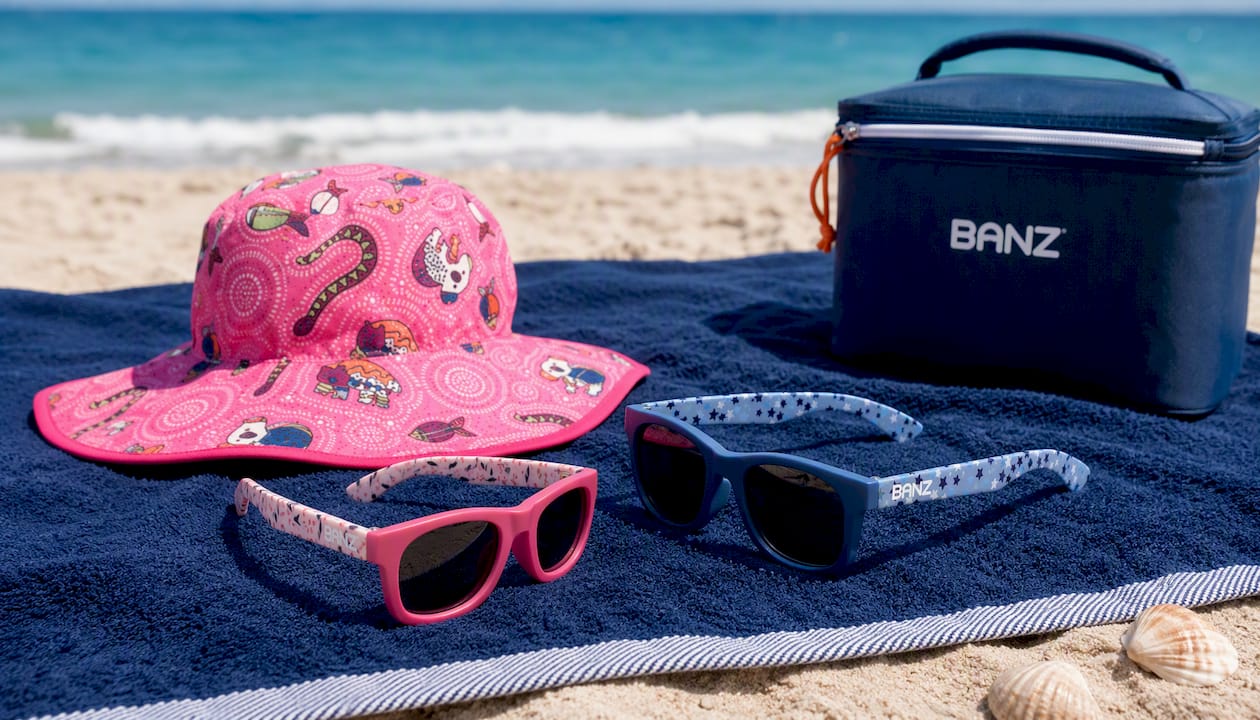
The Toddler Reversible Sun Hats with UPF 50+ Protection reverse for two looks in one hat, so packing light doesn’t mean packing less protection. Pair one with the Baby Beachcomber Wrap Around Sunglasses for your infant or younger toddler, or the Kids Beachcomber Wrap Around Sunglasses for an older, more active toddler. Check current sizing and availability on each product page, and build your beach bag around gear made specifically for small, squirmy beachgoers.
Sources
This guide draws directly on pediatric and dermatology authorities. The AAD’s infant sun protection guidance informs the shade-first, clothing-first approach for infants. HealthyChildren.org supports the stick-sunscreen and light-test tactics. CHOP’s sun safety page backs the sand-reflection warnings. The FDA’s consumer guidance shapes the under-6-months sunscreen rules, and a PMC pediatric sun protection review supports reapplication timing throughout.
This article is general information, not a substitute for advice from a qualified doctor. Consult a qualified healthcare professional about your own circumstances before acting on anything here.
- PMC review on sun protection and pediatric guidance
- How to protect kids from the sun — CHOP
- FDA: Should you put sunscreen on infants?
- Healthychildren