

Sound under 70 dB is generally safe for unlimited exposure, but risk climbs fast once noise crosses 85 dB. Above that mark, NIOSH treats it as an action threshold requiring real intervention. If your child is somewhere loud and you can’t hold a normal conversation without raising your voice, move them away, cut the exposure time, or put hearing protection on them right now.
TL;DR:
- Noise exceeding 85 dB poses a high risk for children, with safe exposure time halving for every 3 dB increase above this threshold.
- Household appliances like blenders and hair dryers often reach levels above 80 dBA, which can cause harm if used close to a child’s ear for extended periods.
- Using ear protection is essential at loud events such as fireworks, concerts, or yard work, with earmuffs being more effective and easier to fit on kids than earplugs.
- Consumer phone apps offer approximate noise level readings but should be calibrated or supplemented with dedicated meters for more accurate exposure management.
- Early and consistent hearing protection in loud environments helps prevent cumulative damage, emphasizing the importance of safeguarding ears during everyday activities and special events.
Table of Contents
- What Does a Decibel Chart for Kids Actually Show?
- How Long Is Safe at 85, 100, or 110 Decibels?
- Which Everyday Sounds Are Loud Enough to Watch?
- How Do You Actually Measure Decibels at Home?
- How to Protect Children’s Hearing in Loud Situations
- Why Early Hearing Protection Deserves More Attention Than It Gets
- Shop Hearing Protection Built for Kids
- Sources
What Does a Decibel Chart for Kids Actually Show?
A decibel chart for kids maps ordinary sounds against the decibel scale so you can size up risk in seconds, without needing a physics background. The scale uses dBA, which means A-weighted decibels, a measurement that adjusts raw sound pressure to match how the human ear actually perceives pitch and loudness. Nearly every consumer sound meter and phone app defaults to dBA for that reason, and it’s what the readings below assume.
Here’s the part most parents miss: the decibel scale is logarithmic, not linear. It’s roughly tenfold, even though it only sounds about twice as loud to your ear. That gap between what a number sounds like and what it means is exactly why a 10-decibel difference between a vacuum and a blender matters so much more than it seems.
| dB Range | Risk Band | Everyday Examples |
|---|---|---|
| — | Safe | Whisper, quiet library, refrigerator hum |
| — | Safe | Normal conversation, dishwasher, light traffic |
| 70–85 dB | Caution | Vacuum cleaner, busy street, hand blender |
| 85–100 dB | Dangerous | Lawnmower, hair dryer, subway platform |
| 100–120 dB | Dangerous (short bursts only) | Rock concert, fireworks, a child’s scream |
| 120+ dB | Immediate hazard | Close-range gunshot, jet engine at takeoff |
That last column isn’t hypothetical for parents; for context on infant sounds, see why newborns grunt while sleeping. A child’s scream can hit about 110 dB, which is loud enough to cause harm within minutes at close range. Most household sounds sit in the 30 to 70 dBA range, but small kitchen appliances routinely break 80 dBA, which is where “caution” tips into “watch the clock.”
Note that the chart shows typical readings, not absolutes. A lawnmower averages around 85 to 95 dB, but a sudden gust or a rock under the blade can spike well past that for a fraction of a second. Peaks matter as much as averages when you’re deciding whether protection is worth the hassle.
How Long Is Safe at 85, 100, or 110 Decibels?
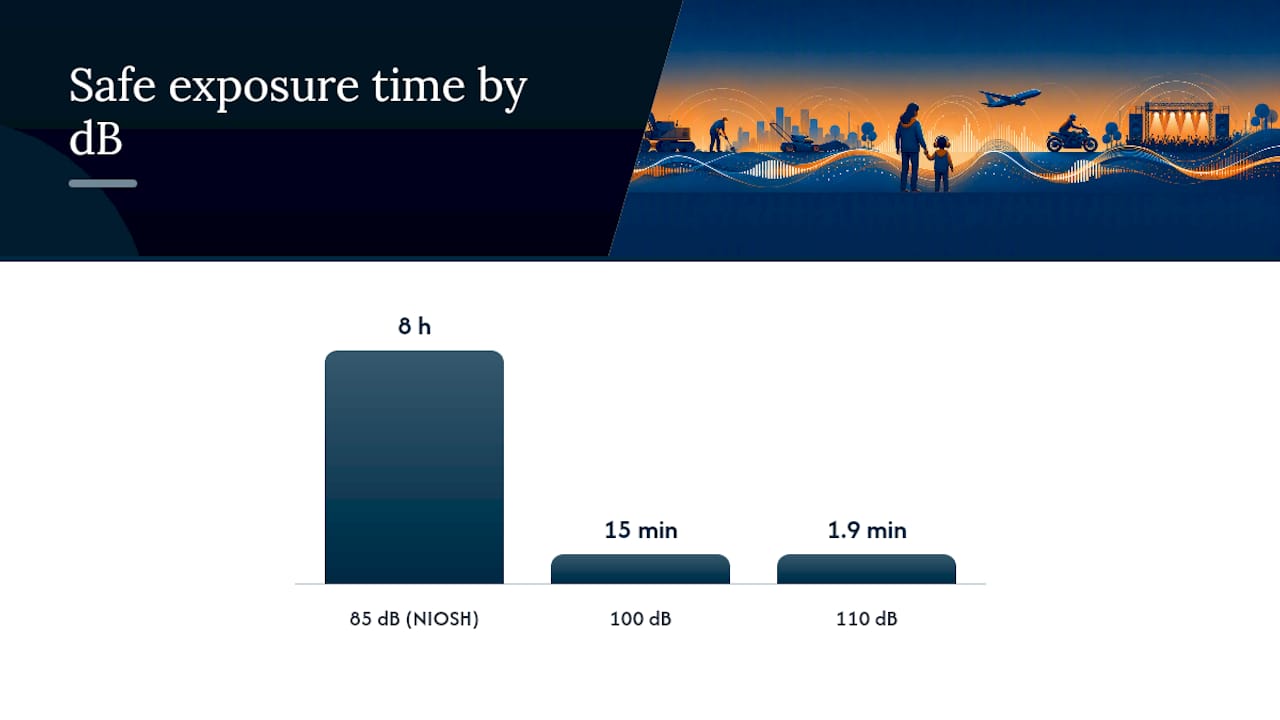
Loudness and time trade off against each other, and the math behind that trade-off is simpler than it looks once you strip out the jargon. NIOSH sets 85 dB as its action level and applies a 3 dB exchange rate, meaning your safe listening time cuts roughly in half for every 3 dB increase above that point. OSHA uses a looser 5 dB exchange rate with a permissible exposure limit of 90 dB over 8 hours, which is why NIOSH’s standard is considered the more protective benchmark for anyone advising on children.
Translated into real numbers, the exposure limits look like this:
- 85 dB: is generally considered a safe daily dose for several hours
- 90 dB: safe exposure duration is shorter than at 85 dB and varies by standard
- 100 dB: safe exposure time is limited to short periods, varying by standard
- 110 dB: safe exposure time drops to a few minutes
- 120+ dB: no safe exposure duration; immediate hearing risk
The gap between NIOSH and OSHA isn’t a rounding error. It’s the difference between treating a rock concert as an 8-hour risk versus a 15-minute one. When you’re planning how long your child stays at a fireworks display or in the front row of a show, defaulting to the stricter NIOSH numbers is the safer bet.
Which Everyday Sounds Are Loud Enough to Watch?
Some of the riskiest noise sources aren’t the obvious ones. A blender or hair dryer can hit 85 to 95 dBA, putting them in the same danger zone as a lawnmower, and both get used at close range to a child’s ear far more often than a concert does. Here’s what tends to catch parents off guard:
- Kitchen appliances: blenders and food processors often exceed 85 dB during a normal cycle
- Personal care tools: hair dryers routinely run 80 to 95 dB depending on setting and distance
- Toys: noisy toys, sirens, and musical instruments made for toddlers can spike above 100 dB right next to a small ear
- Headphones: many devices max out well above safe listening levels, especially with cheap earbuds pushed to full volume
- Fireworks and concerts: both regularly land in the 100 to 120+ dB range, with fireworks producing sharp, unpredictable peaks
- Lawnmowers and yard tools: typically 85 to 95 dB, dangerous with sustained use rather than a single pass
The distinction that matters most here is peak versus sustained exposure. A firework’s bang is a brief spike that can still cause damage in a single occurrence, while a lawnmower’s risk builds gradually over the length of the chore. Both call for the same response: move the child back, shorten their time near the source, or get protection on their ears before the noise starts.
How Do You Actually Measure Decibels at Home?
Phone apps are a reasonable starting point, but they’re not precision instruments. Consumer phone microphones vary by as much as ±10 dB from device to device, which is a wide enough margin to mistake a “caution” reading for a “dangerous” one, or the reverse. A quick calibration step, checking the app’s reading against a known reference sound or a calibrated meter for a moment, can tighten that accuracy to roughly ±2 dB, which is good enough for everyday parenting decisions.
For anyone tracking exposure across a full day rather than a single moment, a dedicated meter or dosimeter gives a more reliable cumulative picture than an app glancing at one snapshot. A free mobile app offering real-time noise monitoring helps users see cumulative dose building over a day at a fair, a festival, or even just a noisy household afternoon, rather than guessing after the fact.
Pro Tip: No meter handy? If you have to raise your voice to be heard by someone an arm’s length away, the room has likely crossed 85 dB. That’s your cue to check a reading or move the child somewhere quieter.
How to Protect Children’s Hearing in Loud Situations
The order of operations here isn’t complicated: reduce the source first, increase distance or shorten time second, and use hearing protection when neither of those options is realistic. A concert or fireworks show doesn’t let you turn down the volume, so protection becomes the primary tool rather than the backup plan.
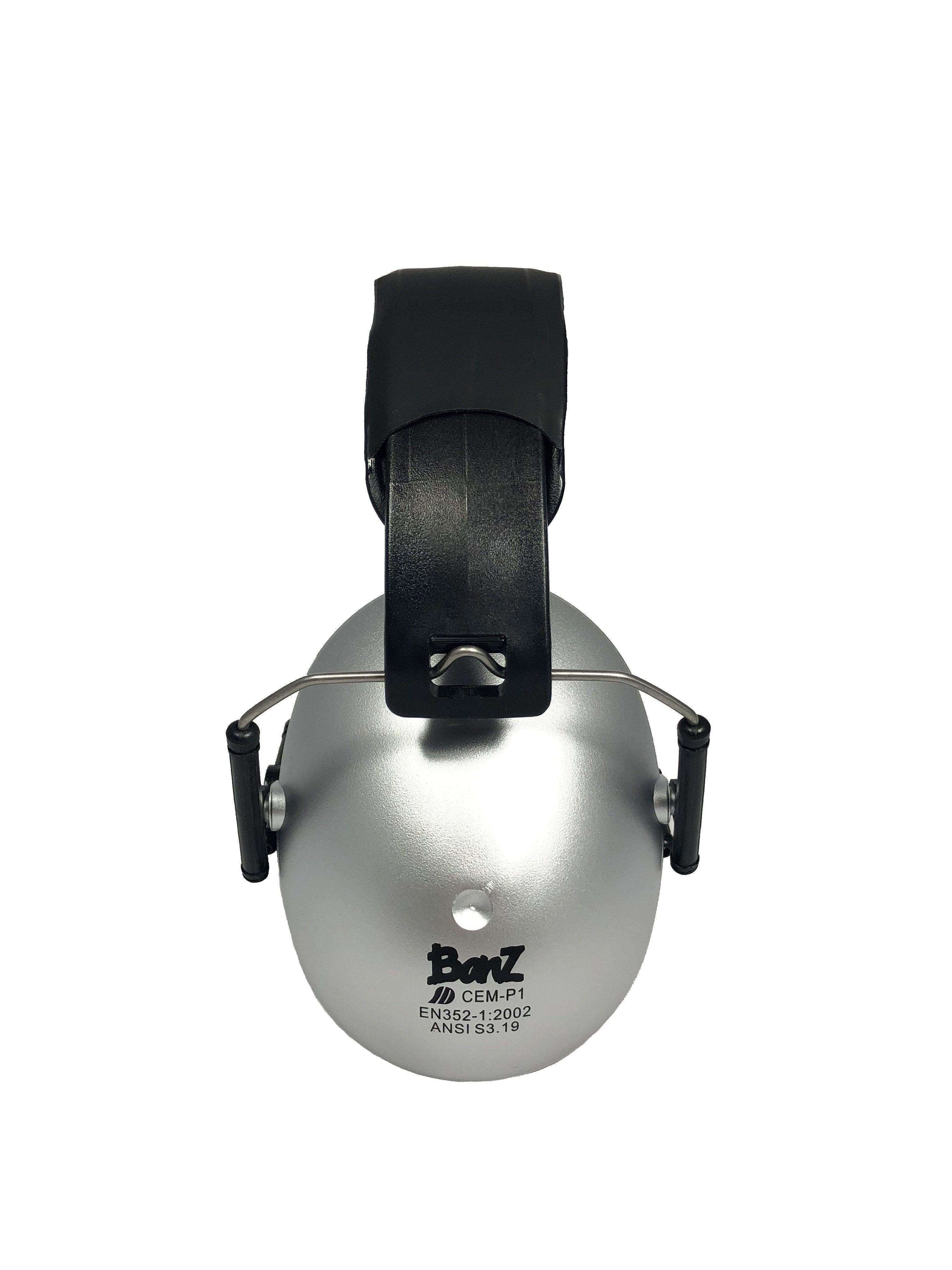
Earmuffs generally outperform earplugs for kids because they don’t require a proper seal in a small ear canal and stay put better on a fidgeting child. When you see a noise reduction rating (NRR) on packaging, treat it as optimistic. Real-world attenuation typically runs about 7 dB lower than the rated number, so a muff rated NRR 26dB is more realistically providing meaningful protection in the high teens to low 20s once fit and movement are accounted for.
Some situations call for protection every time, no exceptions:
- Concerts, fireworks displays, and motorsport events
- Air travel with a fussy engine or a screaming cabin
- Yard work with a running mower or power tool nearby
- Parades, sporting events, and any space with amplified sound
If you’re shopping for hearing protection for loud events, look for a snug, adjustable fit designed specifically for smaller heads. Adult earmuffs rarely seal properly on a child, which defeats the purpose no matter what the rating says.
Why Early Hearing Protection Deserves More Attention Than It Gets
Noise-induced hearing loss doesn’t announce itself. It accumulates quietly across birthday parties, car rides with headphones cranked up, and school events, and by the time a parent notices a child asking “what?” more often, the damage is already done and permanent. That’s the piece conventional advice tends to underplay: this isn’t about avoiding one bad night at a concert. It’s about the running total.
Pediatric guidelines already build in early detection, recommending newborn hearing screening by 1 month and diagnostic testing by 3 months when concerns arise, which tells you how seriously the medical field treats early intervention. Parents can carry that same urgency into everyday noise decisions, using BANZ’s educational resources and the free BANZ Protect app to make protection a habit rather than an afterthought.
— Shari M. Murphy
Shop Hearing Protection Built for Kids
A practical solution here is earmuffs designed specifically for children, with an NRR 26dB rating built for real-world noise like concerts, fireworks, and travel days.
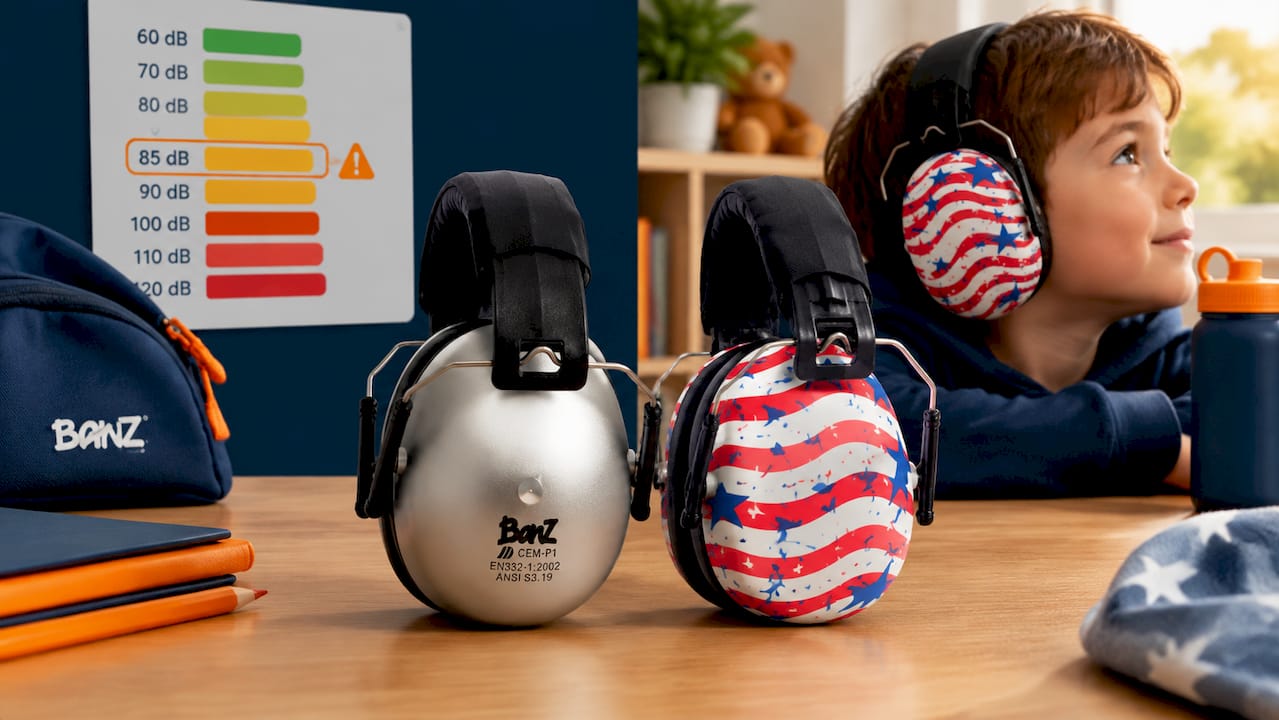
The Kids Hearing Protection Earmuffs - Solids offer a clean, understated option that works for everything from a flight with a cranky engine to a loud family gathering. If your child prefers something with more personality, the Kids Hearing Protection Earmuffs - Prints deliver the same protection in patterns kids are more likely to actually keep on, which matters more than any spec sheet when you’re standing in a crowd trying to get a toddler to cooperate. Both are built for the moments this guide covers: fireworks, concerts, motorsport events, and noisy travel. Shop the collection today and get your child’s ears covered before the next loud event catches you off guard.
Sources
- American Academy of Audiology — Levels of Noise (poster)
- Hearing loss assessment in children — StatPearls (NCBI Bookshelf)
This article is general information, not a substitute for advice from a qualified doctor. Consult a qualified healthcare professional about your own circumstances before acting on anything here.