

Yes, UPF clothing still works when wet, but how well depends entirely on the fabric. Engineered swim polyester holds its rating in the water, while cotton and stretchy athletic knits can lose much of their protective value the moment they’re soaked. A study on 69 summer fabrics found wetting increased UPF in some polyesters while cutting it sharply in cotton, and MD Anderson notes some swimsuits drop to a very low UPF when wet and stretched.
Here’s what to do with that information right now:
- Choose swim-specific UPF 50+ fabrics, not cotton tees or casual gym shirts, for anything involving water.
- Apply sunscreen to the face, neck, hands, and any skin the fabric doesn’t cover.
- Check the label for “designed for swimming” or “marine” language, not just a UPF number.
Pro Tip: A dry UPF 50+ fabric blocks about 98% of UV rays. That number can hold steady, rise, or fall once the fabric is wet, so the fiber and weave matter more than the label alone.
Key Takeaways
UPF clothing protects best when the fabric is engineered for water: swim-specific polyester retains its rating wet, while cotton and stretch knits often lose significant protection once soaked.
| Point | Details |
|---|---|
| Wetness effect varies by fabric | Some polyesters gain UPF when wet; cotton and certain treated fabrics lose protection. |
| Fit changes protection | Stretched or oversized garments open the weave and reduce UPF, wet or dry. |
| Drying time affects total exposure | Fabrics that dry in minutes limit reduced protection compared to cotton that stays damp for 45+ minutes. |
| Combine clothing with sunscreen | UPF 50+ garments cover most skin, but face, neck, and hands still need sunscreen. |
| BANZ offers swim-tested UPF gear | The BANZ rash guard and board shorts set uses fabric built to hold UPF while wet, not just dry. |
Table of Contents
- How UPF Is Measured and What the Numbers Mean
- Research Summary: How Wetness Changes UPF Across Fabric Types
- Which Fabrics Actually Hold Up in the Water
- How to Choose UPF Clothing for Swimming, Fishing, and Water Play
- Caring for UPF Garments So They Keep Working
- BANZ Products Built for Water-Ready Sun Protection
- What Parents Get Wrong About UPF and Water
- Get Water-Ready UPF Protection From BANZ
- Frequently Asked Questions
- Sources
How UPF Is Measured and What the Numbers Mean
UPF and SPF measure different things. SPF estimates how long sunscreen delays sunburn; UPF measures the percentage of UV radiation a fabric blocks outright. A UPF 50 garment lets through a very small fraction of incoming UV rays, while a UPF 30 garment lets through a slightly larger fraction.
Labs test UPF with a spectrophotometer that measures how much UV light passes through a swatch of fabric across the UVA and UVB spectrum. The result depends heavily on weave tightness, fiber type, and dye, which is why two shirts that look identical can carry very different ratings.
- UPF 15–24: good protection, blocks 93.3% to 95.9% of UV rays.
- UPF 25–39: very good protection, blocks 96% to 97.4%.
- UPF 40–50+: excellent protection, blocks 97.5% to 98%+.
A 2022 comparative study found modern sun-protective textiles outperformed two tested sunscreens on broad-spectrum blocking, reinforcing that clothing deserves a central role in any sun-safety plan for kids, not a backup role to lotion alone.
Research Summary: How Wetness Changes UPF Across Fabric Types
The clearest evidence on wet-state UPF comes from a controlled in vitro and in vivo study of 69 summer fabrics, and the results cut against a common assumption. Wetting didn’t uniformly weaken protection. Linen, viscose, and several polyesters actually gained UPF when saturated, while cotton fabrics and some polyester blends treated with titanium dioxide lost protection once wet. That same research found salt water and tap water produced similar effects on most fabrics, so the ocean isn’t more forgiving than a backyard pool.
The mechanism comes down to physics, not magic. Water fills the air pockets between fibers, changing how the fabric bends and scatters light, and in some weaves that shift actually improves UV blocking. Fibers can also swell when wet, tightening the weave. But stretch works against all of it: a wet, stretched fabric opens its pores wider, letting more UV straight through.
| Fabric Type | Dry UPF Behavior | Wet UPF Behavior |
|---|---|---|
| Cotton | Moderate, fiber and weave dependent | Often decreases, sometimes sharply |
| Casual polyester blend | Moderate to good | Inconsistent, can drop with stretch |
| Engineered swim polyester | Excellent, typically UPF 50+ | Retains rating, built for wet use |
Pro Tip: Look for a garment that states its UPF rating was tested wet, or one marketed specifically for swimming rather than general activewear. A UPF number alone doesn’t tell you whether it was measured dry, wet, stretched, or all three.
Which Fabrics Actually Hold Up in the Water
Not all UPF fabrics are built for the pool or the beach, and the difference shows up the moment they get soaked.
- High-density polyester: tightly woven fibers resist the pore-opening effect of stretch and water, keeping UPF ratings close to their dry-state numbers.
- Polyester-nylon blends: common in swim-specific rash guards, these combine durability with UPF stability in water.
- Marine-rated swim fabrics: engineered specifically to maintain UPF while wet and dry quickly, which matters more than most parents realize.
Cotton and lightweight stretchy athletic knits are the opposite story. Cotton fibers absorb water and the weave can loosen, while stretch knits open their pores under tension. Casual gym shirts fall into a gray zone: fine for a walk in the sun, unreliable for a swim.
Drying speed matters as much as the wet-state rating itself. Analysis of open-water swimming gear found standard athletic shirts can lose 40% to 75% of their UV blocking when saturated, while purpose-built swim fabrics keep UPF 50+ even soaked. A fabric that dries in 10 to 15 minutes limits the window of reduced protection; a cotton shirt that stays damp for 45 minutes or more extends it considerably.
How to Choose UPF Clothing for Swimming, Fishing, and Water Play
- Read past the UPF number. Look for “designed for swimming,” “marine,” or fiber content like polyester or nylon rather than a bare UPF 50+ claim.
- Check the fit before you check the price. A garment sized correctly preserves weave density; oversized stretch or an undersized garment pulled taut both compromise protection.
- Pair clothing with sunscreen on exposed skin. Cleveland Clinic recommends UPF 50+ garments alongside sunscreen for the face, hands, and neck.
- Dry off promptly after water exposure. Less time in a damp fabric means less time with reduced UV blocking.
- Pick a rash guard over a casual long-sleeve shirt for any real time in the water. A regular shirt might handle a walk to the mailbox; it isn’t built for an hour of splashing.
Pro Tip: Keep a dry change of UPF clothing in your beach bag. Swapping out a soaked rash guard for a dry one mid-afternoon does more for sun protection than almost any other single habit.
Caring for UPF Garments So They Keep Working
Some UPF protection is built into the fiber itself; some comes from a chemical finish applied during manufacturing. Fiber-based UPF tends to hold up longer, while finishes can wear down with repeated washing, chlorine exposure, and sun over a season or two.
- Follow the care label exactly, especially water temperature and dryer heat settings.
- Skip harsh detergents and bleach, which can degrade both fiber structure and any UPF finish.
- Rinse chlorine and salt water out after each swim rather than letting a suit air-dry unwashed all summer.
- Replace rash guards and swimsuits once fading, thinning, or visible wear shows up. That’s usually the first sign UPF performance has dropped.
BANZ Products Built for Water-Ready Sun Protection
BANZ started because one family couldn’t find gear that actually protected their kids outdoors, and that same standard shapes every product in the lineup today, including UPF 50+ swimwear designed for the water, not just the backyard. Over 2 million families across six continents now rely on that approach, backed by the free BANZ Protect app for real-time UV monitoring.
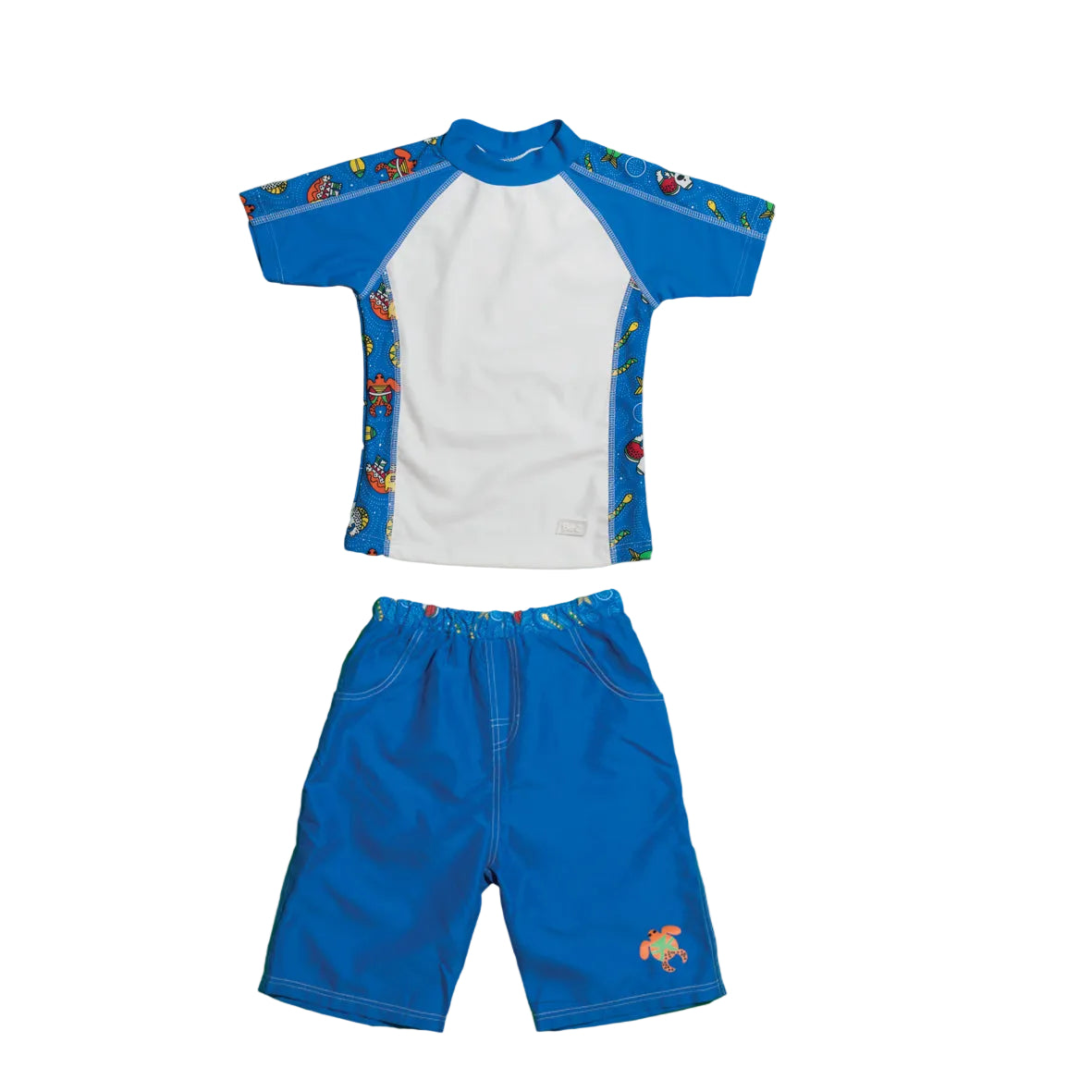
For the water-ready guidance covered above, the Short Sleeve Rash Guard and Board Shorts Set fits the fabric profile that holds UPF when wet, not the cotton or stretch-knit profile that doesn’t. Pair it with Kids Anti-Fog UV Swim Goggles for full coverage during pool or beach days.
- Rash guards and board shorts built with swim-appropriate fabric construction.
- Anti-fog UV swim goggles for eye protection alongside skin coverage.
- UPF 50+ hats and sunglasses to round out exposed-area protection.
Pro Tip: Check BANZ’s UV Safety Resources page for seasonal guidance on UV index and timing outdoor water play around peak sun hours.
A UPF rating tested only in dry conditions tells parents half the story. The other half of the story, what happens after the first splash, is where fabric choice actually earns its keep.
What Parents Get Wrong About UPF and Water
Most sun-safety advice treats UPF like a fixed number, stamped once and true forever. That’s the part worth pushing back on. The research is clear that wetness changes UPF unevenly across fabrics, which means a “UPF 50+” label on a cotton blend tells you almost nothing about how that shirt performs once your child jumps in the pool.
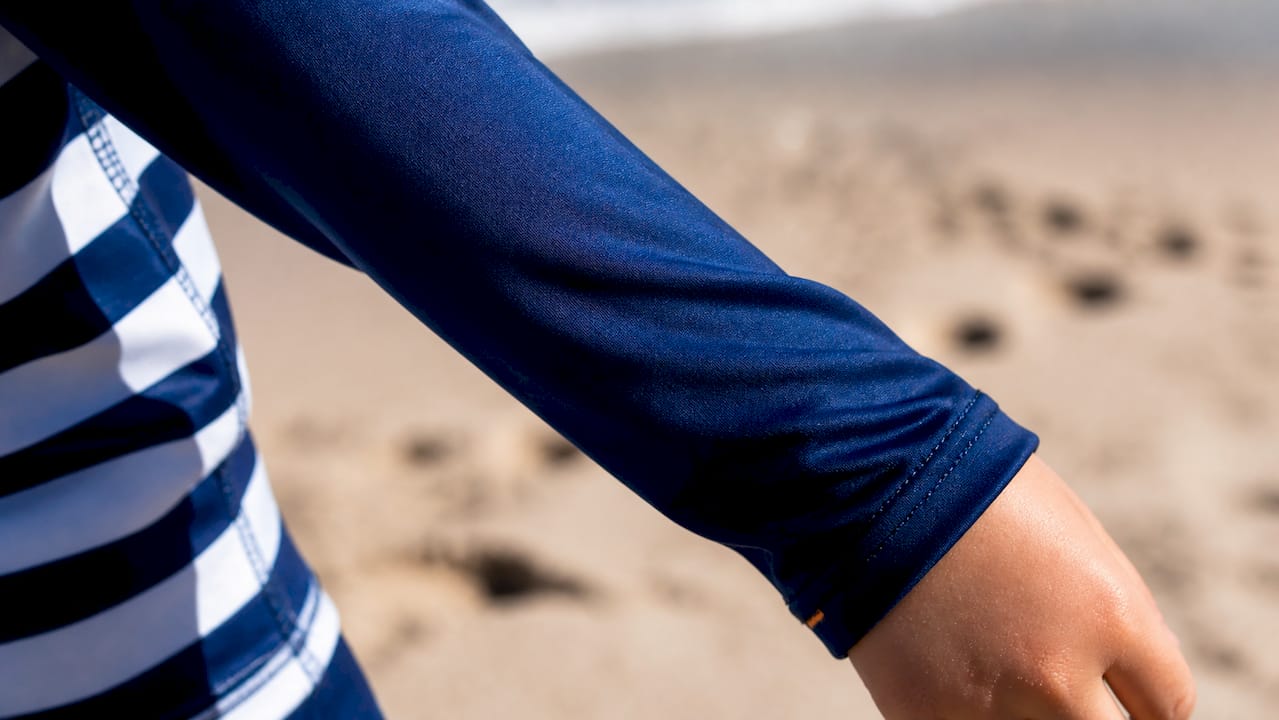
The bigger miss, though, is fit. Parents fixate on the number and skip the stretch test. A garment that’s too small and gets pulled tight across a kid’s shoulders can lose most of its rated protection, wet or dry, because stretch opens the weave regardless of fiber quality. That’s a bigger risk factor than most sunscreen reminders ever mention.
If you take one thing from the research, take this: buy for the activity, not just the label. A fabric engineered for swimming and sized to fit loosely will outperform a higher-numbered UPF shirt that’s stretched too tight or made from a fiber that wasn’t built to get wet in the first place. Sunscreen still belongs on exposed skin either way. Clothing does the heavy lifting only when the fabric is right for the job.
Get Water-Ready UPF Protection From BANZ
BANZ builds its swimwear and sun gear around exactly the fabric standards this article covers: engineered construction that holds UPF 50+ protection through a full day of swimming, not just a walk in the yard.
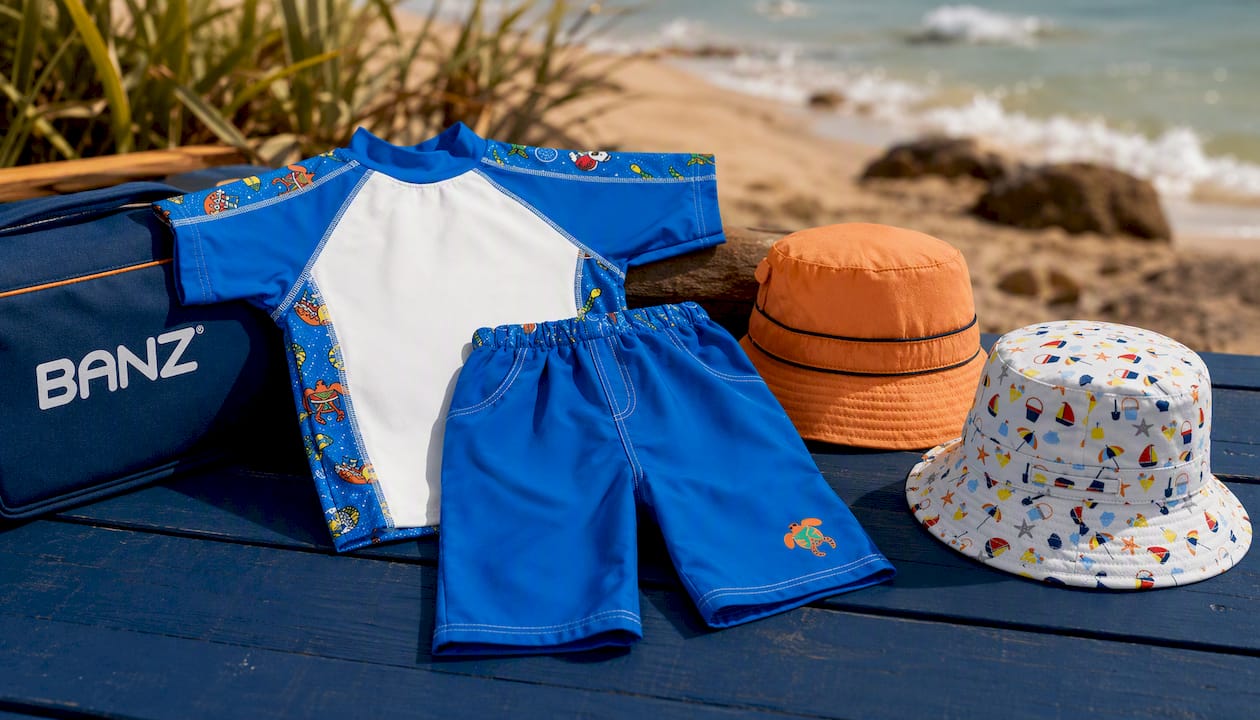
If you’re outfitting your kids for the pool, lake, or beach this season, the Short Sleeve Rash Guard and Board Shorts Set delivers the swim-specific fabric performance that casual cotton tees can’t match once they’re wet. Add UV Swim Goggles for complete coverage, and browse the full swimwear collection to find the right size before your next trip to the water.
Frequently Asked Questions
Does UPF still work when clothing gets wet? Yes, but performance depends on fabric. Engineered swim polyester retains its UPF rating wet, while cotton and some treated fabrics can lose a significant amount of protection when saturated.
Why does wet cotton lose UV protection? Water changes how light passes through cotton fibers, and the weave can loosen when saturated, letting more UV rays through than the dry-state rating suggests.
Can stretching a UPF fabric reduce its protection? Yes. Stretch opens the spaces between fibers, and a garment rated highly when relaxed can drop sharply in UPF when pulled tight, wet or dry.
Is UPF swimwear better than sunscreen for kids in the water? Clothing and sunscreen work together rather than replacing each other. UPF swimwear doesn’t wash off the way sunscreen can, but exposed skin like the face and hands still needs sunscreen.
How do I know if a swimsuit will actually protect my child in water? Look for labels stating the fabric was tested wet or marketed specifically for swimming, along with fiber content like polyester or nylon rather than a bare UPF number alone.
Sources
- Comparative study of sun-protective textiles and sunscreens (PubMed)
- Influence of wetness on the ultraviolet protection factor (UPF) of textiles: in vitro and in vivo measurements — PubMed
- 7 things to know about UPF, sun protection and clothing — MD Anderson
- Does sun protection clothing actually work? — Cleveland Clinic
Recommended
- UPF 50 Protection for Kids: What Parents Need to Know – BANZ® Carewear USA
- UPF 50 vs 30: Which Sun Protection Level Do You Need? – BANZ® Carewear USA
- UPF 50 Explained: What the Rating Really Means – BANZ® Carewear USA
- UV Protection Swimsuit for Kids and Caregivers: UPF 50+ Guide – BANZ® Carewear USA
