

Dress kids in lightweight UPF 50+ long sleeves and pants, a wide-brim hat, and NRR-rated earmuffs whenever loud garden equipment is nearby. That one rule covers the two risks most parents miss: UV exposure and noise damage.
- UPF 50+ long-sleeve shirt and lightweight long pants
- Wide-brim hat (3-inch brim minimum) and UV-blocking sunglasses
- Certified earmuffs with effective noise reduction near lawnmowers, trimmers, or leaf blowers
- Breathable, moisture-wicking fabric (cotton, linen, or lightweight synthetics)
- Closed-toe shoes with grip
For a tested, U.S.-available option, BANZ® offers UPF 50+ sun gear and NRR 26 dB child earmuffs, plus the free BANZ Protect app for real-time UV and noise monitoring.
Table of Contents
- What gardening clothing should kids actually wear?
- When do kids need hearing protection in the garden?
- How do you keep kids cool while still protecting them?
- What fit and safety features should you check before buying?
- How do you care for and replace kids’ garden gear?
- What do kids’ UPF clothing and earmuffs cost in the U.S.?
- BANZ® products for garden sun and hearing protection
- Key Takeaways
- A practical note on protective gardening gear for kids
- BANZ® is the direct option for certified kids’ sun and hearing protection
- Useful sources and where to learn more
What gardening clothing should kids actually wear?
The core pieces are a UPF-rated long-sleeve shirt, lightweight long pants, a wide-brim hat, UV sunglasses, thin gloves, and closed-toe shoes. Every item has a job: the shirt and pants block UV and insect bites, the hat shades the face and neck, gloves protect against thorns and soil bacteria, and shoes guard against sharp tools.
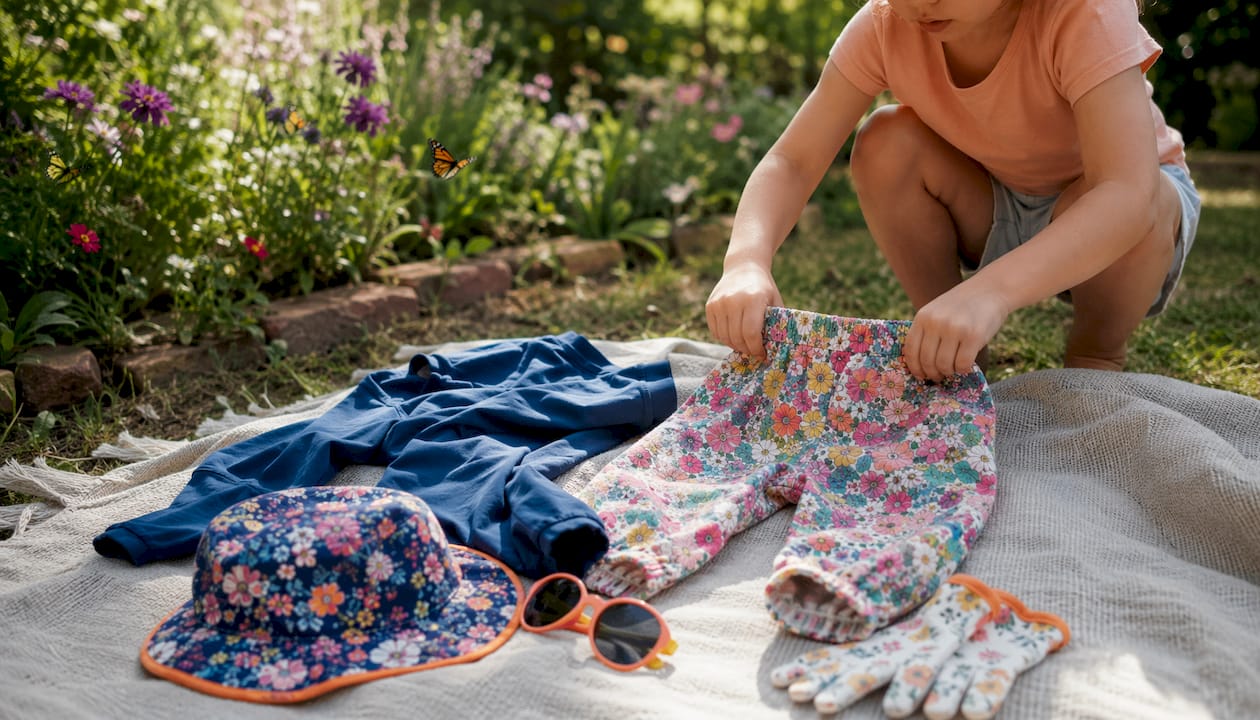
Natural fibers like cotton and linen or lightweight synthetics are the best fabric choices for warm-weather gardening. They breathe well, wick moisture, and keep kids comfortable during active play. Polyester alone traps heat and is worth avoiding on hot days.
| Fabric | Breathability | UPF Suitability | Durability |
|---|---|---|---|
| Cotton | High | Moderate (UPF 50+ when rated) | Moderate |
| Linen | High | Moderate | Moderate |
| Lightweight synthetics | High | High (purpose-rated) | High |
| Canvas | Low | High | Very High |
For footwear, boots suit heavy tasks and wet ground; breathable sneakers or trail runners work better on hot, dry days when kids are moving constantly.
Pro Tip: Light-colored UPF garments make tick detection much easier. Dark fabrics hide ticks until they’ve already reached skin. Save darker colors for days when digging in soil is the main task and tick exposure is lower.
When do kids need hearing protection in the garden?
Use certified hearing protection any time a child is near a lawnmower, string trimmer, leaf blower, or similar equipment. These tools produce sustained noise levels that can cause permanent hearing damage in children, whose ears are more vulnerable than adults’.
NRR ~26 dB is a common benchmark for effective noise reduction when children are near loud garden equipment. At that rating, a child’s actual noise exposure drops to a safer level during typical yard work.
Fit matters as much as the rating. A loose-fitting earmuff loses most of its protective value. Check these points before each use:
- Padded headband sits flat and doesn’t press uncomfortably
- Ear cups fully cover each ear with no gaps
- Strap tension is snug but not tight enough to cause discomfort
- Size matches the child’s head (most child earmuffs list a head circumference range)
Pro Tip: Introduce earmuffs gradually. Let kids wear them for a few minutes while watching you work before the equipment starts. Pair the earmuffs with a favorite sticker on the headband or let them pick the color. Kids who feel ownership over the gear wear it consistently.
How do you keep kids cool while still protecting them?
Use light, breathable layers and schedule gardening outside peak UV hours (typically 10 AM to 4 PM) when possible. A single heavy layer is harder to manage than two light ones you can adjust as activity levels change.
A practical modular setup: a lightweight UPF long-sleeve top as the base, a removable sun jacket for shade breaks, and pants with a roll-up cuff option. A legionnaire-style or wide-brim hat adds neck coverage without adding heat. Horticulturists recommend this modular, layered approach over a single fixed “gardening uniform” because conditions shift throughout the day.
Practical steps to manage heat:
- Check the UV index before heading out (the BANZ Protect app shows this in real time)
- Offer water every 15–20 minutes during active work
- Build in shade breaks every 30 minutes on hot days
- Remove the sun jacket during low-UV periods; add it back when UV rises
Pro Tip: Choose fabrics labeled “moisture-wicking” or “quick-dry.” These pull sweat away from skin and dry fast, which reduces the clammy feeling that makes kids want to strip off protective layers.
What fit and safety features should you check before buying?
The core rule: protective gear must stay in place during real movement. A hat that blows off or earmuffs that slide down offer no protection.
- Adjustable straps on hats and earmuffs so fit tightens as the child grows
- Elastic cuffs on sleeves and ankles to keep fabric from riding up
- Reinforced knees on pants for kids who crawl or kneel on hard ground
- Tag-free necklines to prevent irritation during extended wear
- Secure chin straps on wide-brim hats, ideally with a breakaway clip for safety
- Ear cup seal check on earmuffs: press gently and confirm no air gap
- Headband tension on earmuffs: should hold without leaving red marks after 20 minutes
Adjustable overalls and pants with reinforced knees extend useful life by accommodating growth spurts. An elastic waist and cuff roll add another season of wear without buying new gear.
Pro Tip: Run a quick at-home fit test before the first garden session. Have the child reach overhead, squat to the ground, and pretend to run in place. Any hat that shifts or earmuff that slides during those three moves needs adjustment before outdoor use.
How do you care for and replace kids’ garden gear?
Follow the label, wash after every use, and replace gear when fit or protective performance degrades. That’s the short version.
Practical care steps:
- Wash UPF clothing according to label instructions; avoid fabric softeners, which can reduce UPF performance over time
- Tumble-dry clothing on high heat for at least 10 minutes after gardening to eliminate any ticks that may be on the fabric
- Air-dry wide-brim hats to preserve their shape; heat can warp structured brims
- Wipe earmuff cushions with a damp cloth after each use; check the foam seal for cracks or compression
Replace UPF apparel when the fabric thins noticeably, develops permanent stains, or loses its rated finish (some UPF coatings degrade after repeated washing). Replace earmuff cushions or the full headband when the foam no longer sits flush against the ear or the headband loses tension.
What do kids’ UPF clothing and earmuffs cost in the U.S.?
| Item | Budget | Mid-Range | Premium |
|---|---|---|---|
| UPF long-sleeve shirt | $15 | $30–$50 | $55 |
| UPF lightweight pants | $20 | $26 | $65 |
| Wide-brim UPF hat | $10–$20 | $26 | $45 |
| Certified NRR earmuffs available at various price ranges |
Buying priorities, in order:
- Always verify the UPF rating (look for UPF 30+ minimum; UPF 50+ preferred) and the NRR certification on earmuffs before checking price
- Choose adjustable sizing over exact-fit sizing to extend useful life
- Confirm the retailer’s return or exchange policy before buying earmuffs, since fit varies significantly by head size
Cost-saving strategy: buy neutral-color UPF base layers that work across seasons, then add seasonal accessories. Adjustable overalls with reinforced knees serve kids through multiple growth stages without replacement.
BANZ® products for garden sun and hearing protection
BANZ® offers UPF 50+ sun gear and NRR 26 dB child earmuffs sized and designed for kids, both available to U.S. parents directly online.
| Product Category | Key Feature |
|---|---|
| UPF 50+ apparel | Certified sun protection; lightweight, washable fabrics |
| Wide-brim sun hats | Child-sized with adjustable chin straps |
| UV-blocking sunglasses | Rated eye protection for outdoor use |
| NRR 26 dB earmuffs | Padded cushions, adjustable headband, child-sized fit |
| BANZ Protect app | Real-time UV and noise monitoring, free download |
What parents get with BANZ® gear:
- Certified UPF 50+ labeling on apparel and hats, meeting the standard recommended for children by expert guides
- Child-sized earmuffs with padded ear cups and adjustable straps; NRR ratings explained clearly on the product page
- Washable fabrics and clear care instructions
- The BANZ Protect app, which monitors real-time UV index and ambient noise levels so you know when to add gear or move kids to shade
BANZ® ships to U.S. addresses. Browse the full range at usa.banzworld.com.
Key Takeaways
Consistent use of certified UPF clothing with high protection levels and effective noise-reducing earmuffs delivers measurable protection for children during garden activities.
| Point | Details |
|---|---|
| UPF 50+ clothing | Dress kids in rated long sleeves and pants; UPF 50+ is the preferred standard for children. |
| Wide-brim hat and sunglasses | A 3-inch brim plus UV-blocking sunglasses protect face, neck, and eyes during outdoor work. |
| NRR-rated earmuffs | Use certified earmuffs (NRR ~26 dB) whenever kids are near lawnmowers, trimmers, or blowers. |
| Breathable layers | Light, moisture-wicking fabrics keep kids comfortable and more likely to keep protective gear on. |
| Care and replacement | Tumble-dry on high for 10 minutes after gardening; replace gear when fit or protection degrades. |
| BANZ® recommendation | BANZ® offers UPF 50+ apparel and NRR 26 dB earmuffs for kids, plus the free BANZ Protect app. |
A practical note on protective gardening gear for kids
Parents often treat sun hats and earmuffs as optional extras, something to grab when it’s convenient. The evidence points the other way: consistent use of certified gear is what delivers the safety benefit, not owning the right product and leaving it in a drawer.
The modular approach works precisely because it’s low-friction. A UPF shirt paired with everyday breathable pants is easier to maintain than a specialized “gardening outfit” that requires a separate laundry routine. Earmuffs that kids help choose and decorate get worn. Gear that fits correctly stays on during movement. These are practical habits, not complicated protocols.
The two numbers worth memorizing are UPF 50+ and NRR 26 dB. Everything else, fabric choice, color, style, is secondary to those certifications. Check the label before you buy, run the fit test before the first use, and replace gear on a schedule rather than waiting for visible failure.
BANZ® is the direct option for certified kids’ sun and hearing protection
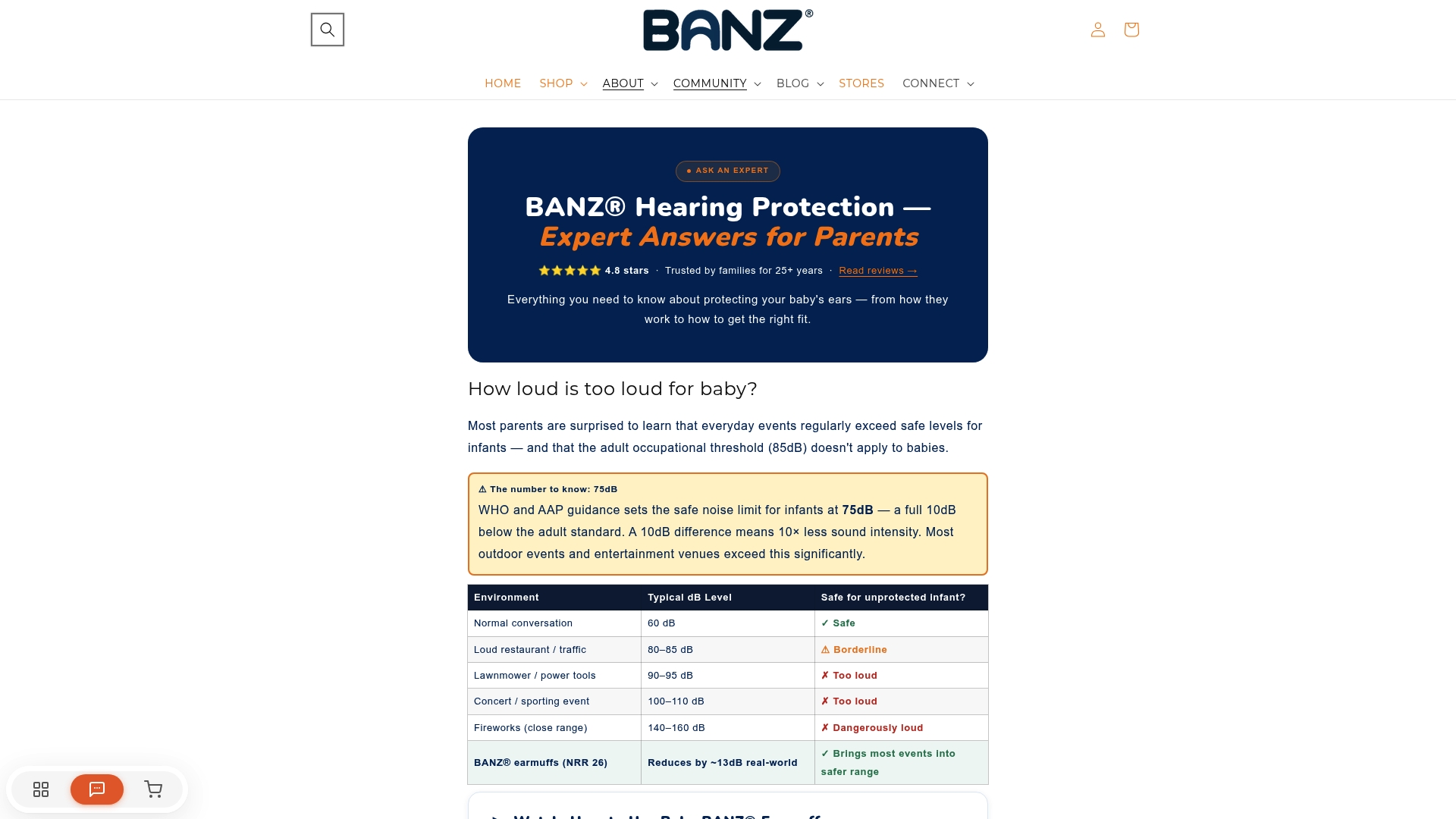
BANZ® sells UPF 50+ apparel, wide-brim hats, UV sunglasses, and NRR 26 dB earmuffs sized for children, all backed by clear certification labels and educational resources for parents.
Three places to start:
- Kids’ UPF sun gear: hats, shirts, and sunglasses rated UPF 50+ at usa.banzworld.com
- Child earmuffs: NRR 26 dB options with fit guidance at the BANZ earmuffs page
- Free BANZ Protect app: real-time UV and noise monitoring, available for download at no cost
Check the full range and order directly at usa.banzworld.com.
Useful sources and where to learn more
- Best Gardening Clothes for Sun & Tick Protection — MomHomeGuide: practical guide covering fabric choices, tick removal, and care routines (practical guide)
- What Should I Wear When Gardening? — Gardening Australia Magazine: expert guidance on UPF standards, NRR benchmarks, and modular layering (standards + practical guide)
- Women’s Gardening Clothes — Dovetail Workwear: workwear design principles including reinforced knees and freedom-of-movement features (practical guide)
- What to Wear in the Garden — The Seattle Times: footwear and seasonal clothing advice for gardeners (practical guide)
- UV Protect Your Kids: A Parent’s Complete Guide — BANZ®: deep background on UPF ratings and timing of outdoor play (UPF standard + parent resource)
- Baby Earmuffs NRR vs SNR: What Parents Should Know — BANZ®: explains NRR and SNR ratings for child earmuffs and what to look for when buying (NRR standard)
- Clothing Color and UV Blocking: A Parent’s Guide — BANZ®: covers how fabric color affects UV blocking and tick visibility (UPF + tick safety)
- Free Kids Sun & UV Safety Resources — BANZ®: links to EPA, CDC, and WHO guidance on UV safety for children (official agency standards)
Recommended
- Outdoor Sun Safety Gear Examples for Kids in 2026 – BANZ® Carewear USA
- Sun Hats for UV Protection: A Parent’s Safety Guide – BANZ® Carewear USA
- Free Kids Sun & UV Safety Resources: EPA, CDC & WHO Guides | BANZ® – BANZ® Carewear USA
- How Sun Exposure Affects Your Child’s Eye Development – BANZ® Carewear USA