

TL;DR:
- A child hearing protection policy reduces children’s exposure to loud noises that can cause irreversible hearing loss.
- Using properly rated earmuffs, earplugs, or noise-canceling headphones, along with environmental controls, helps prevent damage.
A child hearing protection policy is a defined set of guidelines that reduces children’s exposure to harmful noise levels before permanent damage occurs. Noise above 85 decibels can cause irreversible hearing loss, and the risk grows faster as volume increases. Concerts, fireworks, and even loud classrooms regularly exceed that threshold. Parents and educators who implement child hearing protection policy early give children a real defense against one of the most preventable forms of disability. The World Health Organization and OSHA both set standards that make this a measurable, practical goal, not just a good intention.
What are the key components needed to implement a child hearing protection policy?
The Noise Reduction Rating (NRR) is the standard measure of how much sound a hearing protector blocks. Every product sold in the United States carries an NRR label set by the Environmental Protection Agency. For children, NRR 20–25 suits moderate noise environments like sporting events, while NRR 25–30 or higher is required for extremely loud settings such as fireworks or concerts, where noise can reach 140–160 dB.
OSHA adds an important correction to that number. OSHA recommends derating NRR values by 50% for real-world use. That means an earmuff rated NRR 26 delivers roughly 9.5 dB of actual protection in practice. Parents and educators need to account for this gap when selecting gear.
Types of hearing protection for children
Three main categories work for children:
- Earmuffs: The most practical choice for young children. They fit over the ear, require no insertion, and are easy to put on and remove. BANZ produces child-specific earmuffs with NRR ratings designed for infant through school-age use.
- Earplugs: Better suited for older children who can insert them correctly. Improper fit dramatically reduces effectiveness. Properly fitted earmuffs or earplugs significantly cut noise exposure; loose protection provides little benefit.
- Noise-canceling headphones: Useful for sustained low-to-moderate noise environments like air travel, but most consumer models do not carry a certified NRR and should not substitute for rated protection at loud events.
Environmental controls also matter. Positioning children farther from speakers or noise sources, scheduling quiet breaks every 30–60 minutes, and limiting total exposure time all reduce cumulative risk. These controls work alongside physical protection, not instead of it.
Pro Tip: Check the NRR vs. SNR ratings before purchasing any child hearing protector. The NRR number on the box is the lab rating. Real-world protection is lower, so always size up when in doubt.
How do you develop and communicate child hearing safety measures?
Clear rules come first. Set a specific volume limit for personal listening devices: health experts recommend no more than 60% of maximum volume for children. At 80 dB, a child can listen safely for up to 40 hours per week. At 90 dB, that drops to just 4 hours. Those numbers make the stakes concrete for both children and adults.
Teaching children to recognize hazardous noise is the second step. Children as young as four can learn a simple rule: if you have to shout to be heard, the environment is too loud. Schools can post visual noise guides in gyms, music rooms, and cafeterias. Parents can use the same language at home before concerts or sports events.
Adult modeling is the most powerful communication tool available. Parents who consistently wear hearing protection in loud settings normalize the behavior for children. A child who sees a parent put on earmuffs before a fireworks show treats it as a normal step, not a punishment.
Here is a practical communication plan for schools and families:
- Set written guidelines. Document noise limits, required protection for specific events, and consequences for non-compliance in school handbooks or family agreements.
- Train teachers and caregivers. Run a 30-minute session covering NRR basics, correct fitting, and when protection is required.
- Post signage. Place noise level reminders near music equipment, gym speakers, and power tools in shop classes.
- Hold a parent information session. Cover everyday noise hazards children face and how to address them at home.
- Use positive reinforcement. Praise children for wearing protection without prompting. Treat it the way you treat buckling a seatbelt: non-negotiable and worth acknowledging.
Pro Tip: Frame hearing protection the same way you frame sunscreen. Both are invisible defenses against invisible damage. Children accept routines faster when they see them as normal safety steps, not restrictions.
Step-by-step guide to executing a hearing loss prevention policy
Putting a policy into practice requires a clear sequence. Skipping steps, especially the familiarization phase, is the most common reason children resist wearing protection.
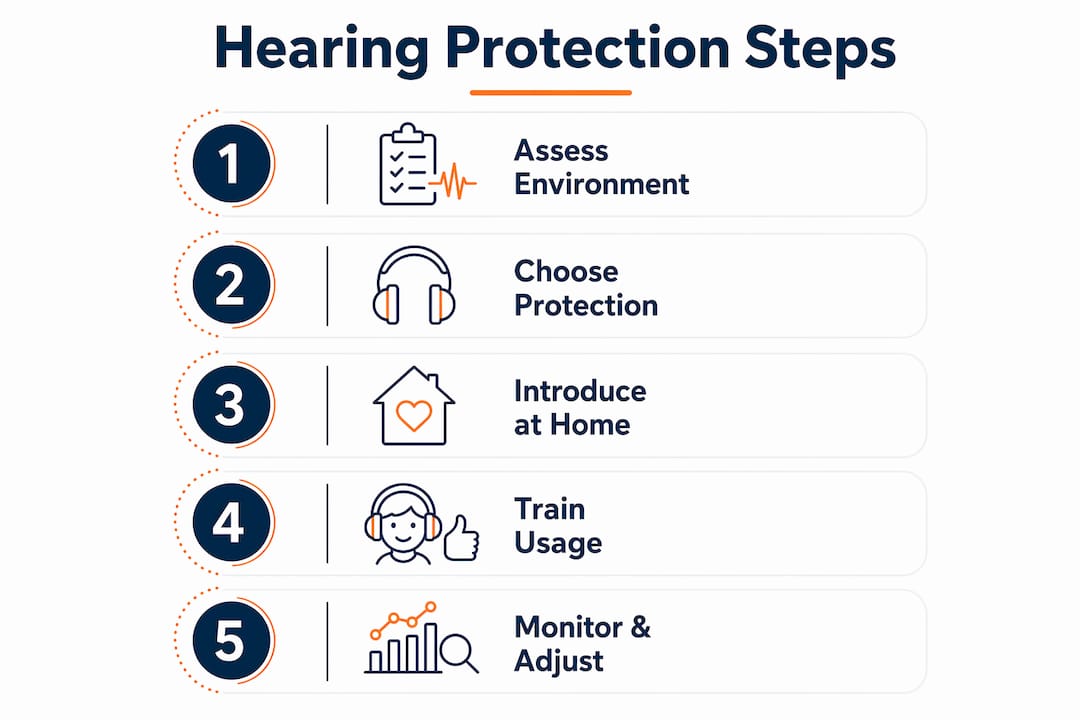
Step 1: Assess your environment
List every noisy setting children regularly encounter. Common examples include school music rooms, sports stadiums, movie theaters, fireworks displays, and power tool use at home. Noise above 85 dB requires protection, and many of these environments exceed that level without warning.
Step 2: Select age-appropriate protection
Match the device to the child’s age and the noise level of the setting. Earmuffs work best for infants and toddlers. Older children can transition to earplugs with proper training. Review hearing protection options for loud events to match NRR ratings to specific environments.
Step 3: Introduce protection at home first
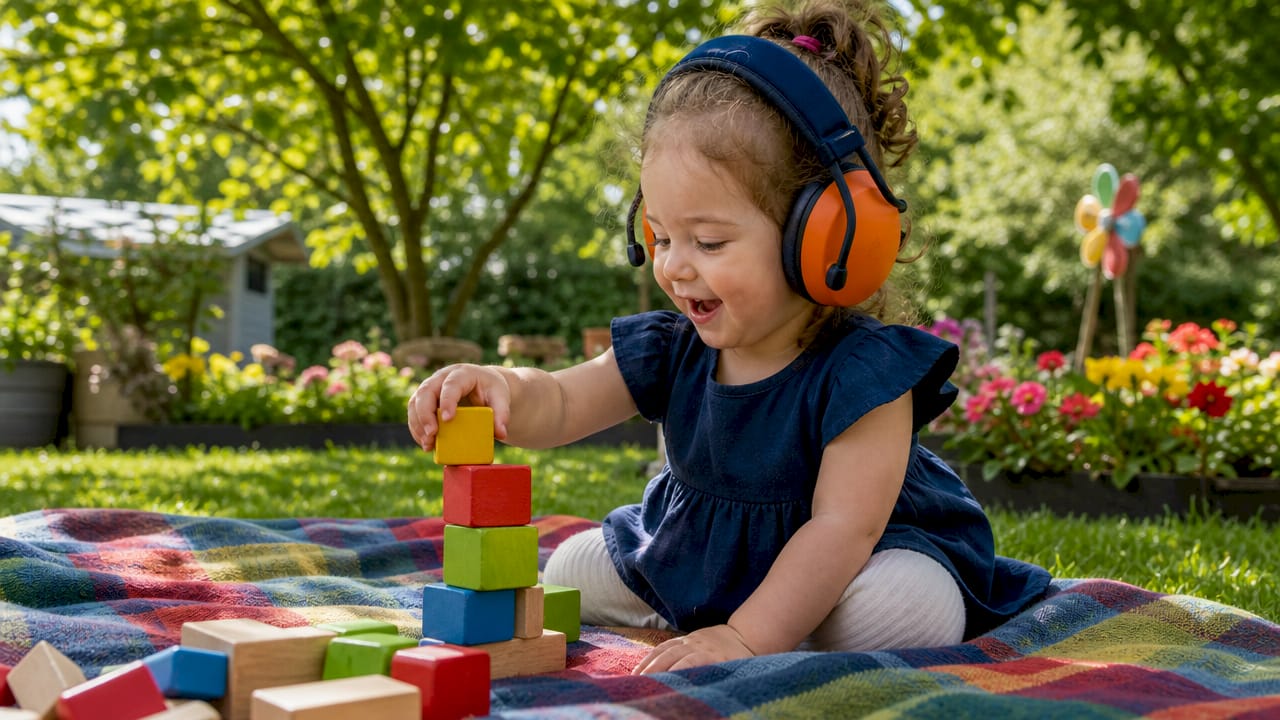
Introducing hearing protection during calm home activities helps children acclimate to the feel before they need it in a stressful loud setting. Let a child wear earmuffs while watching a movie or playing. This removes the novelty and reduces resistance when the real situation arrives.
Step 4: Train on correct use
Show children and staff how to fit earmuffs snugly against the head with no gaps. For earplugs, demonstrate the roll, pull, and hold technique. Conduct a quick check before every noisy event.
Step 5: Build tracking and reminders into your routine
- Add hearing protection to your event packing checklist alongside sunscreen and water.
- Set a calendar reminder before recurring events like school concerts or holiday fireworks.
- Assign a designated “hearing protection check” role to a teacher or parent volunteer at school events.
Step 6: Monitor and adjust
Schedule quiet breaks during extended noisy activities. Watch for early signs of noise-induced hearing loss such as tinnitus, muffled hearing, or asking for louder volumes after an event. If symptoms appear, consult an audiologist promptly.
Pro Tip: The free BANZ Protect app provides real-time noise monitoring so you can check decibel levels before and during events. Use it to decide when protection is required rather than guessing.
What challenges arise when applying hearing protection guidelines for kids?
Resistance is the most common obstacle. Children often refuse earmuffs because they feel strange, muffle familiar sounds, or simply look different. The solution is early and repeated exposure in non-threatening settings. Introducing protection at home in calm environments builds tolerance before the stakes are high.
Fit problems are the second major issue. A device that sits loosely on a child’s head provides far less protection than its NRR rating suggests. Check that earmuffs seal completely around the ear with no hair or clothing caught underneath. For children with sensory sensitivities, specialized options exist that balance comfort with protection. BANZ offers sensory-friendly earmuffs designed for children with heightened sensitivity to touch and sound.
Adult inconsistency undermines policy faster than anything else. When a teacher skips earmuffs at a school concert “just this once,” children notice. Consistent adult behavior is not optional. It is the policy.
Hearing protection works only when worn correctly and consistently. A child who sees adults treating protection as optional will treat it the same way. The adult in the room sets the standard, every time.
Two common misconceptions also slow adoption. First, many parents believe earmuffs block all sound and will prevent children from enjoying an event. Quality child earmuffs reduce harmful peaks while still allowing speech and music to come through at safe levels. Second, some educators assume hearing loss only affects elderly people. Noise-induced hearing loss has no age floor. Children exposed to loud noise repeatedly without protection face the same permanent damage as adults.
When a child shows persistent symptoms after noise exposure, a referral to a pediatric audiologist is the right step. Early assessment prevents long-term damage from compounding.
Key Takeaways
Consistent use of correctly fitted, age-appropriate hearing protection, combined with clear written guidelines and adult modeling, is the most effective way to protect children’s hearing in noisy environments.
| Point | Details |
|---|---|
| Know the 85 dB threshold | Noise above 85 dB causes permanent damage; identify every setting that exceeds it. |
| Match NRR to environment | Use NRR 20–25 for moderate noise and NRR 25–30+ for loud events like fireworks. |
| Introduce protection early | Familiarize children with earmuffs at home before using them in loud settings. |
| Model consistent behavior | Adults who wear protection every time make it normal, not optional, for children. |
| Monitor for early symptoms | Tinnitus or muffled hearing after an event signals overexposure; consult an audiologist. |
Why I think we underestimate the power of routine in hearing protection
Most articles on this topic focus on decibel numbers and product ratings. Those details matter. But after years of working with families on child safety, the single biggest predictor of whether a child wears hearing protection is whether the adults around them do it without being asked.
I have seen schools with detailed written policies where children still show up to concerts without earmuffs. The policy existed on paper. The habit did not exist in practice. The gap between the two is always adult behavior. When a teacher makes a point of putting on earmuffs before a loud assembly, students follow. When a parent packs earmuffs alongside snacks for a fireworks show, the child asks for them next time.
The research on this is clear: children learn safety habits by watching adults. That is not a soft insight. It is the mechanism by which any policy actually works. The written rule creates the expectation. The adult behavior creates the habit.
What I find underappreciated is how early this starts. Infants and toddlers who wear earmuffs at loud events grow up treating them as normal gear, the same way they treat car seats. The families who struggle most are those who wait until a child is five or six and then try to introduce protection at a loud, stressful event. That is the worst possible context for building a new habit.
Start early. Be consistent. Treat it like a seatbelt. That is the entire policy in three sentences.
— Shari M. Murphy
BANZ hearing protection for your child safety policy
BANZ has built child-specific hearing protectors used by over 2 million families across six continents. Every product is designed for the specific anatomy and comfort needs of infants through school-age children, with NRR ratings matched to real-world loud environments.
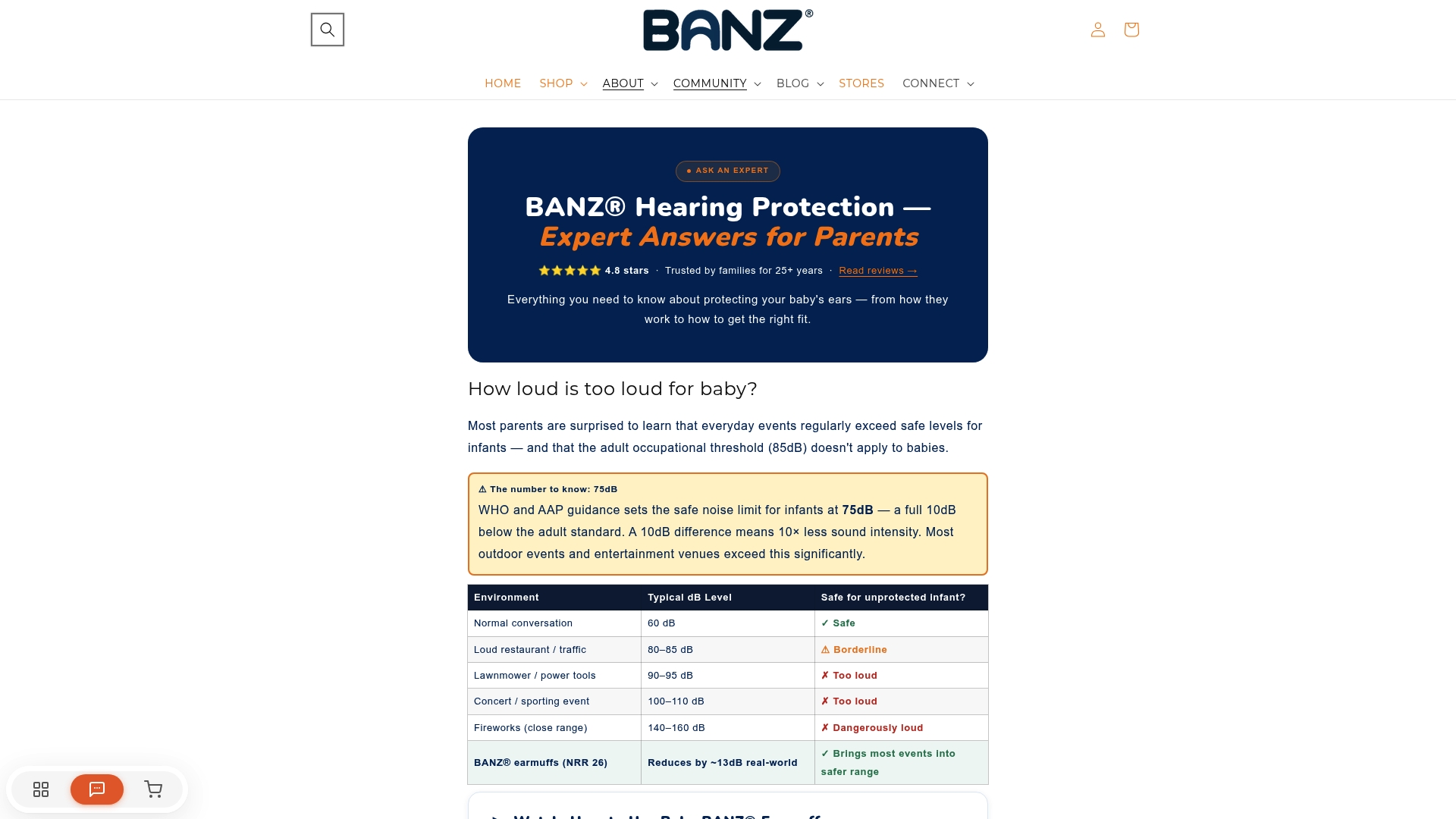
Parents and educators ready to act can browse the full range of baby and kids ear protection at BANZ, including options for sensory-sensitive children and event-specific use. The kids hearing safety resource library provides free downloadable guides, expert articles, and practical tools to support policy rollout in schools and at home. For personalized advice on selecting the right NRR level for your child’s environment, BANZ experts are available to help directly.
FAQ
What decibel level is dangerous for children’s hearing?
Noise above 85 dB can cause permanent hearing damage. Fireworks and concerts regularly reach 140–160 dB, which causes damage within seconds without protection.
What NRR should children’s earmuffs have?
NRR 20–25 covers moderate noise environments. For loud events like fireworks or concerts, choose NRR 25–30 or higher to provide adequate protection.
How do I get my child to wear hearing protection without a fight?
Introduce earmuffs at home during calm activities first. Children who are familiar with the feel before a loud event accept them far more readily.
What volume limit should children use on personal devices?
Health experts recommend no more than 60% of maximum volume for children. At 90 dB, safe listening time drops to just 4 hours per week.
When should I take my child to an audiologist?
Schedule an assessment if your child reports tinnitus, muffled hearing, or difficulty following conversations after noise exposure. Early detection prevents long-term damage from worsening.