

Rash guards give kids continuous UPF fabric protection against UV rays, cut down on chafing and skin irritation from sand and pool chemicals, and keep them more comfortable during long stretches in the water. A garment rated UPF 50+ blocks roughly 98% of UVA and UVB rays wherever it covers skin. The catch: any skin the fabric doesn’t cover still needs sunscreen. Pick a snug, UPF 50+ fit and you’ve solved most of the problem before your kid even hits the water.
TL;DR:
- UPF 50+ rash guards block about 98% of UVA and UVB rays, but exposed skin still requires sunscreen for full protection.
- The snug fit and dense fabric weave of rash guards prevent water weight gain, chafing, and reduce friction on sensitive or irritated skin.
- Proper care, including rinsing and air drying, is essential to preserve the fabric’s UPF rating and maintain its protective effectiveness over time.
- For optimal safety and comfort, choose rash guards that fit tightly, cover all necessary areas, and layer with other sun protection measures.
- Family water activities warrant diverse gear, including rash guards paired with hats, gloves, sunscreens, and quick-dry fabrics, for comprehensive protection.
Table of Contents
- What Is a Rash Guard and How Does It Protect Skin?
- UPF 50+ Sun Protection: What It Actually Means
- How Rash Guards Prevent Chafing and Protect Sensitive Skin
- Comfort Features: Quick-Dry Fabric and Breathability
- Sizing and Fit: How Snug Is Snug Enough?
- Washing and Care to Preserve UPF Protection
- When to Pack a Rash Guard and What Else to Bring
- Temperature Regulation in Different Water Conditions
- Safety Benefits Beyond Sun and Skin
- Why BANZ® Builds Around UPF and Everyday Practicality
- Shop BANZ® Rash Guards for Kids
- Sources
- FAQ
What Is a Rash Guard and How Does It Protect Skin?
A rash guard is a snug-fitting athletic shirt, usually built from nylon or polyester blended with spandex, designed to sit close against a child’s skin in and out of the water. The tight weave of that fabric blend is what does the real work. Densely packed fibers leave far fewer gaps for UV rays to pass through than a standard cotton tee, which is how a rash guard earns its UPF 50+ rating in the first place. Spandex adds stretch so the fit stays close through paddling, digging, and general kid chaos, and that same tight weave holds up better against chlorine than loosely knit cotton.
Common design features you’ll see on quality rash guards include:
- Long or short sleeves depending on coverage needs
- Front or back zippers for easier on/off
- Flat-lock seams that lie smooth against skin instead of rubbing
- Tagless necklines to avoid a scratchy collar
UPF 50+ Sun Protection: What It Actually Means
UPF 50+ fabric blocks about 98% of UVA and UVB rays, according to the UPF rating standard used across kids’ swimwear. That’s the benchmark to look for, since anything under UPF 30 starts letting through meaningfully more radiation. A UPF 50+ rash guard does the job of sunscreen for whatever it covers, without the reapplication headache.

That protection has limits, though. A rash guard only shields the skin under the fabric. Faces, hands, feet, and the backs of knees still need sunscreen, and pediatric and dermatology guidance consistently recommends layering clothing, sunscreen, hats, and shade rather than relying on any single method.
A few practical notes worth keeping in mind:
- UPF fabric protection doesn’t wash off or sweat off the way sunscreen can.
- Wet fabric generally holds its UPF rating better than a wet cotton shirt, which can lose much of its protective value once soaked.
- Reapply sunscreen on exposed skin roughly every two hours, or immediately after toweling off.
How Rash Guards Prevent Chafing and Protect Sensitive Skin
Anyone who’s watched a kid come out of the ocean with an angry red mark across their belly knows the culprit: a wet cotton shirt riding up against a boogie board, or bare skin dragging across sand for an hour straight. A rash guard’s smooth, tight fabric and flat seams reduce that friction significantly, which is where the garment gets its name.
There’s a chemical side to this too. Chlorine and salt water both strip moisture from skin and can leave it dry, tight, or itchy afterward. A fabric barrier over the torso and arms means less direct, prolonged contact with those irritants, which matters even more for children with eczema or generally sensitive skin.
- Smooth fabric reduces board and sand friction on the torso and arms.
- Fabric coverage limits direct chlorine and salt exposure on covered skin.
- Flat-lock seams avoid the raw, rubbed patches that ordinary seams can cause.
Pro Tip: Keep a dry, soft towel and a change of clothes ready at the water’s edge. The fastest way to trigger post swim irritation is leaving a damp rash guard on a child for an hour after they’re done playing.
Comfort Features: Quick-Dry Fabric and Breathability
The difference between a rash guard your kid tolerates and one they fight you over usually comes down to fabric details most parents never think to check. Quick-dry, moisture-wicking material keeps a child from sitting in a cold, clingy shirt between swim sessions, and four-way stretch means the garment moves with them instead of restricting arm swings and cartwheels.
These materials also offer mild insulation. A rash guard is not a wetsuit and won’t keep a kid warm in genuinely cold water, but in a mild ocean breeze or a chilly pool morning, quick-drying fabric helps regulate body temperature enough to stretch playtime before anyone starts shivering.
When you’re shopping, look for:
- Moisture-wicking, quick-dry synthetic blends
- Four-way stretch for full range of motion
- Flat seams and a tagless neck for all-day wear
- A zipper guard or smooth closure that won’t pinch skin
Sizing and Fit: How Snug Is Snug Enough?
The fit matters as much as the fabric. A baggy rash guard fills with water, drags on a swimming child, and leaves gaps where sun can reach skin the shirt was supposed to cover. Guides for parents of toddlers and young children consistently recommend UPF 50+ fabric paired with a close, snug fit rather than sizing up for room to grow.
For babies and toddlers, zip closures make dressing a wriggling kid far easier than a pullover. For older kids who can dress themselves, a pullover with a wide neck often works fine and costs less.
- Try the shirt on dry first. It should sit close to the skin without pinching at the arms or neck.
- Check that sleeves reach the wrist or mid forearm without riding up during arm movement.
- Confirm the hem stays down past the waistband when arms are raised overhead.
- When between two sizes, size down rather than up for a proper snug fit.
Washing and Care to Preserve UPF Protection
UPF ratings degrade over time if the fabric isn’t cared for properly, and a stretched-out, faded rash guard won’t fit or protect the way it did new.
- Rinse in cool fresh water after every chlorine or salt water session.
- Wash on a gentle cycle, or hand wash, with a mild detergent.
- Skip bleach and fabric softener. Both break down the fibers that give the fabric its UPF and chlorine resistance.
- Air dry instead of using a hot dryer, which can degrade spandex over time.
Watch for thinning fabric, stretched-out seams, or noticeable color fade. Any of those signal it’s time to replace the shirt, since a worn-out weave no longer blocks UV the way it did on day one.
When to Pack a Rash Guard and What Else to Bring
A rash guard earns its spot in the beach bag for swim lessons, all-day beach trips, tide pool exploring, and boat outings, basically any scenario where a kid will be in or near water for more than a few minutes. It’s less necessary for a quick five-minute rinse in the backyard sprinkler.
- Pack the rash guard alongside a wide-brim hat and UV-blocking sunglasses for full coverage.
- Bring sunscreen specifically for exposed skin: face, hands, feet, and neck.
- Add water shoes if you’re heading somewhere with rocks, shells, or hot sand.
- Choose a shirt with a zip front or wide tagless neck so wet, wriggly changes go faster.
Temperature Regulation in Different Water Conditions
Water temperature swings a lot depending on where your family swims, and a rash guard responds differently depending on the conditions. In warm pool or lake water, the fabric’s quick-dry properties keep a child from feeling clammy between dips, since the material sheds water fast instead of holding it against the skin the way a soaked cotton shirt does.
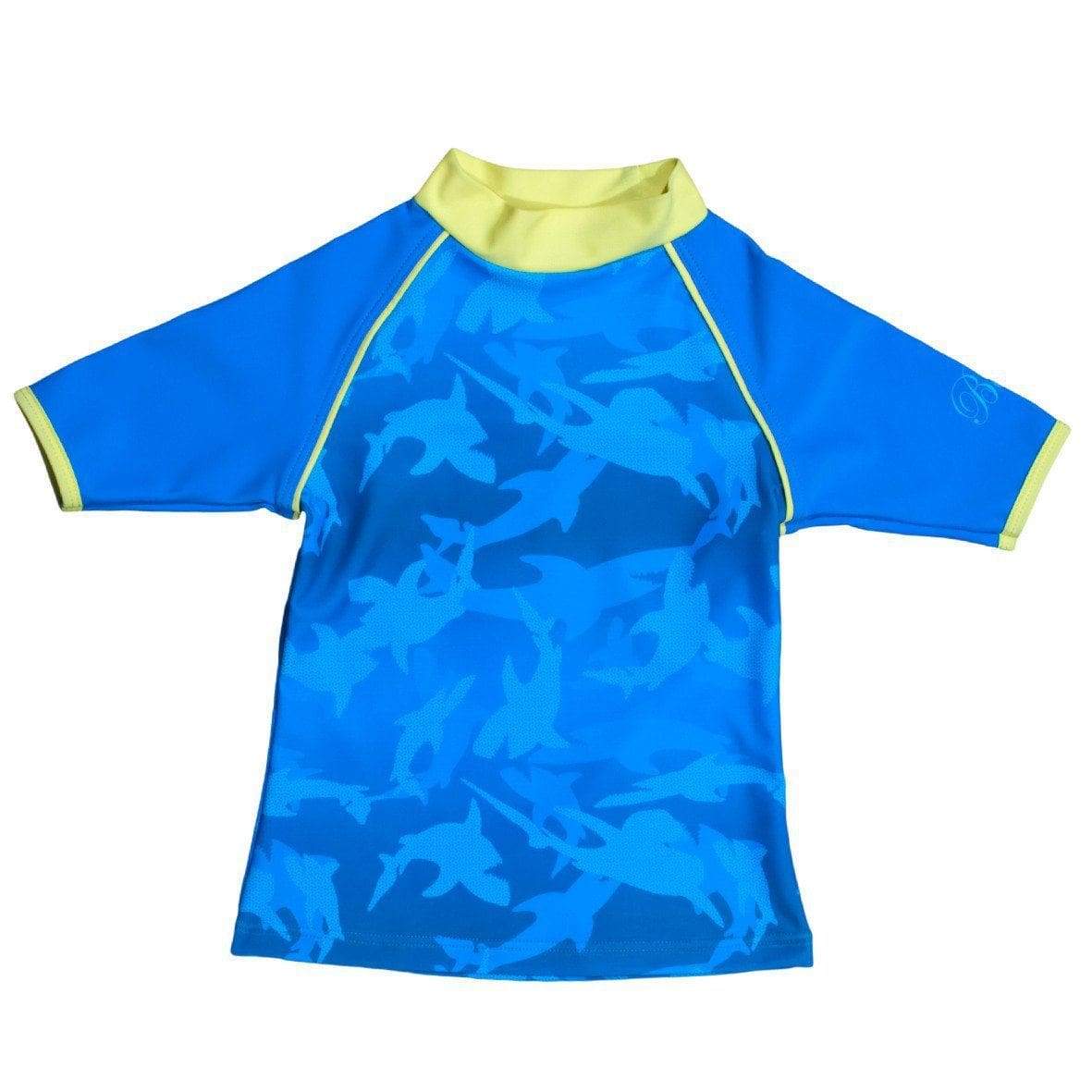
In cooler ocean water or on breezy, overcast beach days, the same fabric traps a thin layer of body heat against the skin, offering mild insulation that stretches out playtime before a kid starts complaining about being cold. That’s a real but modest effect. A rash guard is not built for genuinely cold water the way a neoprene wetsuit is, and parents heading into water below the mid 60s Fahrenheit should plan for a wetsuit instead.
There’s a sun-driven angle to temperature comfort too. Dark, wet fabric sitting directly in strong sun can actually feel warm against the skin, which is part of why lighter colored, breathable rash guards tend to feel more comfortable on hot, sunny days than heavier dark ones. For families splitting time between a warm pool and a cooler ocean on the same trip, a lightweight short sleeve option for the pool and a long sleeve for breezier ocean sessions covers both situations without needing a wetsuit at all.
Safety Benefits Beyond Sun and Skin
Sun and skin protection get most of the attention, but a rash guard carries a couple of safety perks that rarely make the pitch. Bright colors and contrasting patterns make a swimming child noticeably easier to track in open water, whether that’s a parent watching from the shore or a lifeguard scanning a crowded pool. A plain tan or pale swimsuit blends into sand and water in a way a bold blue or orange rash guard simply doesn’t.
The fabric barrier also matters in water where jellyfish, sea lice, or stinging plankton are a possibility. Covered skin on the torso and arms is far less exposed to brief contact stings than bare skin, even though a rash guard can’t guarantee protection against every marine hazard. For families snorkeling or swimming in unfamiliar coastal water, that extra layer is a reasonable precaution on top of checking local conditions before heading in.
Neither of these benefits replaces active supervision or basic water safety habits, but they stack on top of the sun and skin protection a rash guard already provides, which is part of why so many swim schools and camps make one a standard part of the uniform.
Why BANZ® Builds Around UPF and Everyday Practicality
The guidance here reflects what BANZ® has built its swimwear around since its Australian founding: UPF 50+ fabric protection paired with fit and features that actually survive a real day at the pool or beach. The same family that started BANZ® over hearing protection gaps applied that same practical lens to sun gear. The free BANZ Protect app adds real-time UV monitoring, so parents get a second layer of sun-safety awareness beyond the fabric itself, useful on days when the UV index climbs faster than expected.
— Shari M. Murphy
Shop BANZ® Rash Guards for Kids
If you’re ready to put UPF 50+ protection to work, BANZ® carries a lineup built around exactly the fit and fabric details covered above, without you having to compare a dozen brands to find one that checks every box.
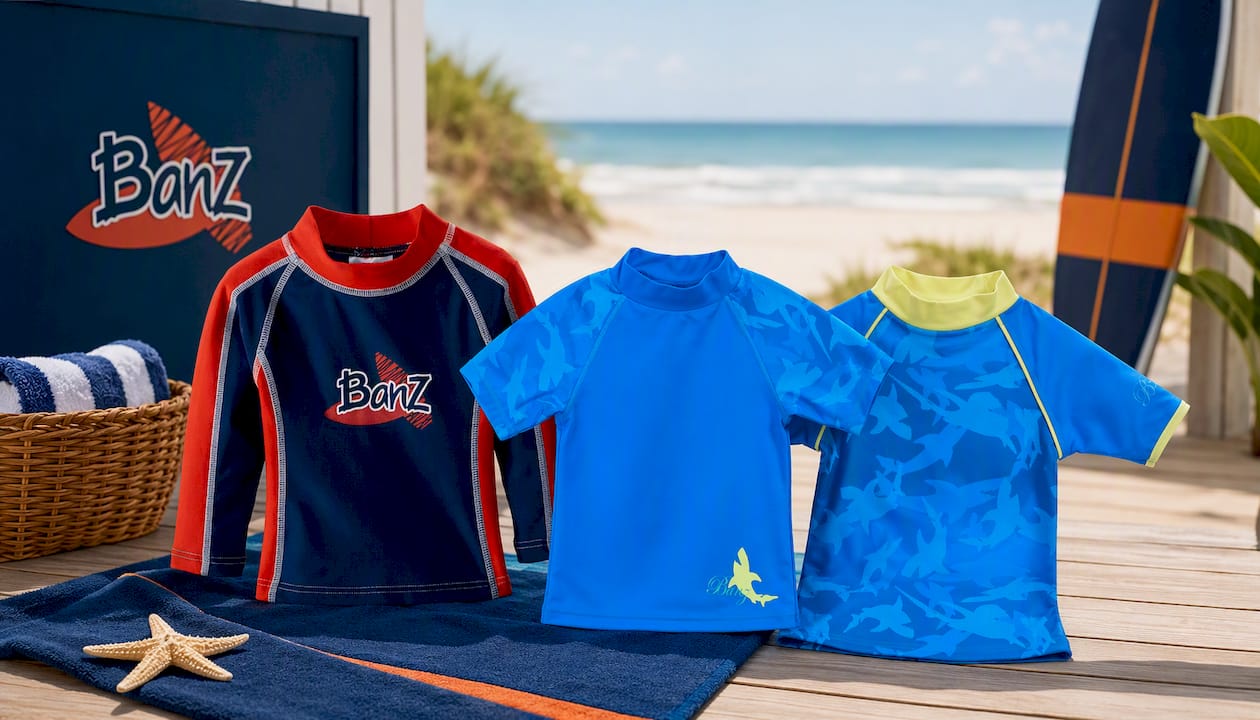
The Boys 2-6 Long Sleeve Rashguards give the most coverage of the lineup, a solid pick for long beach days or fair-skinned kids who need arms and shoulders fully shielded. For active sunny days where a little more arm freedom helps, the Boys 2-6 Short Sleeve Rashguards cover the torso without the extra fabric. And for infants who need gentle, breathable coverage on warm days, the Baby Short Sleeve Rashguards are sized specifically for that stage.
Every option carries the UPF 50+ fabric protection detailed throughout this guide, with the snug fit and flat seams that keep skin comfortable from the first dip to the last. Browse the current lineup and find the right fit for your child’s next water day.
Sources
- Kids Rash Guard 101: A Parent’s Buying Guide
- Why Your Child Needs a Rash Vest for Sun Protection and Comfort | Splash About UK
FAQ
Why Do Kids Wear Rash Guards?
Kids wear rash guards for continuous UPF sun protection and to reduce chafing from sand, boards, and prolonged water exposure, all while staying comfortable in quick-dry fabric.
How Long Should Kids Wear Rash Guards?
A rash guard can stay on for an entire swim session, but it’s best to change into dry clothes within an hour or so after swimming ends to avoid skin irritation from prolonged dampness.
What Are the Benefits of Wearing a Rash Guard?
The core benefits are UPF 50+ sun protection, reduced chafing and skin irritation from sand and pool chemicals, mild temperature regulation, and better visibility in the water.
What Is the Purpose of Wearing a Rash Guard?
Its main purpose is to create a physical barrier between a child’s skin and the sun, friction, and irritants like chlorine or salt, cutting down on both sunburn risk and skin irritation.
Do Rash Guards Replace Sunscreen?
No. A UPF 50+ rash guard protects only the skin it covers, so exposed areas like the face, hands, and feet still need sunscreen reapplied every couple of hours.