

For water sports and grappling, a rash guard beats a cotton t-shirt every time; a tee only works for casual, short-duration lounging at the pool or beach. Rash guards fit close to the body, dry fast, resist chafing, and carry high-level sun protection that cotton simply doesn’t have. For parents outfitting active kids, that difference in fit, fabric, and sun coverage is the whole decision.
TL;DR:
- Rash guards are made from water-resistant, stretchy fibers like nylon or polyester with spandex, ensuring better moisture management and durability than cotton.
- Flatlock seams and multi-panel cuts in rash guards reduce chafing and improve movement, unlike standard t-shirts with overlock seams prone to irritation.
- UPF 50+ rash guards block roughly 98% of UV rays regardless of wetness, whereas cotton T-shirts offer minimal protection and lose effectiveness when soaked.
- Rash guards dry faster and inhibit bacterial growth, making them essential safety gear for grappling, water sports, and extended outdoor activities involving kids.
- Costly replacements and frequent sunscreen use make UPF-rated rash guards more economical than cotton T-shirts for families with active water or outdoor routines.
Table of Contents
- Rash Guard vs T-Shirt: The Core Differences at a Glance
- What Rash Guards Are Made Of, and Why It Matters
- Performance by Activity: BJJ, Water Sports, and Casual Wear
- How UPF Ratings Compare Between Rash Guards and Cotton Tees
- Hygiene, Drying, and When to Retire the Garment
- Cost Comparison: What Rash Guards and T-Shirts Actually Cost
- BANZ Perspective: Fitting Rash Guards Into Family Routines
- How BANZ Rash Guards Fit What Your Family Actually Needs
- A Publisher’s Take: Why the “Just Wear a Tee” Advice Persists Anyway
- Sources
Rash Guard vs T-Shirt: The Core Differences at a Glance
The fit alone tells you most of what you need to know. A rash guard is built as a compressive “second skin,” while a cotton t-shirt is cut loose and baggy. In water, a loose shirt balloons with drag and can ride up. On a grappling mat, loose fabric creates something more dangerous: an opening for a training partner’s finger to get caught, twisted, or jammed. Rashguards reduce this finger-trap risk entirely because there’s no slack fabric to grab.
Fabric behavior is the second major split. Rash guards are built from performance fibers that move moisture away from skin and release it fast. Cotton does the opposite. It soaks up sweat and water, holds onto it, and gets noticeably heavier the longer you wear it wet, typically absorbing more water than rash guards that absorb very little.
Construction rounds out the picture. Rash guards typically use flatlock stitching and multi-panel cuts designed to reduce chafing during hard, repetitive movement. A standard t-shirt uses basic overlock seams that were never engineered for friction or stretch.
Here’s how those differences map to real activities:
- Grappling and no-gi training: a snug rash guard eliminates loose fabric that can trap fingers or toes.
- Surfing and swimming: quick-drying fabric cuts drag and prevents the shirt from ballooning underwater.
- Sun exposure: UPF-rated fabric blocks UV consistently, even when soaked.
- Casual beach or pool lounging: a t-shirt is fine for brief, low-intensity wear.
- Multi-hour outdoor play: wicking fabric keeps kids cooler and drier than absorbent cotton.
Once you see the pattern, the choice mostly comes down to how long the activity lasts and how much movement is involved.
What Rash Guards Are Made Of, and Why It Matters
Most rash guards blend nylon or polyester with spandex, a combination chosen for a specific reason. Nylon and polyester resist water absorption and dry quickly, while spandex gives the fabric the stretch needed for full range of motion. Cotton has neither property. It stretches poorly when wet and holds water like a sponge.
Construction details matter just as much as fiber choice:
- Flatlock seams lie flat against the skin instead of raised, which is why they reduce chafing during repetitive contact or paddling motion.
- Multi-panel cuts follow the body’s natural movement zones, reducing stress on any single seam.
- Reinforced necklines and cuffs hold their shape through repeated washing and wringing.
Caring for these fabrics correctly keeps them performing the way they’re supposed to. Skip the fabric softener, since it coats fibers and dulls the stretch and moisture-wicking that make a rash guard work in the first place. Wash in cold water and let the garment air-dry rather than tumbling it on heat, which breaks down spandex faster than almost anything else.
Pro Tip: Turn rash guards inside out before washing. It protects the printed UPF coating and graphics from friction against zippers and other fabric in the load.
Fabric weight matters too. Lighter, thinner rash guards suit warm water and high-output sports like surfing, while thicker options add a bit of warmth for cooler water or early-season swims.
Performance by Activity: BJJ, Water Sports, and Casual Wear
On the mat, the stakes are higher than comfort. Rash guards protect against mat burn, wick sweat away from skin, and cut down on the bacterial and fungal buildup that causes ringworm and other skin infections common in grappling gyms. A cotton tee does the opposite: it soaks up sweat, stays damp against the skin for the whole session, and offers zero protection from friction burns. Many academies now require rash guards for no-gi training specifically because of these hygiene and safety concerns.
In the water, the gap is just as wide. A cotton shirt becomes noticeably heavier as it absorbs water, dragging on a swimmer or surfer with every stroke. Rash guards stay light because they barely absorb water at all.
That said, a t-shirt isn’t always the wrong call:
- Brief pool lounging where there’s no real contact or extended swimming.
- A beginner who feels self-conscious in compression gear and needs a comfort bridge.
- Quick beach walks where sun exposure is minimal.
If a tee is the only option on hand, a looser swim shirt is a better middle ground than plain cotton, since it’s built for water even if it’s not compression-fit.
How UPF Ratings Compare Between Rash Guards and Cotton Tees
UPF 50+ blocks roughly 98% of ultraviolet radiation, according to SwimOutlet’s guide to choosing a rash guard. A standard white cotton t-shirt, by contrast, often measures only UPF 5 to 8, and that number drops further once the shirt gets wet.
That gap is the real reason UPF-rated clothing exists as its own category rather than a marketing add-on. Cotton fibers loosen and thin out when saturated, letting more UV straight through to skin. Rash guard fabric holds its UPF rating wet or dry, which matters most during the exact hours kids are outside longest: midday pool sessions, beach afternoons, boat trips.
The practical rule is simple: for anything beyond a quick dip, put UPF fabric on the torso and shoulders, then use sunscreen only on what’s left exposed, face, hands, feet. Reapply sunscreen every two hours or after swimming, since no cream lasts a full afternoon on its own.
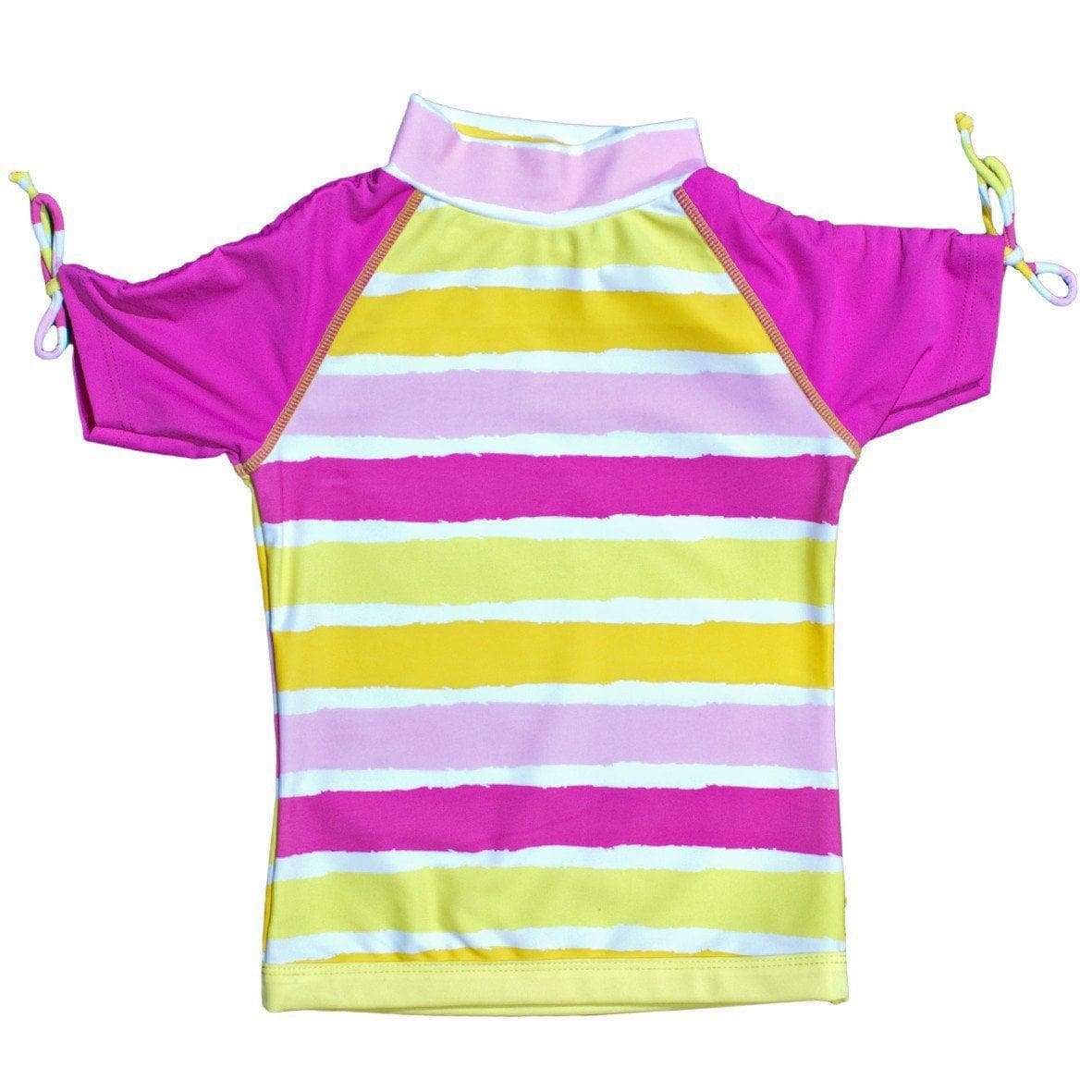
Hygiene, Drying, and When to Retire the Garment
Fungi and bacteria thrive in warm, damp conditions, which is exactly what a wet cotton shirt provides for hours after activity ends. Wicking fabric dries faster and gives those organisms far less time to establish themselves.
A few habits keep gear safe for repeated use:
- Wash after every single session, not just when it smells.
- Use cold water and a mild detergent, skipping fabric softener.
- Air-dry instead of using a hot dryer cycle.
- Never leave damp gear balled up in a gym bag overnight.
Pro Tip: Keep a mesh bag in the gym bag specifically for damp rash guards. Airflow on the way home cuts drying time in half once you get it on the line.
Retire a rash guard once the fabric loses its stretch and starts sagging, or once odor lingers even after a fresh wash. A t-shirt reaches the same point once the fabric thins out or seams start fraying at the shoulders.
Cost Comparison: What Rash Guards and T-Shirts Actually Cost
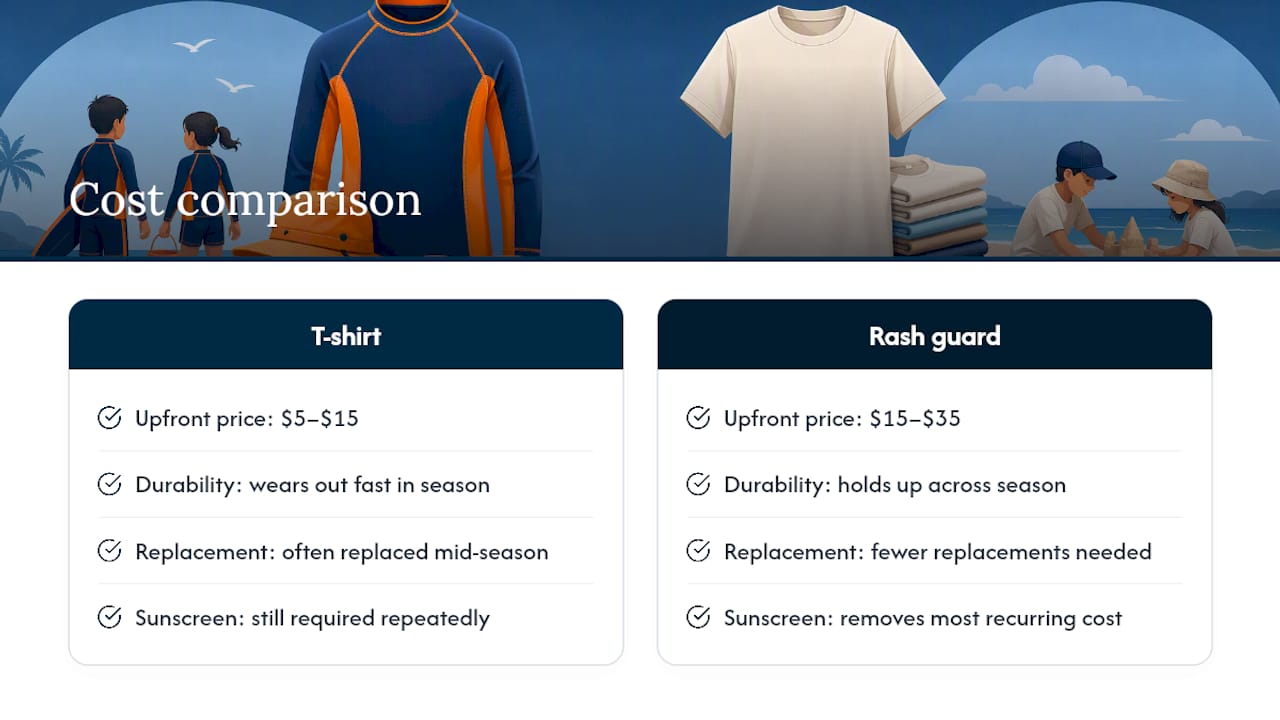
A basic cotton t-shirt runs anywhere from $5 to $15, while kids’ rash guards typically land between $15 and $35 depending on brand, UPF rating, and whether it’s a standalone top or a set with board shorts. That gap looks steep on paper, but it doesn’t tell the whole story once you factor in how each garment holds up over a season.
A cheap tee wears out fast under sun, chlorine, and repeated washing. Cotton fibers break down faster in salt water and pool chemicals than performance blends do, so a $10 shirt bought in June is often thin and stretched out by August. A rash guard’s flatlock construction and synthetic fibers tend to survive far more wash cycles and beach days before losing shape.
There’s also a cost that doesn’t show up on a receipt: sunscreen. A parent relying on a cotton tee for sun protection is still buying and reapplying sunscreen across every exposed inch of the torso, arms, and shoulders all summer long. A UPF 50+ rash guard removes most of that recurring expense from the equation, since the fabric itself is doing the work sunscreen would otherwise need to do.
For families spending multiple days a month at the pool, lake, or beach, the rash guard’s higher upfront price usually evens out fast against replacement tees and sunscreen bottles bought all season.
BANZ Perspective: Fitting Rash Guards Into Family Routines
BANZ builds children’s swimwear around one non-negotiable: UPF 50+ coverage that holds up wet, dry, chlorinated, or salty. Parents lean on that consistency for a good reason. Sunscreen application is easy to mess up on a squirming, splashing kid, and a rash guard removes that variable entirely for however long your child is in the water.
Sizing is where most parents get tripped up. Leave enough room for growth and a full range of arm movement, but keep the torso and shoulders properly covered since that’s where the UPF fabric is doing its job. Snug is good for swimming; restrictive is not.
For families deciding between styles, the rash guard sun-protection guide breaks down which cut fits which activity, whether that’s beach play, boating, or backyard sprinkler days.
How BANZ Rash Guards Fit What Your Family Actually Needs
If everything above boils down to one takeaway, it’s this: UPF-rated, quick-dry fabric does the job a cotton tee physically can’t, and that matters most for kids who don’t sit still long enough for sunscreen touch-ups to keep up.
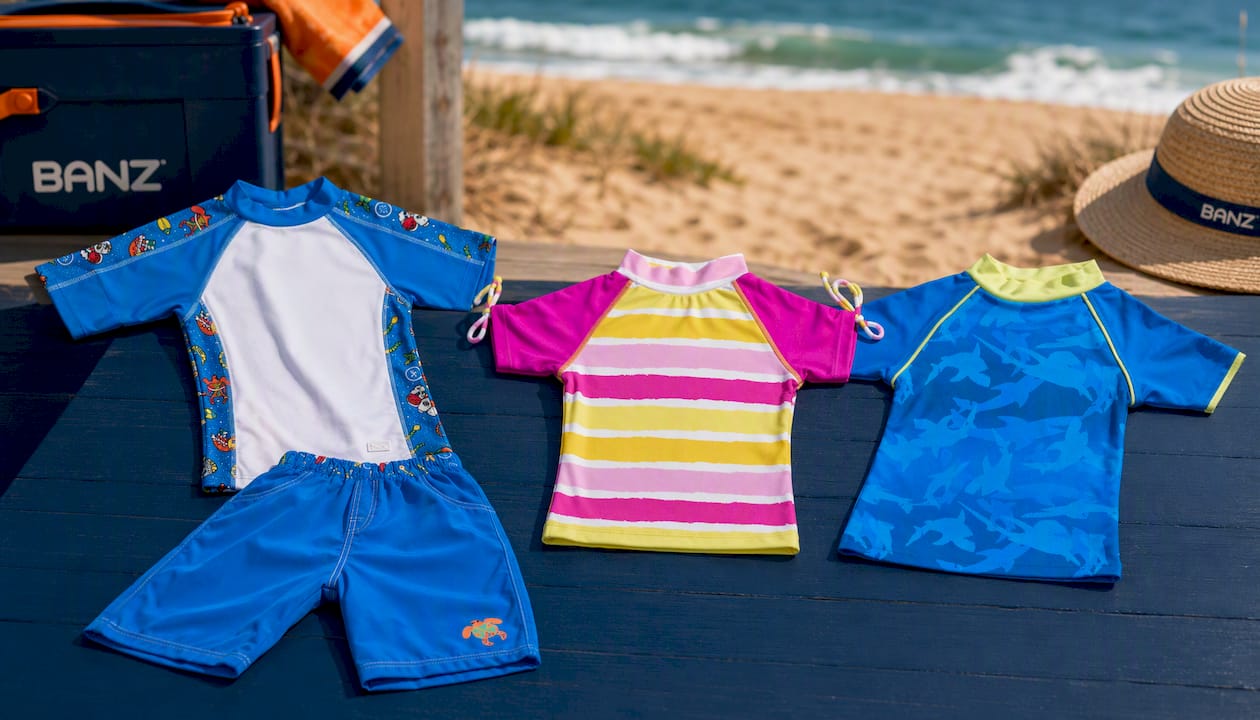
BANZ builds its kids’ rash guards around that exact gap. The Girls 2-6 Short Sleeve Rashguards and Baby Short Sleeve Rashguards both carry UPF 50+ protection sized specifically for smaller frames, so coverage doesn’t gap at the shoulders or ride up mid-splash. For a complete outfit ready for pool days or beach trips, the Short Sleeve Rash Guard and Board Shorts Set in Coolgardie Blue pairs the top with matching bottoms in one purchase.
Pair rash guards with a free UV tracking app for real-time UV monitoring, so you know when to reapply sunscreen on the parts a rash guard doesn’t cover. Browse current rash guard lineups and pick the size and set that fits your next trip to the water.
A Publisher’s Take: Why the “Just Wear a Tee” Advice Persists Anyway
The advice to “just throw on an old t-shirt” for the pool or the mat sticks around because it sounds cheap and simple, not because it’s good advice. It’s a hand-me-down habit from a generation that didn’t have easy access to UPF-rated kids’ clothing at every big box store. That habit is worth questioning, especially for parents managing sun exposure or grappling hygiene for a child who can’t yet judge either risk for themselves.
What gets underestimated most is how much of the rash guard’s value comes from removing decisions, not adding gear. A snug, UPF-rated top means a parent isn’t recalculating sunscreen coverage every twenty minutes while also watching for signs of chafing or mat burn. The tee shirt looks like the low-effort choice in the moment. In practice, it just moves the effort somewhere else, onto sunscreen reapplication, onto post-activity skin checks, onto replacing a stretched-out shirt by midsummer.
None of this means a cotton tee is useless. It has a real place for a quick walk to the car or a kid who refuses anything snug on a hot day. But treating it as interchangeable with a rash guard for actual water time or mat time is where the advice falls apart, and where a lot of preventable skin irritation and sunburn quietly happens.
— Shari M. Murphy