

Before your kids step on the boat, do five things: get them under shade or a hat immediately, dress them in UPF 50+ clothing, apply water-resistant broad-spectrum sunscreen to whatever skin is still exposed, fit their life jackets correctly, and pack more water than you think you need. That order matters. Clothing and shade do the heavy lifting; sunscreen backs them up on the parts a shirt can’t cover.
Here’s the 60-second version to run through at the dock:
- Shade first. Point out where the boat’s shaded “home base” is before anyone sits down.
- Cover skin with fabric, not lotion. A long-sleeve UPF 50+ shirt beats reapplying sunscreen every hour.
- Sunscreen the exposed bits. Face, ears, tops of feet, backs of hands. Broad-spectrum, water-resistant, SPF 30 to 50.
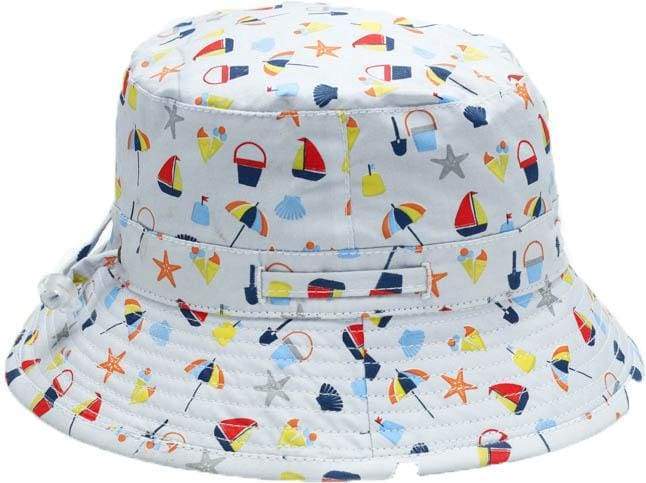
- Hats that won’t blow off. A toggle sun hat or a pocket-style hat with a chin strap solves the “it’s in the lake now” problem before it starts.
- Life jackets fitted, not just worn. Loose straps defeat the purpose.
- Water within arm’s reach. Kids won’t ask for it until they’re already behind.
Grab those six things, and you’ve covered the majority of what causes sunburn and heat trouble on the water.
Key Takeaways
Physical barriers, shade and UPF clothing, protect kids on a boat more reliably than sunscreen reapplied on a moving deck.
| Point | Details |
|---|---|
| Shade comes first | Set up a home base and use it as a scheduled rest zone from 10 a.m. to 4 p.m. |
| UPF clothing is primary | A long-sleeve UPF 50+ shirt blocks about 98% of UV and holds that rating wet or dry. |
| Sunscreen covers the gaps | Use broad-spectrum, water-resistant SPF 30 to 50 on face, ears, and hands, reapplied every 2 hours or after 80 minutes in water. |
| Check PFD fit every trip | Confirm life jackets fasten fully over UPF layers without pinching or bunching. |
| BANZ hats solve retention | Toggle and pocket-style BANZ sun hats keep UPF 50+ coverage on through wind and wake. |
Where to Read More on Kids and UV Safety
- The EPA’s UV radiation page is the federal government’s primary public resource on UV exposure and prevention.
- EWG’s baby and kids sunscreen list comes from an independent nonprofit that tests formulations against its own safety criteria.
- Pediatrician guidance on sun and swim safety reflects medical-practice recommendations for water-based family activities.
- The melanoma incidence data from Cure Melanoma comes from a dedicated cancer-research and advocacy organization tracking national diagnosis trends.
This article is general information, not a substitute for advice from a qualified doctor. Consult a qualified healthcare professional about your own circumstances before acting on anything here.
Table of Contents
- Why Boats Raise Kids’ Sun Exposure More Than the Beach
- What Sunscreen Should You Actually Use for Boating?
- UPF Clothing or Rash Guard: Which One for Which Activity?
- What Hat and Sunglasses Actually Stay on a Moving Boat?
- Setting Up Shade and a “Home Base” on the Boat
- How Should You Protect Babies and Toddlers on a Boat?
- Making Sure Clothes Fit Right Under a Life Jacket
- What Should Go in Your Boat Sun-Protection Bag?
- What Does the Research Say About Sun Risk on the Water?
- BANZ Sun Gear Built for a Day on the Water
- Sources
Why Boats Raise Kids’ Sun Exposure More Than the Beach
Water reflects ultraviolet light back up at your child from underneath, and a light-colored fiberglass deck does the same thing from below their chin. That double bounce means a kid standing on a boat can take in a meaningfully higher effective UV dose than a kid standing on sand, even at the identical time of day and sun angle.
Reflective surfaces on the water can roughly double the effective UV exposure compared with a non-reflective setting on land. That’s not a small correction, it’s a different risk category entirely, and it’s why the same SPF 30 spray that worked at a backyard barbecue leaves a kid pink after two hours on the bow.
There’s a longer-term piece to this too: a large share of a person’s lifetime cumulative UV exposure happens before age 18, concentrated in exactly the outdoor, unstructured hours that boating days are made of. Peak UV runs from 10 a.m. to 4 p.m., which for most families is also peak boating time.
Two practical conclusions follow. First, sunscreen alone is a losing strategy on a boat, because reapplying every two hours to a squirming, wet, wind-whipped kid is harder than it sounds and easier to skip than you’d admit. Second, shade placement and clothing choice need to happen before the boat leaves the dock, not as a reaction once someone’s shoulders turn red.
What Sunscreen Should You Actually Use for Boating?
Use a broad-spectrum, water-resistant sunscreen with an appropriate water resistance duration, and lean toward a mineral formula (zinc oxide or titanium dioxide) for kids with sensitive skin. That’s the short answer. The longer answer covers when to apply it and how often to redo it, because timing is where most families lose the thread.
- Pick SPF 30 to 50 for children, broad-spectrum labeled, water-resistant. EWG’s list of vetted baby and kids sunscreens is a solid starting point if you want mineral options that skip the ingredients some dermatologists flag for sensitive or reactive skin.
- Apply 20 to 30 minutes before you’re on the water, when your schedule allows it. Sunscreen needs a few minutes to bind before it’s swim-ready.
- Reapply after 80 minutes in the water, or every 2 hours on dry deck time, whichever comes first. Water resistance is a countdown timer, not a permanent shield.
- Choose mineral formulas over chemical ones when a boating trip means avoiding coral reefs or sensitive marine areas. Some boating guides specifically recommend skipping oxybenzone and octinoxate, both to protect a child’s skin and to reduce the sunscreen’s environmental footprint.
- Use sticks for faces, pumps for bodies. A stick doesn’t run into eyes when a kid tilts their head back to watch a pelican, and it travels better in a cockpit pouch than a bottle that might tip over.
Pro Tip: Treat UPF clothing as your first line of defense and sunscreen as the backup for whatever skin the fabric doesn’t cover. If a shirt is doing the work on shoulders, back, and arms, you’re only fighting the sunscreen battle on a face, some ears, and the tops of two feet, which is a fight you can actually win by 10 a.m.
UPF Clothing or Rash Guard: Which One for Which Activity?
For a full day on deck, put your child in a long-sleeve UPF 50+ sailing-cut shirt. For a swim-heavy afternoon in and out of the water, a snug rash guard works better because it dries faster and doesn’t billow when wet.
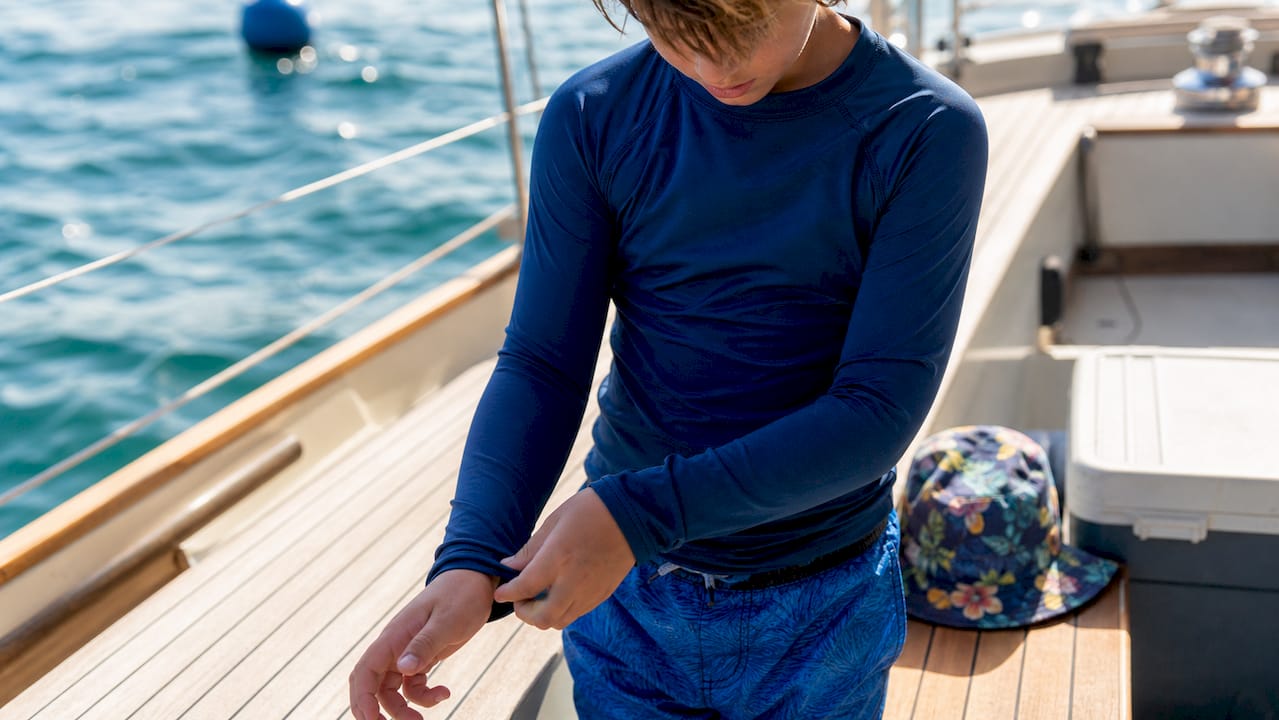
UPF 50+ fabric blocks the vast majority of UV radiation, and unlike sunscreen, that rating doesn’t wash off, wear thin, or need a two-hour timer. It’s a fixed property of the weave, tested under standards like AATCC 183, and it holds up whether the shirt is bone dry or soaked through from a wave over the bow.
| Garment type | Best for | Drying time | Fit under a PFD |
|---|---|---|---|
| Swim rash guard | Water-focused play, tubing, swimming breaks | Fast, minutes in open air | Snug fit, minimal bunching |
| Board/swim shirt | Mixed swim and deck time | Moderate | Generally good, check shoulder seams |
| Woven UPF sailing shirt | Full-day deck time, minimal swimming | Slow if soaked | Best for layering, roomier cut |
A woven UPF sailing shirt tends to have a looser, more articulated cut through the shoulders, which matters once a life jacket goes on over the top. A rash guard designed for swimming can feel snug and comfortable in the water but bunch up under PFD straps once your child is out and dry. If your day is mostly anchor-and-swim, pack the rash guard. If it’s mostly cruising with occasional dips, the sailing shirt earns its spot.
What Hat and Sunglasses Actually Stay on a Moving Boat?
A wide-brim or legionnaire-style hat with UPF 50+ fabric, a chin strap or toggle, and a shape that folds flat for storage is what survives an afternoon of wind and wake. Anything without a retention strap becomes a floating hat within the first hour, and that’s not a hypothetical, it’s what actually happens on open water.
- Pocket-style hats double as storage. A pocket sun hat gives a small kid somewhere to tuck a shell, a snack wrapper, or a spare hair tie, which sounds minor until it’s the reason they keep the hat on.
- Polarized, floatable sunglasses cut glare and survive a drop. Glare off open water is intense enough to make kids squint constantly, and floating frames mean a dropped pair rides the surface instead of sinking.
- Look for wraparound coverage, not just tinted lenses. UV protection needs to be labeled on the lens itself, not assumed from how dark it looks.
- Practice hat-wearing at home before the trip. Kids who’ve never worn a chin strap will fight it the first time; a few dry runs on the porch fix that before it becomes a dockside argument.
Setting Up Shade and a “Home Base” on the Boat
Set up a shaded spot on the boat before you leave the dock, and treat it as a scheduled rest zone during the highest-risk hours, roughly 10 a.m. to 4 p.m. A home base works because it turns sun protection into a location instead of a negotiation. You’re not telling a kid to stop having fun, you’re telling them where snack time happens.
- Bimini tops and factory canopies cover the helm and cockpit area on most boats and are the most durable option if your boat already has the hardware.
- Pop-up shade tents or clip-on canopies work well for smaller boats or open bow areas without built-in coverage, and they pack down small enough to store in a hatch.
- A large umbrella clamped to a rail is the fastest fix if you’re on a small boat with none of the above and need shade in the next five minutes.
- Assign the shade zone as the snack and water station. Kids gravitate to wherever the food is, so put the food under the canopy.
- Schedule breaks there every hour, not just when someone complains. Waiting for a kid to say they’re hot means you’ve already missed the window.
Pack an extra towel or lightweight coverup specifically for the home base, separate from swim towels, so there’s always something dry and shaded to wrap around a chilly or overheated kid without digging through a wet bag.
How Should You Protect Babies and Toddlers on a Boat?
For babies under 6 months, skip sunscreen entirely and rely on shade and UPF-covered clothing instead. Pediatric guidance is consistent on this: infant skin and their ability to metabolize sunscreen ingredients aren’t developed enough to make topical products the first choice, so physical coverage does the job sunscreen can’t yet do.
- Dress infants in breathable, long-sleeve UPF fabric, not heavy layers. Overheating is a real risk when you compensate for sun coverage with thick material.
- Use a brimmed hat with a tether or strap, since babies can’t reposition a hat that’s slipped, and a loose brim does nothing.
- Keep the stroller, bassinet, or car seat under the boat’s shaded zone at all times, not just during peak hours.
- Watch for flushed skin, unusual fussiness, or reduced wet diapers as early signs of overheating or dehydration, and move to shade immediately if you see them.
- If a pediatrician has approved sunscreen for a specific situation, follow their guidance over general age cutoffs.
Babies regulate body temperature far less efficiently than older kids, which means the margin between “comfortable in the shade” and “too hot” is narrower than most first-time boating parents expect.
Making Sure Clothes Fit Right Under a Life Jacket
Pick garments with a relaxed, articulated cut through the shoulders so a properly fitted, Coast Guard-approved life jacket sits correctly on top without bunching the fabric underneath or pulling at the straps. A shirt that’s too snug through the shoulders will ride up the moment a PFD goes on, exposing lower back and stomach skin exactly where you didn’t plan for it.
- Have your child raise both arms overhead while wearing the shirt and the life jacket together. If the shirt hem creeps above the waistband, size up.
- Simulate a reaching motion, like grabbing a rail, to check for pinch points where the PFD strap crosses the shoulder seam.
- Check that the life jacket’s leg straps and chest clip still fasten fully with the shirt underneath. A too-thick layer can prevent a snug, safe fit.
Pro Tip: If your child resists snug base layers, size up one garment size for comfort rather than skipping the shirt altogether. Just re-check the PFD fit afterward. A slightly looser UPF shirt a kid will actually keep on beats a perfectly fitted one they peel off the moment you look away.
What Should Go in Your Boat Sun-Protection Bag?
A compact on-boat kit covers sunscreen in two formats, backup hats, an extra UPF shirt, floating sunglasses, water bottles, and a small first-aid kit. Building this once and leaving it packed in the boat saves the last-minute scramble that leads to skipped steps.
- Sunscreen pump for bodies, stick for faces, both stored in a shaded, dry bin rather than a hot glove box or sun-baked cooler lid.
- One spare hat per child, because hats go overboard and wind takes them off railings.
- A dry UPF shirt in a sealed bag, in case the first one gets soaked and a kid needs a dry layer before more sun exposure.
- Floating, polarized sunglasses kept in a hard case in the shade zone, not loose in a cupholder.
- Extra water bottles, more than you think you need, since heat and salt air both increase how much kids need to drink.
- A basic first-aid kit with aloe gel, adhesive bandages, and children’s pain reliever for the inevitable minor scrape or sunburn miss.
After the trip, rinse UPF garments in fresh water to clear out salt or chlorine, and air-dry them out of direct sun. Sun exposure over time can degrade the fabric’s UV-blocking finish faster than normal wear does, so a quick rinse routine actually extends the useful life of the protection you paid for.
What Does the Research Say About Sun Risk on the Water?
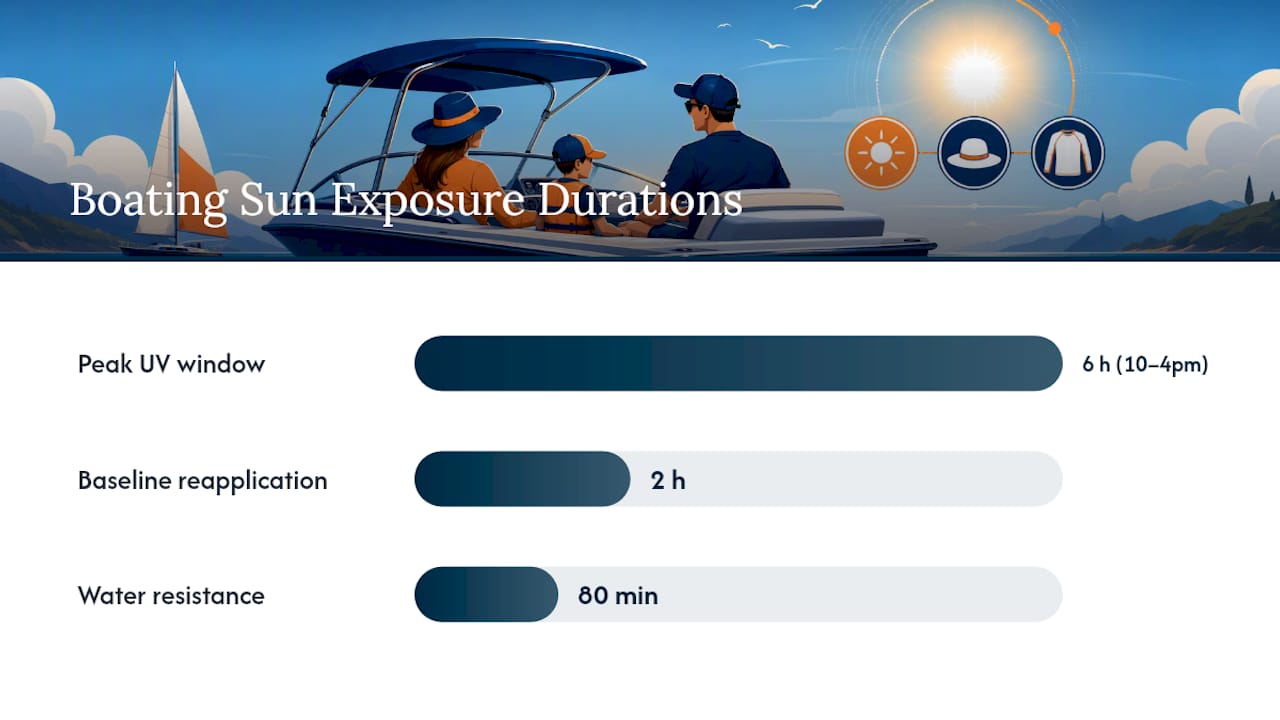
Three facts anchor everything above. Peak UV hours run from 10 a.m. to 4 p.m., water and light decks amplify effective UV exposure well beyond what a similar sunny day on land delivers, and a large share of a person’s lifetime UV dose accumulates in childhood. Public-health guidance treats early, consistent protection as the highest-leverage intervention available, given that over 104,000 Americans are projected to be diagnosed with invasive melanoma in 2025, a figure that underscores why habits formed early carry weight decades later.
| Fact | Number | Why it matters for boating |
|---|---|---|
| Peak UV window | 10 a.m. to 4 p.m. | Schedule shade breaks and water time around this window |
| Water resistance duration | 80 minutes | Sets your reapplication clock after swimming |
| UPF 50+ protection | Blocks the vast majority of UV | Makes clothing more reliable than sunscreen timing |
| Baseline reapplication | Every 2 hours | Applies even without swimming, due to sweat and wind |
Heat illness deserves its own watch list. Flushed skin, headache, unusual quietness or crankiness, and fewer bathroom trips than usual are early warning signs in kids. The EPA’s guidance on UV exposure pairs well here with basic hydration monitoring: if a child hasn’t asked for water in the last hour, offer it anyway rather than waiting for a request that dehydrated kids often don’t think to make.
BANZ Sun Gear Built for a Day on the Water
Three items solve most of the problems this guide has walked through, and each one maps to a specific moment in a boating day rather than being a generic sun product.
- Bubzee pocket sun hats, best for slightly older kids who like having somewhere to stash small items. The pocket detail gives a practical reason for a kid to keep the hat on, and the UPF 50+ construction covers ears and neck better than a standard cap.
- Hello Sunshine sunhat, best for kids who prefer a wider, floppier brim style for shaded lounging time rather than active deck play. It suits calmer stretches of the day, like anchored swim breaks, where a snugger toggle hat isn’t necessary.
For sun exposure tracking beyond clothing choices, the free BANZ Protect app monitors UV in real time, so you can see when conditions cross into higher-risk territory and time your shade breaks accordingly instead of guessing from how the sun feels. It pairs naturally with the UPF garments and gear covered here since it tells you when the physical barriers matter most.
A Publisher’s View on Fun vs. Safety on the Water
Boating with kids works best when sun protection stops being a series of interruptions and becomes part of how the day runs. Put the shade up first, put the shirts on before shoes, and reserve sunscreen for the parts fabric can’t reach. That order isn’t about being cautious for its own sake, it’s about reducing how many times a day you have to stop a happy kid to fight them over sunscreen. The families who have the smoothest days on the water aren’t the ones with the most product in their bag; they’re the ones who set the routine once, at the dock, and let the gear do its job without much daily negotiation. Editorial standards here favor gear that’s actually been checked against real use cases, toggle straps that hold in wind, fabric that stays rated when wet, hats that pack down instead of getting left behind, over anything that just looks good in a product photo.
Get the Kit Packed Before You Leave the Dock
BANZ is built specifically around the problem this guide keeps circling back to: sunscreen alone doesn’t hold up on a boat, but UPF clothing and a hat that actually stays on do.
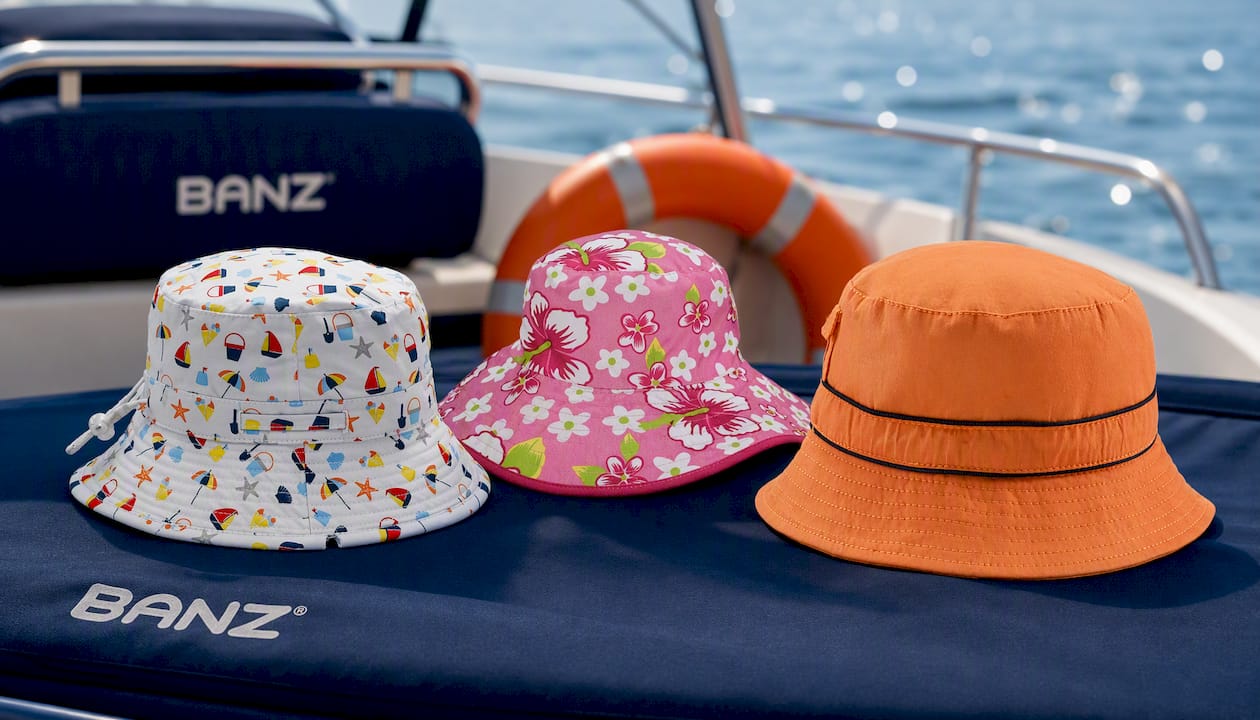
The pocket sun hat collection and toggle sun hat option are both in stock and ready to ship before your next trip out. If a specific size or color you want shows as sold out, check the kids sun hats collection for current availability across the lineup. Pack the kit before you cast off, not after someone’s shoulders turn pink halfway through the afternoon.
Sources
- Ultraviolet (UV) radiation and sun exposure — EPA
- Best sunscreens for babies and kids — EWG
- Keeping kids safe: pediatricians’ emphasis on sun protection and swim safety
- Four sun safety tips for boaters
- Over 104,000 Americans estimated to be diagnosed with invasive melanoma in 2025 — Cure Melanoma blog
