

TL;DR:
- Reflective surfaces like snow, water, and concrete significantly increase ultraviolet exposure by bouncing UV rays onto skin and eyes. This reflection elevates UV risk year-round, especially on cloudy days, with snow reflecting up to 88% and urban surfaces adding 10-18%. Protecting against reflected UV requires layered measures such as broad-spectrum sunscreen, UV-blocking sunglasses, wide-brim hats, and timed outdoor activities.
Reflective surfaces are defined as any material that bounces ultraviolet radiation back onto the skin and eyes, adding to the UV dose received from direct sunlight. Snow, water, sand, concrete, and glass all do this to varying degrees, and understanding how reflective surfaces increase UV exposure is the first step toward protecting yourself and your children during outdoor activities. The CDC confirms that UV rays reflect off water, cement, sand, and snow year-round, including on cloudy days. That means your total UV exposure on a beach, ski slope, or city sidewalk is always higher than the sky alone would suggest.
How do reflective surfaces increase UV exposure?
Reflected UV radiation is the portion of ultraviolet light that bounces off a surface and reaches your skin from a secondary angle. Direct sunlight hits you from above. Reflected UV hits you from the sides, below, and at angles that sunscreen, hats, and shade cannot always intercept. The result is a higher cumulative UV dose than most people expect.
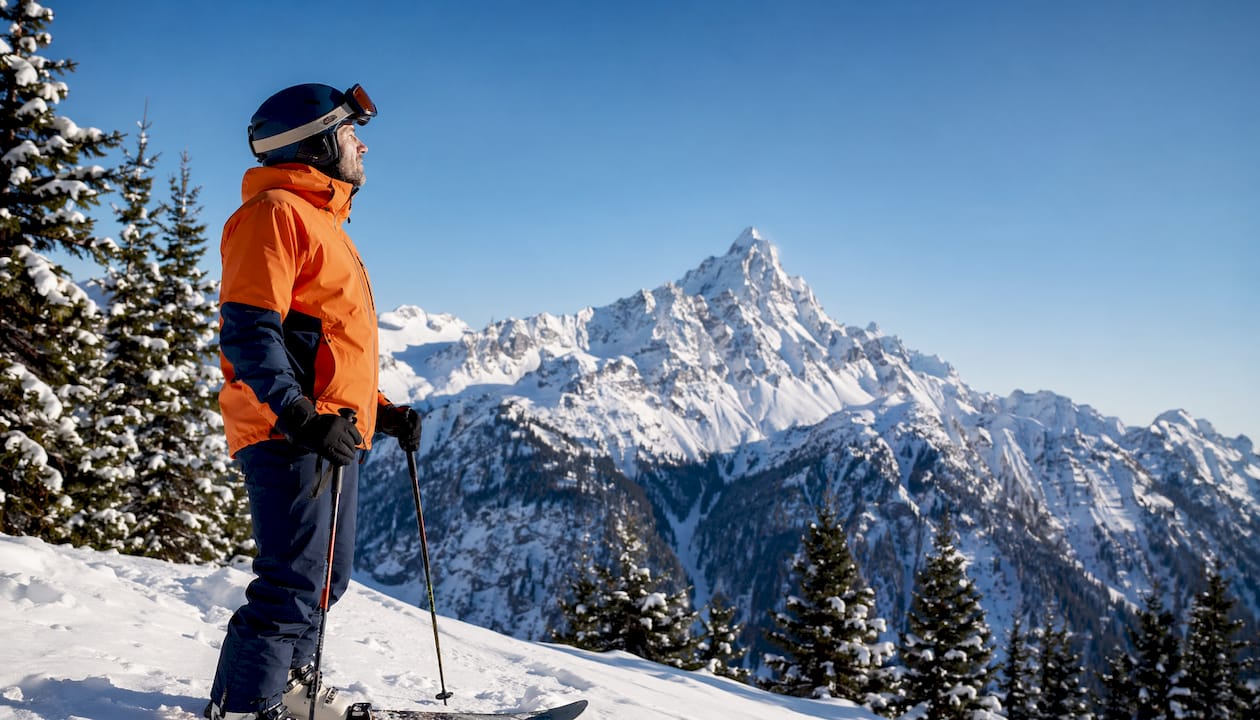
The technical term for a surface’s ability to reflect radiation is albedo. A surface with high albedo reflects more UV back into the environment. Snow has extremely high albedo. A paved city street has lower albedo but still contributes meaningfully to your total UV burden, especially when you are surrounded by buildings and pavement on all sides.
UV exposure nearly doubles when highly reflective surfaces like snow or sand are present, compared to areas without them. That is not a marginal increase. It means a child playing in the snow or on a beach receives roughly twice the UV radiation compared to playing on a grass field under the same sky.
What surfaces reflect the most UV rays?
Not all surfaces reflect UV equally. The reflectivity rates below come from environmental UV research and show how dramatically exposure levels vary by location.
| Surface | UV Reflectivity |
|---|---|
| Snow (fresh or packed) | 50%–88% |
| Water and sea surf | 25%–30% |
| Dry sand | 15%–18% |
| Concrete and pavement | 10%–18% |
| Glass (urban buildings) | 10%–18% |
| Grass | 2%–5% |
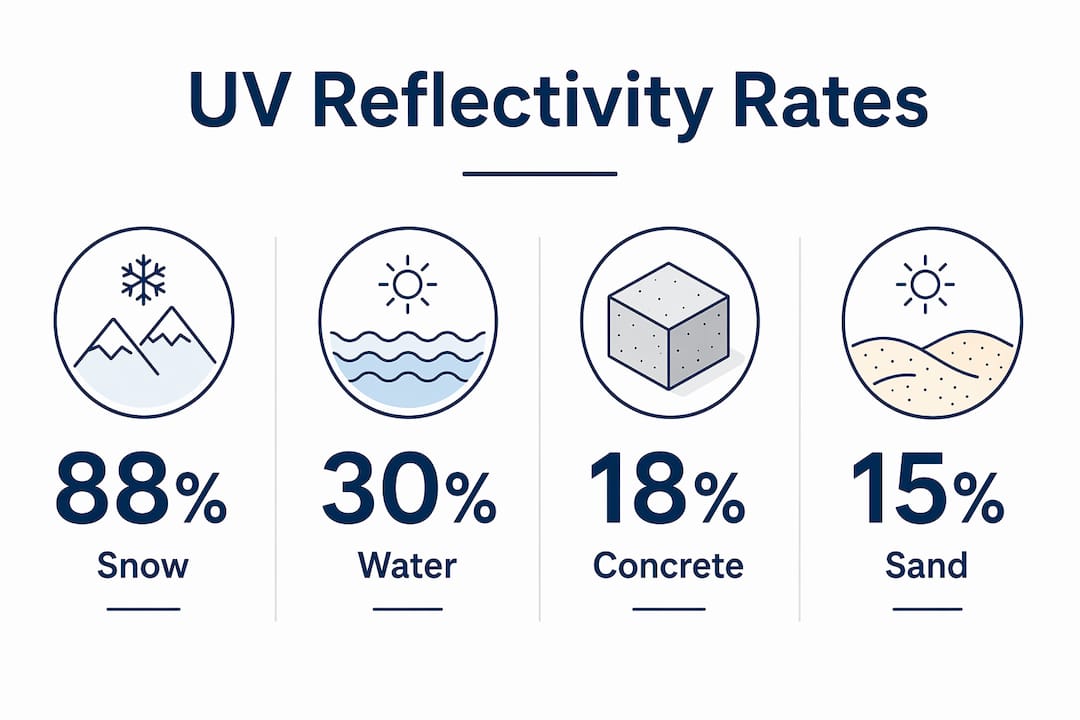
Snow reflects up to 88% of UV radiation, making ski slopes and winter playgrounds among the most UV-intense environments on earth. Water and surf reflect 25%–30%, which explains why a day at the beach without proper protection causes severe sunburn even when the air feels cool. Dry sand reflects 15%–18%, adding a meaningful secondary dose on top of direct sun.
Urban environments deserve special attention. Concrete, glass facades, and paved roadways each reflect 10%–18% of UV. Urban surfaces add 10%–18% to direct UV exposure, increasing the overall UV burden for anyone spending time in a city. That effect compounds when you are walking between tall buildings lined with glass, where reflected UV arrives from multiple directions simultaneously.
Pro Tip: Sand and concrete look very different, but their UV reflectivity is nearly identical. Applying sunscreen before a city walk matters just as much as before a beach outing.
How do environmental factors change reflected UV levels?
The angle of the sun, cloud cover, and urban heat all modify how much reflected UV you actually receive. These factors interact in ways that catch most people off guard.
The solar zenith angle, which is the angle between the sun and the point directly overhead, determines how much UV reaches the ground and at what intensity. When the sun is high in the sky between 10:00 AM and 4:00 PM, UV intensity peaks and surface reflection is at its strongest. Surfaces that seem harmless in early morning become significant UV sources by midday.
Cloud cover does not provide the protection most people assume. Up to 89% of UV rays penetrate clouds and still reach reflective surfaces below. That means a cloudy day at the beach or on a snowy slope still delivers a high reflected UV dose. The CDC’s sun safety guidance explicitly states that UV penetrates clouds and reflects off surfaces year-round, not just in summer.
Urban environments add another layer of risk. The urban heat island effect, caused by heat absorbed and re-emitted by buildings and pavement, increases UV exposure by approximately 11%. Combined with the reflection from glass and concrete, city dwellers face a compounded UV risk that is easy to underestimate. Even at moderate UV Index levels of 3–4, urban reflection and heat combined can push effective UV exposure more than 10% above baseline.
What is the cumulative health risk from reflected UV?
Reflected UV radiation adds directly to your total UV dose, and that cumulative burden drives real health consequences. Skin cancer, photoaging, and eye damage all result from accumulated UV exposure over time, not just from single intense episodes.
“Cumulative UV burden increases significantly with the addition of reflected UV rays, elevating risk for skin aging, cancer, and eye damage. UV rays reflected from buildings, roadways, and surfaces continue to affect eyes even in shade or indirect sunlight.” — CDC, Sun Safety Facts
The eyes are particularly vulnerable. Reflected UV from water, snow, and pavement reaches the eyes from below and at angles that brow ridges and hat brims do not block. Polarized lenses reduce glare from reflective surfaces, but they must also carry full UV-blocking certification to protect against UV damage. Glare reduction alone is not UV protection.
For children, the risk is higher still. Children spend more time outdoors, have larger pupils relative to eye size, and have clearer lenses that allow more UV to reach the retina. A child building a sandcastle or skiing with the family is receiving reflected UV from below while direct UV arrives from above. Understanding UV radiation and children’s skin damage is critical for any parent planning outdoor activities.
How can you reduce UV exposure from reflective surfaces?
Reducing reflected UV exposure requires a layered approach. No single measure covers all the angles that reflected UV can reach.
- Wear broad-spectrum sunscreen rated SPF 30 or higher. Apply it to all exposed skin, including under the chin and around the ears, where reflected UV from sand or snow arrives from below.
- Use UV-blocking sunglasses with wraparound frames. Wraparound styles block UV from the sides and below, which standard frames miss. Confirm the lenses carry UV400 certification, not just polarization.
- Put on a wide-brim hat. A brim of at least 3 inches blocks direct overhead UV and reduces the angle at which reflected UV can reach the face.
- Wear UPF-rated clothing. UPF 50+ fabric blocks more than 98% of UV rays. This matters especially for children, whose skin is more sensitive to cumulative UV damage.
- Time outdoor activities carefully. UV intensity peaks between 10:00 AM and 4:00 PM. Scheduling beach, snow, or urban outings outside this window reduces both direct and reflected UV exposure.
- Seek shade strategically. Shade reduces direct UV, but reflected UV persists even in shaded areas when surrounding surfaces are highly reflective. Shade works best when combined with sunscreen and protective clothing.
For beach outings specifically, the combination of water and sand reflection creates a UV environment that demands extra preparation. The extra UV risks at the beach are well documented, and protection should begin before you leave the car, not after you set up your umbrella.
Pro Tip: When skiing or snowboarding, apply sunscreen to the underside of your nose and chin. Snow reflects UV upward, and those areas receive intense exposure that most people miss entirely.
Key Takeaways
Reflective surfaces amplify total UV exposure by bouncing ultraviolet radiation onto skin and eyes from secondary angles, requiring layered protection beyond standard sunscreen.
| Point | Details |
|---|---|
| Snow is the highest reflector | Snow reflects 50%–88% of UV, nearly doubling total exposure on slopes and winter playgrounds. |
| Urban surfaces compound risk | Concrete and glass add 10%–18% to direct UV, worsened by the urban heat island effect adding ~11% more. |
| Clouds do not block UV | Up to 89% of UV rays penetrate cloud cover and still reach reflective surfaces below. |
| Eyes need angle-specific protection | Reflected UV arrives from below and the sides; wraparound UV400 sunglasses are required, not optional. |
| Layered protection is the standard | Broad-spectrum sunscreen, UPF clothing, wide-brim hats, and timed outdoor activity all work together. |
The UV risk hiding in plain sight
I have spent years watching parents apply sunscreen carefully on a sunny beach day, then skip it entirely on an overcast ski trip. That gap in awareness is where the real UV damage happens.
Snow is the most underestimated UV environment most families will ever encounter. The combination of high-altitude sun, fresh snow reflecting nearly 90% of UV, and the false comfort of cold air creates conditions where serious UV damage accumulates fast. I have seen children come off a ski slope with sunburned faces in february, a month when most parents are not thinking about sun protection at all.
Urban environments present a subtler version of the same problem. Glass towers and wide concrete plazas create UV reflection from multiple directions. A child in a stroller at street level is surrounded by reflective pavement and building facades. The UV dose arriving from below and the sides is invisible but real.
The public conversation about UV safety still focuses almost entirely on direct sunlight. That framing misses a significant portion of actual UV exposure. Comprehensive protection means accounting for every surface in the environment, not just the sky overhead. The BANZ UV safety resources page is one of the few places I have seen this explained clearly for parents, with practical guidance that goes beyond “apply sunscreen and wear a hat.”
Adopting year-round UV protection habits, especially in snowy and urban settings, is the single most underutilized sun safety practice available to families today.
— Shari M. Murphy
BANZ sun protection resources for outdoor families
Protecting children from reflected UV requires gear and information that accounts for all exposure angles.

BANZ offers a free sun safety resource library that pulls together guidance from the EPA, CDC, and WHO in one place, covering UV Index interpretation, reflective surface risks, and age-specific protection recommendations. For families heading to the beach, slopes, or city parks, BANZ’s UPF 50+ sun protection gear and UV-blocking eyewear are built for exactly the conditions described in this article. The BANZ Protect app provides real-time UV monitoring so you know when reflected UV levels are high enough to require extra precautions. Over 2 million families across six continents rely on BANZ for this kind of practical, research-backed protection.
FAQ
How much does snow increase UV exposure?
Snow reflects between 50% and 88% of UV radiation, which can nearly double total UV exposure compared to a non-reflective surface under the same sky.
Do reflective surfaces increase UV exposure on cloudy days?
Yes. Up to 89% of UV rays pass through clouds and still reach reflective surfaces below, so reflected UV exposure remains significant even when the sky is overcast.
What surfaces reflect the most UV rays?
Snow has the highest UV reflectivity at 50%–88%, followed by water and surf at 25%–30%, dry sand at 15%–18%, and concrete or glass at 10%–18%.
Are polarized sunglasses enough to protect against reflected UV?
Polarized lenses reduce glare from reflective surfaces but do not automatically block UV. Sunglasses must carry UV400 certification to provide full protection against reflected ultraviolet radiation.
How can parents protect children from reflected UV at the beach?
Apply broad-spectrum SPF 30+ sunscreen before arriving, dress children in UPF 50+ clothing, use wraparound UV400 sunglasses, and limit time on the sand between 10:00 AM and 4:00 PM when both direct and reflected UV peak.