

UPF measures how much ultraviolet radiation a fabric blocks, covering both UVA and UVB rays; SPF measures how much longer a sunscreen delays UVB-caused sunburn on exposed skin. Neither replaces the other. Clothing rated UPF 50+ protects covered skin all day without reapplication, while broad-spectrum SPF sunscreen protects whatever skin the fabric doesn’t reach. The best sun-safety routine for kids uses both.
TL;DR:
- UPF 50+ fabrics block about 98% of UV radiation, but wetness, stretching, and thin weaves can significantly reduce their effectiveness in real-world use.
- Sunscreen performance often falls below labeled SPF levels due to under-application and failure to reapply every two hours, especially after swimming or sweating.
- UPF clothing protects covered skin without reapplication, making it ideal for the torso and limbs, while SPF sunscreen is necessary for exposed areas like the face and hands.
- The best sun protection combines UPF clothing for covered skin with broad-spectrum SPF 30 to 50 sunscreen on all exposed areas, reapplying regularly.
- Choosing tested UPF 50+ gear with dense, tightly woven fabrics and dark colors improves actual protection, especially after laundering and exposure to water.
Table of Contents
- What Does UPF Mean and How Do UPF Ratings Work?
- What Does SPF Mean and How Do SPF Ratings Work?
- UPF vs SPF: Key Differences and When Each Matters Most
- When Should You Use UPF Clothing, Sunscreen, or Both?
- How to Choose UPF Clothing That Actually Works
- Building a Combined UPF and SPF Routine for Your Family
- The Bottom Line on UPF vs SPF
- A Parent’s Note on Consistency Over Perfection
- Shop UPF 50+ Gear Built for the Way Kids Actually Play
- Sources
What Does UPF Mean and How Do UPF Ratings Work?
UPF stands for Ultraviolet Protection Factor, and it tells you what percentage of UV radiation gets through a piece of fabric to reach skin.
Statistic Callout: UPF 50+ clothing blocks roughly 98% of UV radiation, allowing less than 2% transmission. UPF 30 lets through about 3% of UV radiation, and UPF 15 blocks a substantial portion but less than higher-rated fabrics.
Fabric makers test UPF using standards like ASTM D6544 and D6603, which measure UV transmission through fabric before and after simulated laundering and sun exposure. The Skin Cancer Foundation recommends UPF 50+ as the benchmark for excellent protection, and that rating should hold up wash after wash if the garment was properly tested rather than just marketed as “sun safe.”
Real-world conditions change the math, though:
- Wet fabric lets in more UV than dry fabric, sometimes significantly more.
- Stretching a garment (across shoulders, during a swim stroke) opens the weave and lowers effective UPF.
- Thin or loosely woven fabrics, including many ordinary cotton T-shirts, offer weak protection despite feeling like a barrier.
- Coverage matters as much as rating. A UPF 50+ shirt does nothing for bare legs or a child’s neck.
A regular cotton tee can have a low UPF rating, offering minimal protection compared to specialized sun-protective fabrics.
What Does SPF Mean and How Do SPF Ratings Work?
SPF stands for Sun Protection Factor, and it measures how much longer skin can go before burning with sunscreen versus without it, mainly against UVB rays.
Testing follows ISO and FDA protocols that apply a fixed, generous amount of sunscreen (about 2 milligrams per square centimeter of skin) under controlled UV exposure, then measure time to burn. Products also get tested for water resistance, and only sunscreens that pass additional UVA testing can legally claim “broad spectrum” on the label. Skip that phrase and you’re likely getting UVB protection only, with little defense against the UVA rays tied to skin aging and deeper damage.
Statistic Callout: Most people apply far less sunscreen than the amount used in lab testing, and real-world SPF performance often runs well below the number on the bottle because of under-application and skipped reapplication.
That gap between lab conditions and a squirming kid at a pool party is the single biggest reason sunscreen “fails” in practice. It’s rarely the formula. It’s usually the amount and the timing.
UPF vs SPF: Key Differences and When Each Matters Most
The core distinction is what gets tested and what wears the rating. UPF is a property of fabric. SPF is a property of a topical product you apply and reapply.
| Factor | UPF (clothing) | SPF (sunscreen) |
|---|---|---|
| What it measures | UV blocked by fabric (UVA + UVB) | Delay in UVB-caused sunburn |
| Where it’s used | Shirts, hats, swimwear, leggings | Applied directly to skin |
| Maintenance | Worn protection, degrades with wear/stretch/wetness | Must be reapplied every two hours |
| Typical benchmark | UPF 50+ recommended | SPF 30 to 50, broad spectrum |
| UVA coverage | Built into the rating by default | Only if labeled “broad spectrum” |
Three quick scenarios show how this plays out:
Pool day: A UPF 50+ swim shirt and board shorts cover the torso and back without a single reapplication. Sunscreen still goes on the face, ears, hands, and feet, since even the best swimsuit leaves those exposed.
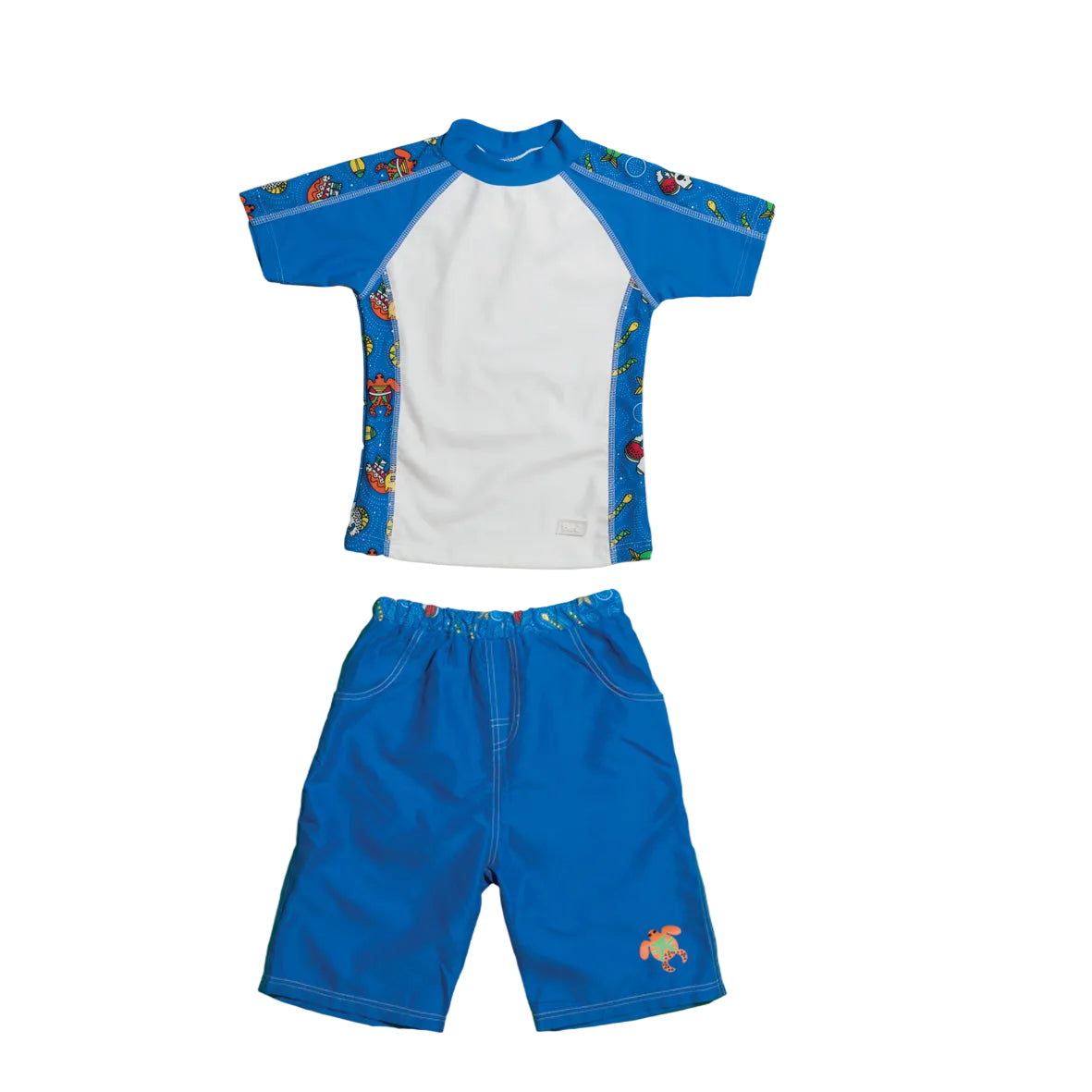
Beach day: Long stretches in direct sun call for UPF clothing as the backbone, with broad-spectrum SPF 30 to 50 on every uncovered inch, reapplied on schedule.
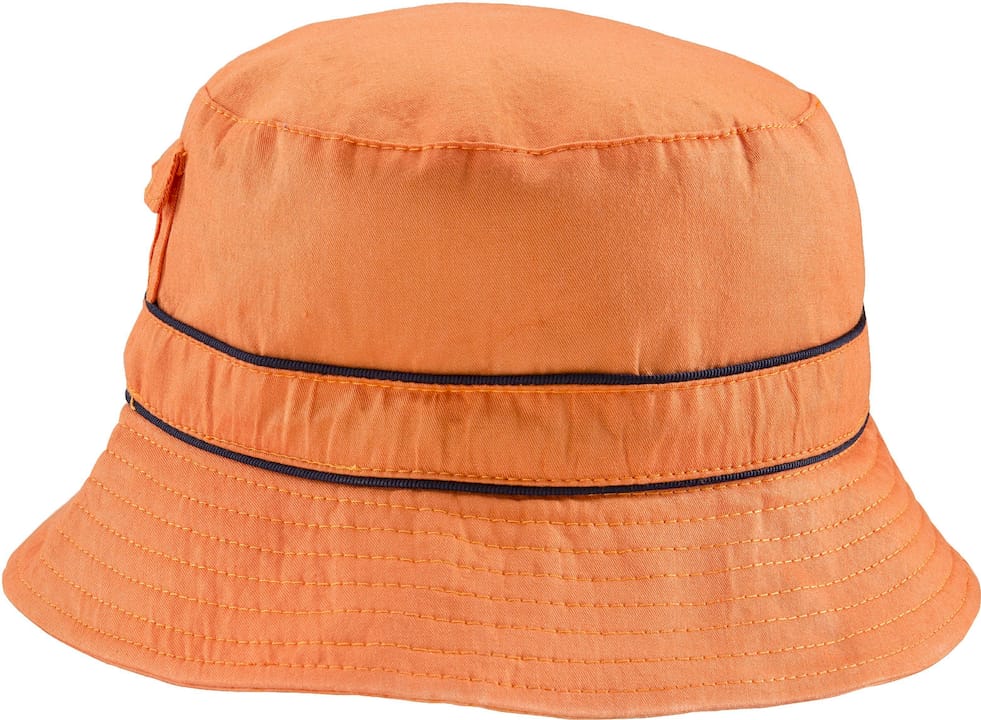
Hiking: Altitude increases UV intensity, so a UPF-rated long-sleeve shirt and hat reduce how much skin needs sunscreen at all, cutting down on reapplication stops mid trail.
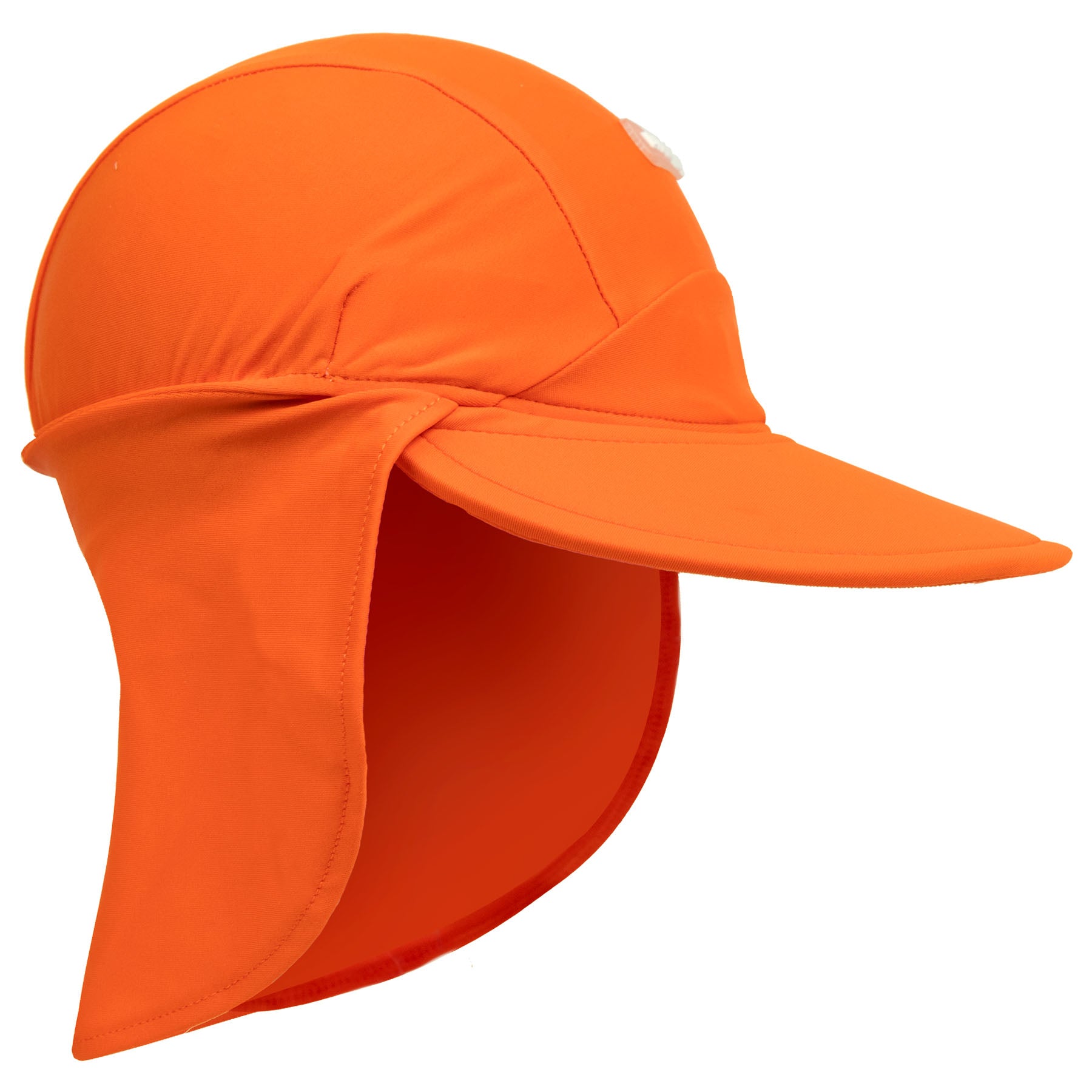
Dermatologists and outdoor-health writers increasingly frame UPF and SPF as teammates, not competitors. The clothing does the heavy lifting on covered skin. The sunscreen handles everything the clothing can’t reach.
When Should You Use UPF Clothing, Sunscreen, or Both?
Here’s a simple rule of thumb: clothing covers what it covers, sunscreen covers everything else, and thin or unrated garments need sunscreen underneath just in case.
- Dress covered areas in UPF 50+ first. A rash guard, swim leggings, or a long-sleeve shirt handles the torso, arms, and legs without any reapplication all day.
- Apply broad-spectrum SPF 30 to 50 on every exposed area. Face, ears, neck, hands, and feet need sunscreen regardless of what else the child is wearing.
- Reapply sunscreen every two hours, and immediately after swimming or heavy sweating. Water resistance ratings buy time, not immunity from reapplication.
- Add a wide-brim or flap hat and UV-blocking sunglasses for the face and eyes. Fabric can’t cover what a hat is built to shade.
- Check the UV index before heading out, since a UV index above 6 calls for full coverage plus sunscreen even on cloudy days, as clouds don’t block much UV.
For short errands, a UPF hat and shirt might be enough on their own. For a full beach day or a week at camp, treat sunscreen as non-negotiable no matter how much clothing coverage you’ve got.
Pro Tip: Use a sunscreen stick for a toddler’s face and ears. It’s less messy than lotion, harder for little hands to rub into their eyes, and turns application into something closer to a game than a wrestling match.
How to Choose UPF Clothing That Actually Works
Not every “sun protective” label means much. Here’s what to check before buying:
- Confirm a lab-tested UPF number, ideally 50+, printed on the tag or product page rather than a vague “sun safe” claim.
- Prioritize coverage over cut. Long sleeves, longer shorts, and a hat with a neck flap protect more skin than a stylish cap ever will.
- Feel the weave. Tightly woven or knit fabric blocks more UV than loose, breathable weaves, even at the same fiber weight.
- Darker colors and certain synthetic treatments tend to block more UV than light, untreated cotton, though a proper UPF label always beats guessing from color alone.
- Check wash durability. Fabric testing that includes simulated laundering gives more confidence the rating holds up after a summer of use.
Skip the assumption that a plain cotton T-shirt is “good enough” for a beach day. It usually tests around UPF 5, offering barely more protection than bare skin. And be wary of marketing language with no UPF number behind it. If a swim shirt doesn’t list a tested rating, wetness and stretch during actual swimming can quietly cut its real-world protection.
Pro Tip: For swimwear specifically, look for garments tested for chlorine and saltwater exposure, not just everyday wear. A shirt rated for hiking doesn’t automatically hold its UPF after a season in a chlorinated pool.
Building a Combined UPF and SPF Routine for Your Family
BANZ builds its children’s gear around the idea that clothing should do the heavy lifting so caregivers apply less sunscreen, less often. That’s the practical case for a UPF 50+ wardrobe: it’s not about replacing sunscreen, it’s about shrinking the surface area that needs it.
Statistic Callout: Caregivers using UPF-rated garments on covered areas can rely on a more consistent baseline of protection than sunscreen alone provides, since fabric doesn’t wear off with sweat, splashing, or a missed reapplication window.
The classic dermatology shorthand still holds up: Slip on UPF clothing, slop on broad-spectrum SPF, slap on a hat and sunglasses. For toddlers and younger kids specifically, that sequence reduces the friction of application because there’s simply less bare skin to fight over with a squirmy child.
A few practical notes for building that routine:
- A rash guard and board shorts set covers the torso and legs during water play, so sunscreen duty shrinks to hands, feet, face, and ears.
- Pair body coverage with a hat, since fabric on the torso does nothing for the scalp or neck.
- The free BANZ Protect app adds real-time UV monitoring, so caregivers know when the index climbs high enough to tighten the routine rather than guessing from how sunny it looks outside.
Getting the sequence right matters more than any single product. Clothing first, sunscreen second, hat and sunglasses to finish the job.
The Bottom Line on UPF vs SPF
UPF clothing and SPF sunscreen solve different problems, so the winning strategy has never been choosing one over the other. Dress covered skin in UPF 50+ fabric, apply broad-spectrum SPF 30 to 50 everywhere else, and reapply sunscreen on schedule regardless of how protective the outfit looks.
Pick the routine your family will actually stick with on a chaotic Tuesday, not just the one that sounds ideal on paper. Consistency beats perfection every time the sun comes out.
A Parent’s Note on Consistency Over Perfection
Sun safety fails most often from skipped steps, not bad information. Understanding the mechanics behind UPF and SPF matters less than actually reaching for the hat and the sunscreen stick every single time you walk out the door. Choosing tested UPF 50+ gear for your kids cuts down on how much sunscreen battle you’re fighting daily, which is often the difference between a routine that survives August and one that quietly falls apart by July.
— Shari M. Murphy
Shop UPF 50+ Gear Built for the Way Kids Actually Play
BANZ designs its sun gear around one goal: cutting how much sunscreen wrestling a parent has to do on any given day. Every UPF 50+ piece is built to handle the covered areas so you can focus sunscreen where it actually needs to go.
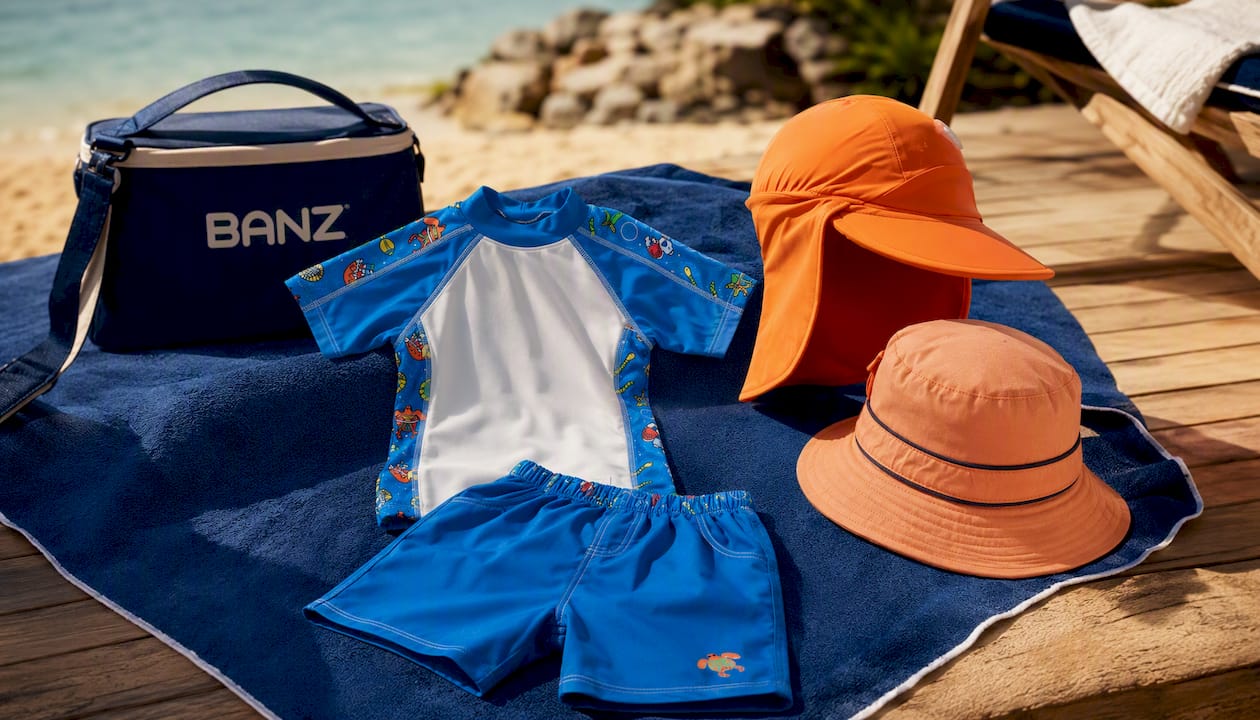
The Short Sleeve Rash Guard and Board Shorts Set in Coolgardie Blue handles torso and leg coverage for pool and beach days, so sunscreen only needs to cover hands, feet, face, and ears. The Children’s Flap Hat adds neck and ear coverage that a swim shirt can’t reach, which matters since the back of the neck is one of the most commonly missed sunscreen spots. And the Children’s Sun Hat with Pocket folds small enough to stash in a diaper bag or beach tote, so there’s no excuse for leaving it in the car.
Browse the UPF 50+ collection and check sizing carefully before you order. Kids’ fit runs differently across styles, and the right size is what keeps coverage actually covering.
This article is general information, not a substitute for advice from a qualified doctor. Consult a qualified healthcare professional about your own circumstances before acting on anything here.
Sources
- Does sun-protection clothing actually work? | Cleveland Clinic
- How to choose sun-protection (UPF) clothing | REI Expert Advice